Indoor Plant Styling · THE GUIDE
Style a Radiator Top Shelf with Heat-Buffered Plant Trays
Cast iron radiators and heating covers often occupy prime floor space near bright windows while creating localized warm microclimates during colder months. Resting a temporary, unattached wooden shelf across a sturdy radiator cover can provide an elevated surface for seasonal styling without permanent alterations. Pairing the arrangement with a tray lined with cork or silicone helps manage moisture and surface contact. By observing how rising warm air affects nearby soil and selecting resilient, drought-tolerant plants, you can introduce greenery into these zones while keeping the heating equipment unobstructed and functional.
Jump to the checklist ↓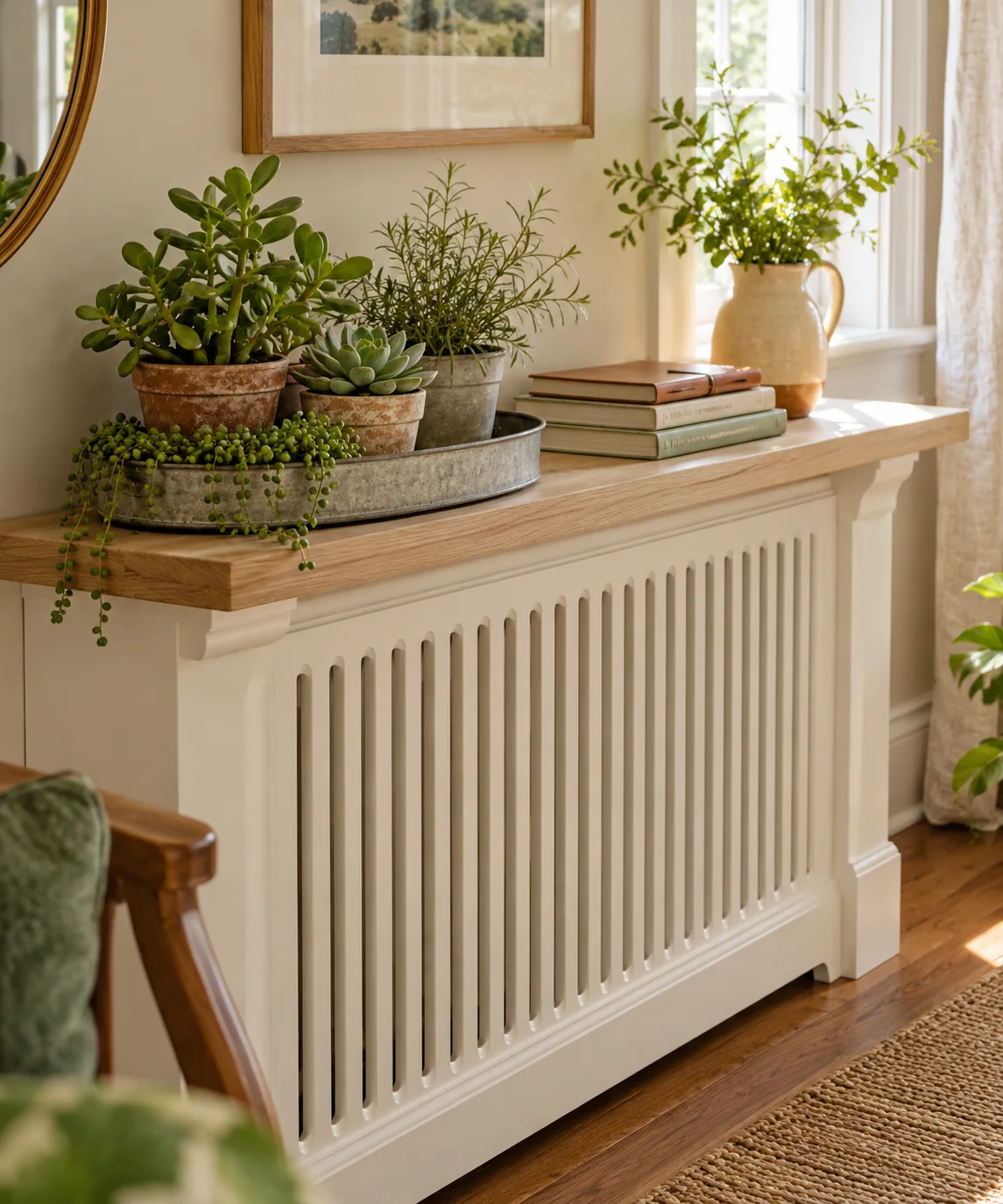
Heating Clearances and Airflow Considerations
Radiators and covers rely on continuous air circulation to warm a room effectively. Before placing any shelf or surface over a radiator cover, consult the enclosure's documentation or heating guidelines to ensure convective airflow remains unobstructed. Avoid solid surfaces that trap heat directly against the unit, as concentrated thermal buildup can warp wood finishes and decrease heating efficiency. Keep front grilles and side vents clear so that heat disperses naturally through the surrounding living space.
Tray Selection and Surface Protection
Rising dry air and shelf contact can accelerate drying and create water marks on shelf surfaces. Using a shallow metal or composite tray fitted with a cork backing provides a defined styling area and protects the timber from stray drops. While a cork layer cushions the tray and slows direct surface heat transfer, it does not completely shield plant root systems from warm ambient air. Ensure the tray sits flat and stable, providing an organized footprint for saucers and cachepots.
Selecting Heat-Tolerant Houseplants
Because active heating creates warm, low-humidity air currents, choose plants adapted to arid microclimates. Robust succulents, haworthias, snake plants, and jade plants handle dry conditions far better than thin-leaved tropical species. Varieties requiring consistent humidity, such as ferns or calatheas, generally suffer rapid leaf browning when placed near warm air currents. Grouping hardy, thick-leaved plants together creates an attractive display suited to seasonal temperature variations.
Monitoring Soil Drying Cycles
Warm air moving past the shelf increases soil evaporation compared to cooler areas of the home. Rather than relying on a fixed calendar schedule, inspect soil moisture frequently by feeling the top few inches of potting mix. Remove individual pots to a sink or basin for watering, letting all excess liquid drain completely before returning them to the display tray. This routine prevents standing water from lingering on the shelf or heating beneath the pots.
Seasonal Placement and Flexibility
Because a resting shelf is completely reversible, the styling can be reconfigured whenever heating demands change. During peak winter operation, consider scaling back the display to durable, heat-tolerant botanicals, architectural seed pods, or decorative objects if the air proves too drying for active foliage. Once the heating system is switched off in warmer seasons, the ledge can accommodate a wider range of indoor plants according to available natural light.
YOUR STARTING POINT
A little checklist.
Original editorial guidance. Images are AI-generated concepts, not photographs of completed projects. Our sources and approach.
Questions to consider
Can tropical houseplants tolerate being placed above an active radiator?
Most thin-leaved tropical species struggle with the dry, warm air currents produced by active heating units. For best results, position moisture-sensitive plants in more humid zones away from heat sources, reserving radiator shelves for resilient, drought-tolerant varieties.
What role does a cork-lined tray serve on a heating shelf?
A cork lining provides physical protection for the shelf finish, reduces tray slipping, and slows direct surface thermal conduction. However, it does not prevent ambient warm air from rising around the plants, so moisture levels still require regular monitoring.
Can heat from a radiator cover warp a wooden shelf?
Prolonged exposure to dry heat can cause unsealed or thin timber to warp or crack. Using well-seasoned wood, applying a protective finish, and ensuring adequate natural airflow around the cover helps reduce the risk of thermal damage.