Bookshelf Styling · THE GUIDE
Style a Room-Divider Bookcase with Clean Sightlines from Both Sides
Open-backed shelving serves as an efficient spatial partition in compact studio layouts, but packing every compartment creates a heavy visual barrier that blocks natural daylight. Styling a freestanding unit to work from both sides requires deliberate discipline with negative space and book orientation. By organizing reading material into contained central blocks and leaving specific bays entirely unobstructed, you preserve sightlines between living zones without sacrificing practical storage. This reversible configuration establishes functional separation while allowing morning and afternoon light to filter freely across the room, balancing openness with dedicated zones for sleeping, lounging, or desk work.
Jump to the checklist ↓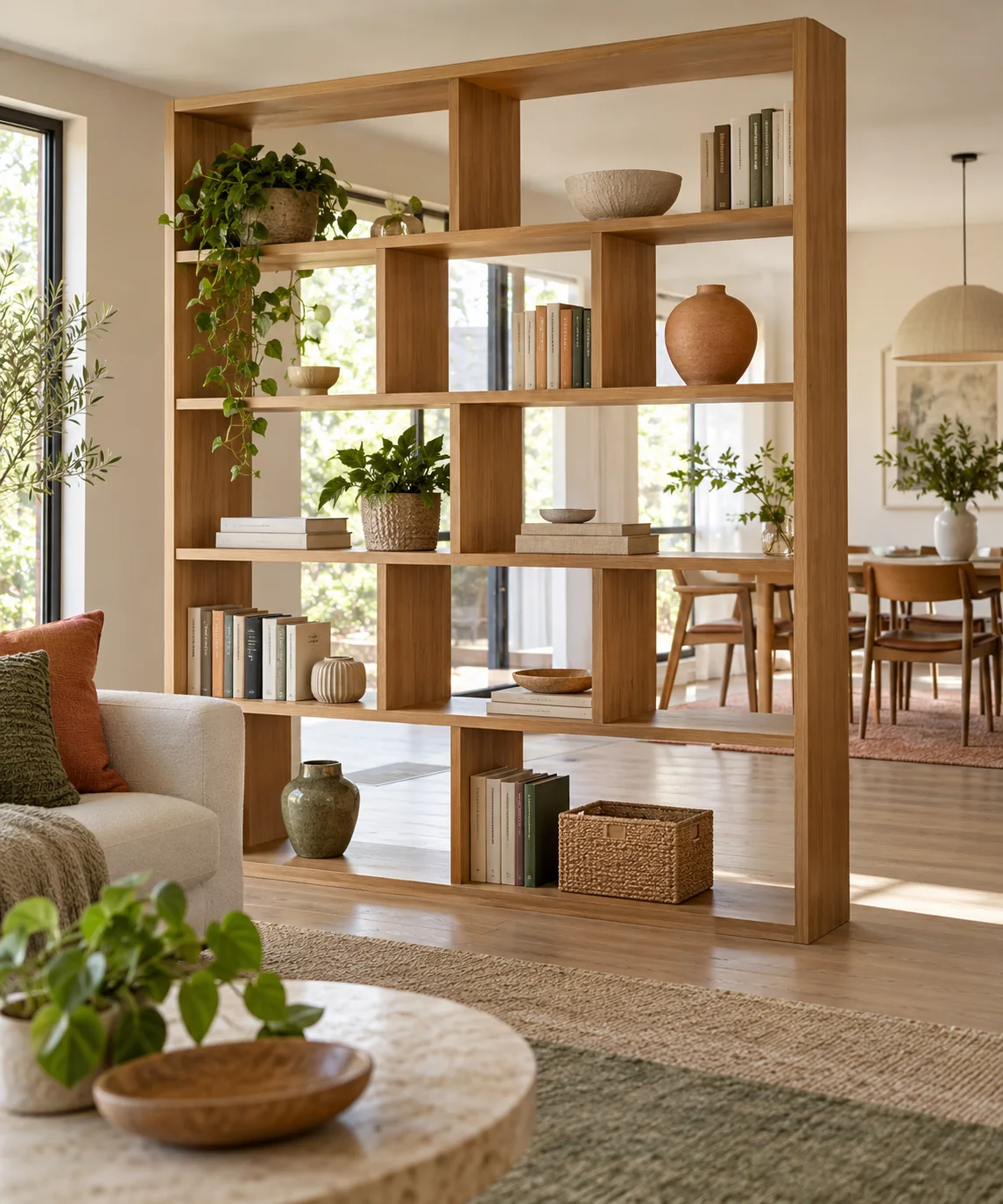
Map Clear Sightlines Before Loading
Begin by standing on either side of the intended divider position to identify the natural paths of window light and foot traffic across the room. Keep eye-level compartments predominantly open or styled with low-profile arrangements rather than solid book rows. Reserving roughly thirty to forty percent of the shelf bays for unobstructed pass-through views ensures the piece divides functional zones without blocking daylight like a solid partition wall. Test these visual corridors from seated positions on sofas, dining chairs, or desk seating to verify that natural light travels effectively into the darker interior portions of the space.
Center Volumes to Service Both Rooms
Standard perimeter bookshelves sit flush against a wall, but double-sided room dividers require centered placement within each cubby depth. Position book blocks along the centerline of each shelf plank, maintaining an equal clearance margin along the front and rear edges. This deliberate placement prevents book spines or page fore-edges from protruding into walkways, keeping thoroughfares unobstructed while appearing intentional from both vantage points. Consider facing spines toward the specific living zone that uses those titles, or alternate spine orientations across adjacent compartments to serve both spaces seamlessly.
Prioritize Low Weight Distribution and Verify Ratings
Before positioning shelving away from a wall, verify with the manufacturer documentation that the unit is engineered and rated for freestanding room-divider placement. Standard tall bookcases rely on perimeter wall-anchor brackets and present severe tip-over hazards if left freestanding in active open areas. For units specifically designed for freestanding use, arrange the densest art hardcovers, reference volumes, or binders across the lowest shelf tier. Concentrating weight at the base lowers the center of gravity and visually grounds the partition, though readers must recognize that heavy books do not replace a broad, stable footprint or appropriate floor-level stability hardware.
Use Single-Direction Runs for Narrow Depths
When styling a room-divider bookcase shallower than twelve inches, avoid attempting two-sided book placement within the same compartment. Stacking volumes back-to-back on narrow shelving creates cramped visual clutter and risks pushing books off the opposite ledge during retrieval. Instead, designate an entire cubby to face one direction, then alternate the contents of adjacent cubbies to face the opposite living zone. This alternating orientation provides practical access from both adjoining areas while maintaining clean silhouettes and preventing messy views of exposed page fore-edges.
Maintain Boundaries Against Everyday Clutter Creep
Double-sided shelving reveals disorganized clutter immediately because loose items lack a solid backboard to conceal them. Establish a consistent household boundary against using open pass-through bays as temporary drop zones for mail, loose cords, or miscellaneous paperwork. During routine weekly shelf maintenance, inspect both sides of the divider and gently reposition any shifted book blocks back to their measured centerlines. Keeping empty compartments fully unobstructed preserves the architectural clarity of the partition and allows daylight to filter through as planned.
YOUR STARTING POINT
A little checklist.
Original editorial guidance. Images are AI-generated concepts, not photographs of completed projects. Our sources and approach.
Questions to consider
Can any standard bookcase be used freestanding as a room divider?
No. Many standard bookcases require wall-anchoring brackets to prevent tipping and pose significant hazards when placed away from walls. Only use units specifically engineered and rated by the manufacturer for freestanding divider use, particularly in households with pets or children.
How much empty space should remain open on a room divider?
Aim for roughly thirty to forty percent open volume across the entire shelving unit. Prioritize keeping eye-level compartments clear so light and sightlines pass through effortlessly without visual obstruction.
Which way should spines face on a dual-sided bookshelf?
Face spines toward the specific zone where those books are referenced most frequently. For example, keep leisure reading facing the seating area and reference volumes facing the workspace, alternating by distinct cubby.