Sage and Cream Interiors · THE GUIDE
Style a Small Fireplace Mantel With Asymmetrical Ceramic Vases
A shallow fireplace mantel in a non-working decorative hearth can easily look cluttered or austere without a deliberate visual strategy. Introducing an off-center arrangement of ceramic vessels brings architectural interest to the wall without requiring symmetrical pairs. Pairing muted sage glazes with creamy stone or painted wood produces an understated, tranquil contrast that visually grounds the room. By relying on varied vessel profiles and subtle heights rather than elaborate ornaments, you create a calm focal point that works within narrow shelf constraints while maintaining clean sightlines across the surrounding living space.
Jump to the checklist ↓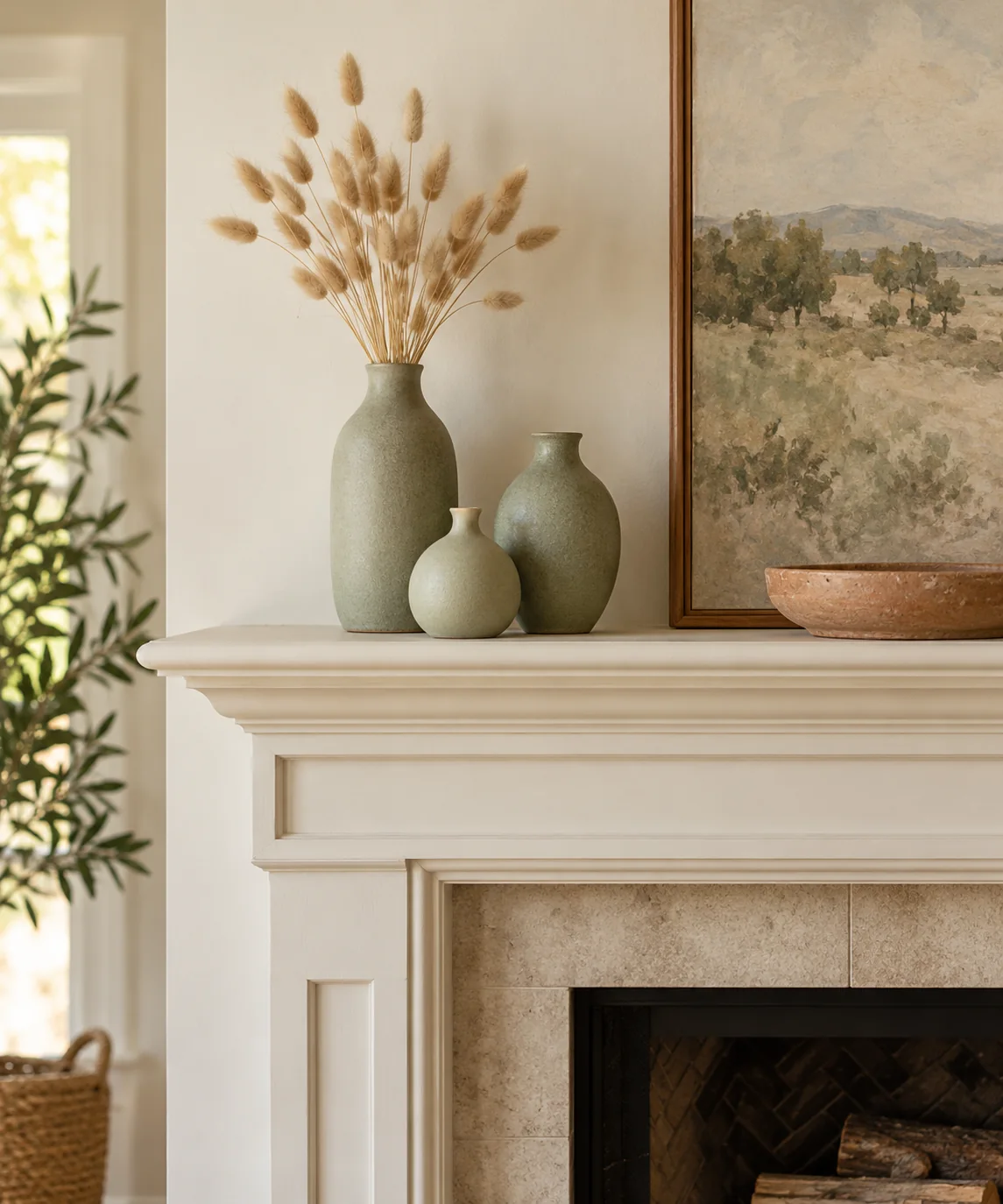
Evaluating Mantel Depth and Vessel Footprints
Before selecting ceramics, measure the usable shelf depth from the front edge to the wall surface. Narrow decorative mantels frequently provide fewer than six inches of clearance, which limits base diameters. Choose vessels with weighted, flat bottoms that sit entirely on the solid wood or stone without overhang. Testing vessel stability against light vibrations from nearby foot traffic prevents accidental tipping. Grouping three vessels of differing heights—such as ten, seven, and five inches—creates balanced vertical rhythm without overwhelming the shallow perimeter of a compact decorative surround.
Arranging the Asymmetrical Grouping
Cluster the ceramic vessels on one third of the mantel shelf rather than centering them. Placing the tallest sage vase closest to the outer edge draws the eye upward, while nesting two smaller cream and soft-green containers inward creates a gentle cascade. This deliberate imbalance provides visual movement without competing with the framed firebox below. Leave the remaining two-thirds of the shelf largely unadorned, allowing the flat surface to function as open breathing room that emphasizes the clean lines of your woodwork.
Balancing Negative Space Across the Shelf
An asymmetrical display requires intentional counterweight so the overall installation does not appear tilted. Instead of adding matching decor across the empty expanse, introduce a single low-profile item on the opposite side. A small horizontal cream dish or an unframed botanical print leaning flush against the rear wall anchors the void. Keep this counter-element under four inches in height. This arrangement distributes visual weight across the horizontal span while preserving the primary focal strength of the clustered ceramic shapes.
Selecting Dry Botanicals and Textural Fillers
Fill non-functional vessels with preserved stems that require no water or maintenance. Slender dried bunny grass, bleached oats, or preserved eucalyptus branches introduce soft organic silhouettes without obscuring the matte ceramic texture. Limit fillers to two or three light stems per narrow-necked vase to prevent top-heaviness on a narrow shelf. Ensure all stems are completely moisture-free before inserting them to safeguard unglazed ceramic interiors from damp odors, and trim stems so botanicals extend no more than half the vessel height.
Establishing Simple Dusting and Care Routines
Matte ceramic finishes attract fine household dust, which can dull soft sage glazes over time. Wipe the exterior surfaces every few weeks using a clean, dry microfiber cloth, avoiding liquid polishes or abrasive pads that could degrade the finish. During dusting, inspect the felt protective pads placed under each vessel base to prevent scratches on the painted or polished mantel shelf. Re-check stem placement periodically to confirm stems have not shifted into an off-balance position that compromises vessel stability.
YOUR STARTING POINT
A little checklist.
Original editorial guidance. Images are AI-generated concepts, not photographs of completed projects. Our sources and approach.
Questions to consider
Can I use real greenery with water inside these decorative vases?
Keep these groupings water-free. Shallow mantels carry tipping risks during plant maintenance, and unsealed decorative ceramics may seep moisture onto bare wood. Dried stems provide texture while keeping the display clean, stable, and completely moisture-free.
How do I keep an asymmetrical mantel layout from looking lopsided?
Counterbalance the tall vase cluster with a single low, horizontal object on the opposite side. Leaving ample empty space between elements allows the deliberate asymmetry to appear calm and planned rather than accidentally uneven.
What colors complement sage ceramic vessels on an off-white mantel?
Warm cream, pale biscuit, and soft putty tones blend seamlessly with sage. Avoid high-contrast primary colors, which distract from the muted, architectural quality of the matte glazes and calm hearth surroundings.