Bookshelf Styling · THE GUIDE
Style a Small Hallway Bookcase for Utility and Paperback Storage
A narrow hallway bookcase can serve dual functions without looking cluttered if utility storage is balanced against readable volumes. Compact paperbacks suit shallow shelving units because their standard heights and uniform depths leave walkways open. By dedicating upper shelves to fiction and anchoring the lowest tier with a closed wooden storage box, household essentials remain accessible while resting safely out of sight. This arrangement turns transitional corridor space into an efficient staging ground for emergency flashlights, fresh batteries, and reading material. Planning proportions carefully ensures daily functionality without disturbing the tidy visual rhythm of the hall.
Jump to the checklist ↓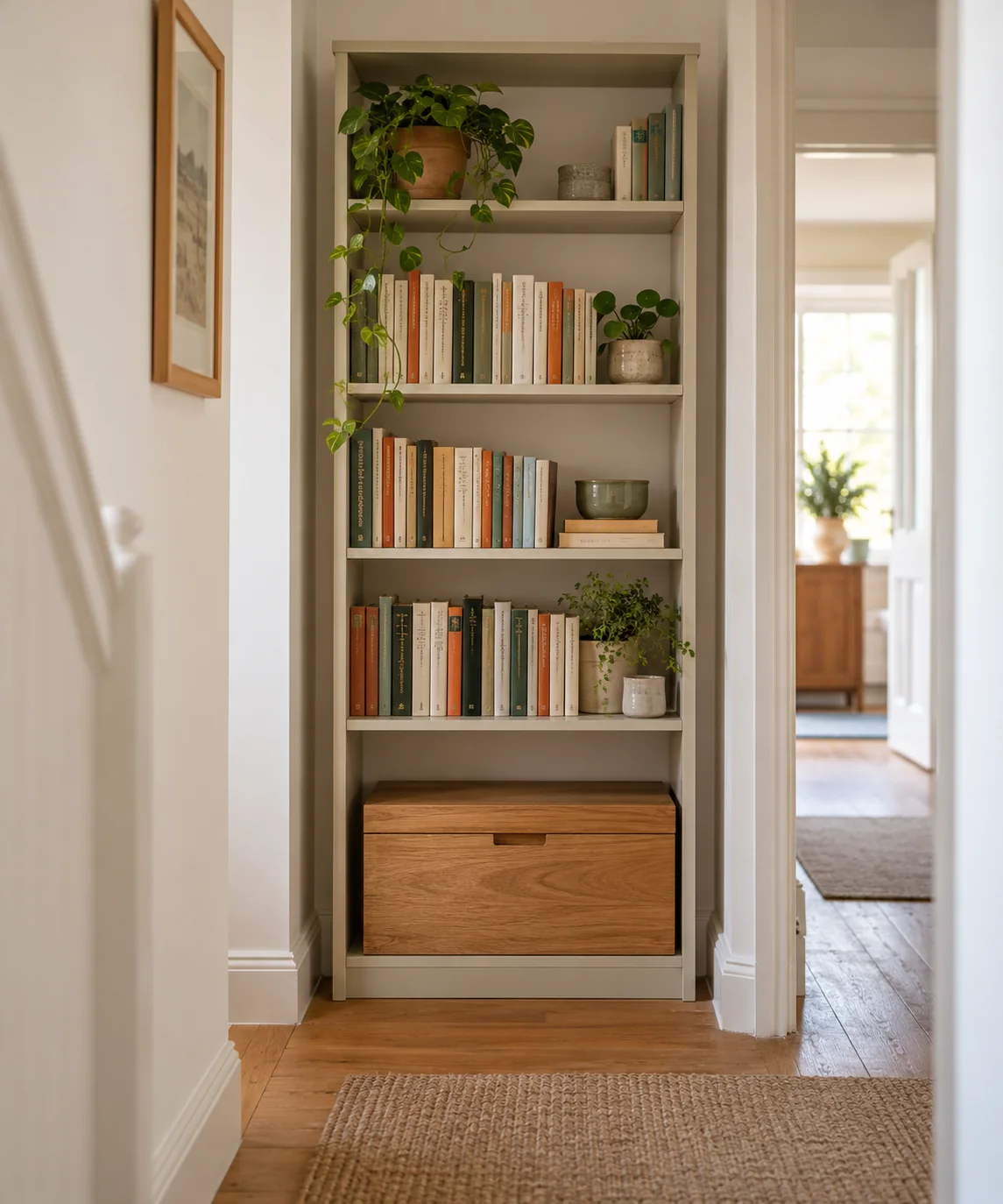
Assessing Corridor Clearance and Unit Proportions
Hallway furnishings must respect daily household movement and building clearance requirements. Before selecting or styling a hallway bookcase, measure the usable passage width with nearby doors swinging fully open. Narrow units with shallow depths preserve corridor flow, but exact allowable dimensions depend on household traffic and local residential egress guidelines. Ensure the bookcase rests completely flat against the baseboard or wall without protruding into natural walking paths. Tightly constrained transitional zones benefit from streamlined profiles where shelves remain visually light and free from protruding decorative elements.
Distributing Visual and Physical Weight
Placing standard mass-market and trade paperbacks on upper tiers keeps the bookcase visually balanced while reserving lower areas for utility storage. Arrange volumes with their spines set slightly back from the shelf edge rather than flush with the perimeter, which helps protect paper edges from brushing against passing outerwear or bags. Group books of similar trim sizes together to create orderly horizontal sightlines. Leaving moderate overhead space above each row prevents the shallow unit from appearing crowded and allows titles to be removed without scraping the shelf above.
Grounding Practical Storage in a Lower Lidded Box
Reserving the lowest shelf tier for a fitted wooden box keeps utility essentials organized while maintaining a clean, cohesive exterior. A sturdy lidded box concealed near the base anchors the visual weight of the unit and provides practical storage for spare flashlights, fresh batteries, and household keys. Select a container that slides comfortably into the shelf opening without catching on shelf pins or upright supports. Natural timber boxes in ash, oak, or birch offer durability and conceal everyday hardware behind a calm, uniform surface.
Organizing Small Household Hardware Safely
Small utility items require deliberate compartmenting to prevent clutter and maintain readiness during household disruptions. Keep replacement batteries stored in their original blister packs or inside dedicated insulating organizers to prevent positive and negative terminals from making accidental contact. Small fabric pouches or modular wooden dividers within the main storage box keep keys, tape measures, and penlights separated. Labeling interior compartments or using shallow trays ensures household members can retrieve emergency items quickly in the dark without rummaging through loose contents.
Maintaining Walkway Safety and Dust Management
Hallways experience continuous foot traffic and air movement from external doorways, making shelf surfaces prone to dust accumulation. Establish a routine of dusting shelf lips and box lids using a dry microfiber cloth to prevent grit from settling into paperback paper blocks. Routinely check that books remain aligned and do not migrate forward into walking lanes. Furthermore, because shallow, tall bookcases situated in high-traffic corridors are susceptible to accidental bumps, verify that the furniture piece is securely fastened to wall framing according to the manufacturer's anti-tip instructions.
YOUR STARTING POINT
A little checklist.
Original editorial guidance. Images are AI-generated concepts, not photographs of completed projects. Our sources and approach.
Questions to consider
How can I ensure a narrow hallway bookcase remains stable in a busy corridor?
Narrow bookcases have a higher center of gravity and should always be anchored directly to wall studs using manufacturer-supplied anti-tip hardware or brackets appropriate for your wall construction. Avoid relying solely on bottom-shelf weight to keep a tall, shallow shelving unit upright when bumped by passing traffic.
What should I look for when choosing a utility storage box for shallow shelves?
Check the interior shelf depth, width, and vertical clearance between shelf pins before purchasing a box. Look for smooth exterior surfaces without sharp metal hardware that could mar the bookcase finish when drawn forward. Cut-out handles or a simple lift-off lid provide easy access in tight hallway quarters.
How do I prevent paperbacks from curling or warping in an entry corridor?
Keep the bookcase positioned away from unsealed exterior doorways, radiators, or damp coat hooks where moisture and direct heat fluctuations occur. Pack paperbacks upright with moderate firmness—tight enough to maintain structural support without pinching bindings—and use stable bookends to keep partial rows plumb.