Bookshelf Styling · THE GUIDE
Style a Tight Corner Bookshelf to Keep a Compact Room Feeling Open
Corner shelving units often become visual sinkholes in compact rooms because shadows naturally concentrate in perpendicular junctions. Stuffing books deep into the triangular or square apex creates dense, dark recesses that pull the eye inward and make room boundaries feel constricted. A lighter arrangement pulls spine volumes outward toward the front shelf edges where ambient daylight can reach them. By leaving the acute interior angle clear and utilizing reflective or pale, low-profile objects sparingly, the unit preserves spatial breathing room while continuing to serve genuine paperback and hardcover storage requirements.
Jump to the checklist ↓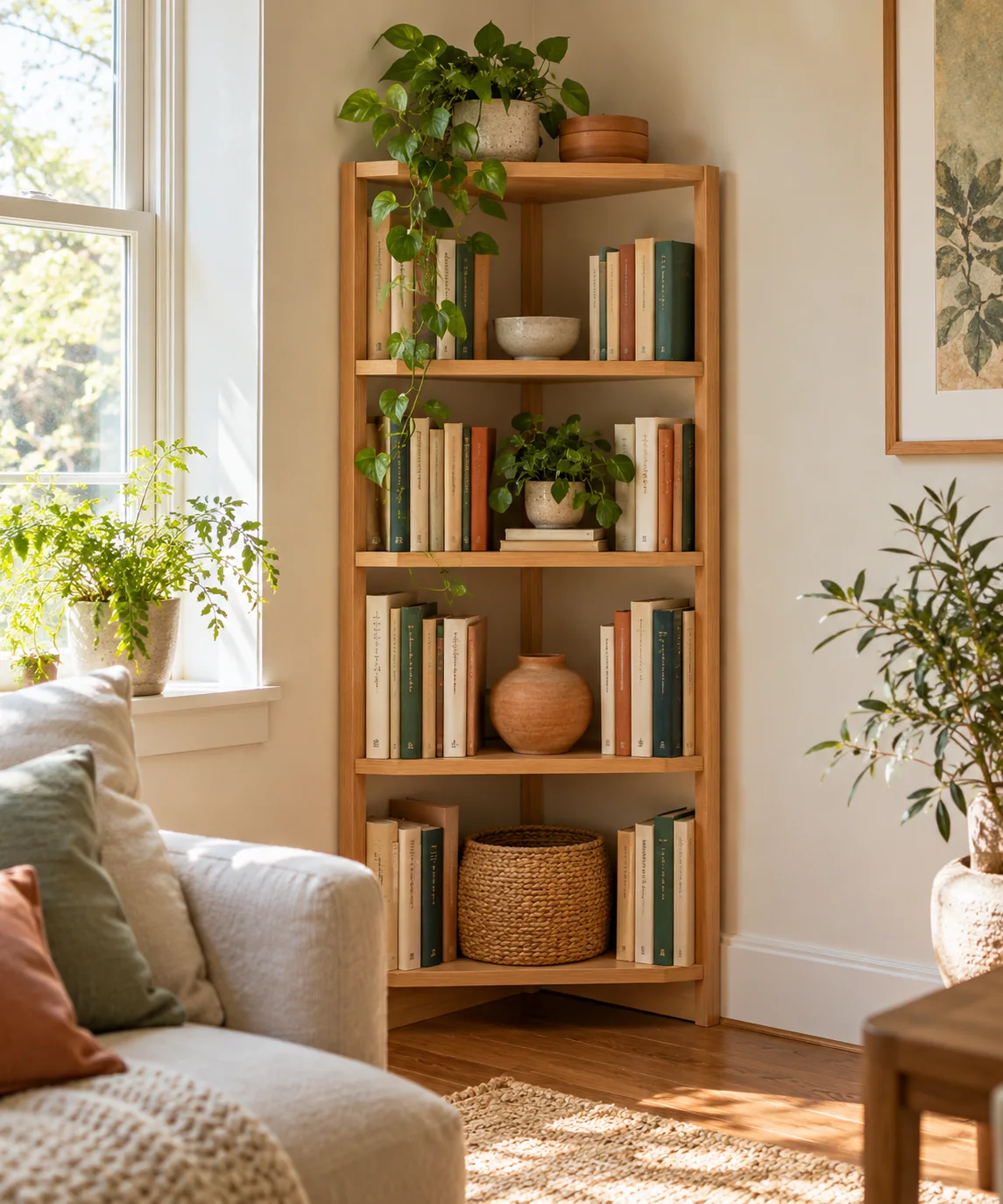
Prioritize Outer Perimeter Alignments
Place your tallest books along the accessible front edges rather than pushing them into the deepest corner apex. In triangular or wedge-shaped shelving, spines sitting flush with the outer rim catch ambient light bouncing from nearby windows or room fixtures. This positioning creates a flat, clean perimeter that frames the shelf clearly. When volumes retreat deep inside, their dark tops cast heavy shadows downward. Test this alignment using five to eight standard paperbacks on one level to observe how light exposure shifts before committing to the full unit.
Leave the Inner Vertex Uncluttered
The narrow apex where two walls meet naturally traps shade and restricts air movement. Resist the temptation to jam small pocket books, folded paperwork, or loose trinkets into that rear pocket. Keeping the rear triangular recess empty allows existing wall paint or the unit’s finished backboard to remain visible across tiers. That continuous sightline signals depth rather than clutter. If you prefer to place an object in the apex, choose a smooth, pale ceramic vessel or empty saucer that reflects ambient light instead of absorbing it.
Stagger Alternating Shelf Densities
Uniform book rows on every tier can turn a corner tower into a solid, monolithic pillar. Instead, alternate between fully lined tiers and semi-open surfaces. For example, fill one shelf with vertical paperbacks aligned forward, then keep the adjacent tier minimalist with only a horizontal stack of three lightweight hardcovers set near the front edge. This rhythm breaks vertical mass, allowing the eye to register open wall space behind the furniture, which prevents the corner from feeling visually overweighted in compact quarters.
Account for Reach and Clearance Limits
Corner shelves often present awkward ergonomic angles, particularly on upper and lower shelves. Storing everyday reference books or frequently accessed novels in the tight inner triangle makes retrieving them cumbersome and risks scuffing nearby wall trim. Reserve the deepest interior zones for items you rarely handle, or leave them vacant. Verify that adjacent doors, closet panels, and window draperies can open and swing through their full operational path without striking the shelving frame or dislodging items.
Maintain Dust Control and Shadow Checks
Because inner shelf corners receive limited natural airflow, dust accumulates rapidly along unutilized rear wedges. Every month, slide the forward-aligned books forward slightly and wipe the rear triangular space with a dry microfiber cloth to keep surfaces clean. At night, inspect the corner under your standard overhead or task lighting. If deep shadows still collect in the interior notch, reduce the book count on that tier by several volumes rather than attempting to squeeze supplementary lighting into restricted shelf openings.
YOUR STARTING POINT
A little checklist.
Original editorial guidance. Images are AI-generated concepts, not photographs of completed projects. Our sources and approach.
Questions to consider
Should I place small decorative items deep inside the corner apex?
Avoid placing small items in the apex, as they disappear in shadows and look like neglected clutter. Keep the rear corner bare or reserve it for a pale, smooth saucer that reflects ambient light clearly.
How do I choose which books go on lower corner shelves?
Place oversized or infrequently read volumes on lower tiers toward the front edge. Deep corner retrieval at floor level is awkward, so keeping spines forward protects both your posture and the book covers from damage.
Can I use bookends effectively on triangular corner shelves?
Yes, provided the bookends feature thin, flat bases. Position them near the outer edge to support upright rows, ensuring their profile does not project past the shelf perimeter into everyday walking paths.