Entryway Organization · THE GUIDE
Style an Inviting Welcome Scent With Dried Botanical Sprigs
Enclosed entryways and hallways frequently develop stale, musty air from damp outerwear, shoe storage, and limited cross-ventilation. Rather than masking interior air with synthetic room sprays or consuming counter space with powered fragrance diffusers, dried botanical sprigs offer a calm, low-profile scent solution. Natural elements like eucalyptus, lavender, and cedarwood provide subtle aromatic properties without introducing moisture or artificial chemicals into the home. Carefully assembling and positioning these botanicals on an entryway shelf creates a refreshing welcome zone that stays clean, dry, and visually tidy throughout the year.
Jump to the checklist ↓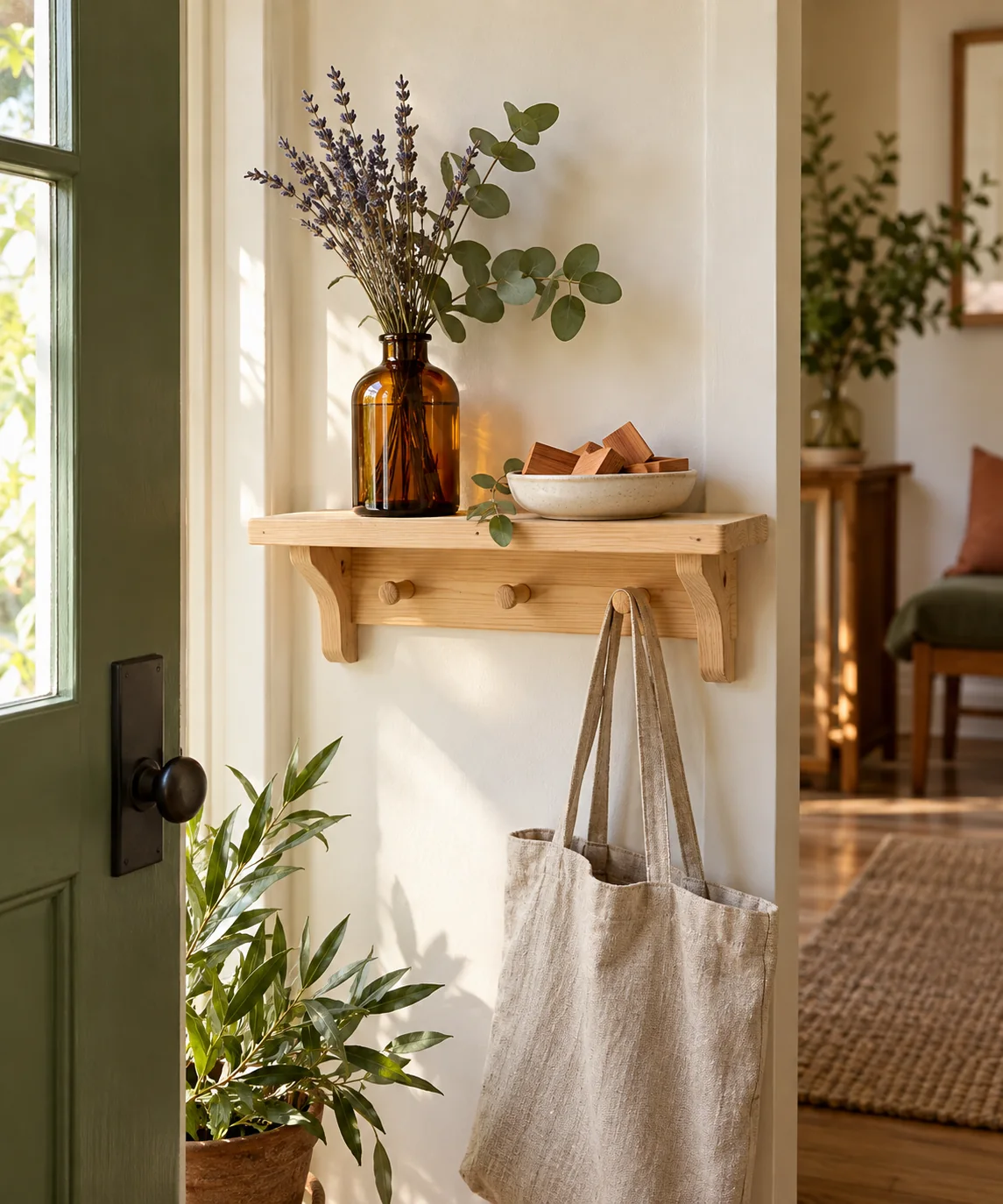
Selecting Dry Botanicals for Subdued Aroma
Choose durable dried stems with clean fragrance profiles that remain stable over months without crumbling excessively. Dried French lavender and preserved spiral eucalyptus stems are ideal because their natural oils hold gentle aroma without needing water. Avoid artificially dyed or heavily perfume-dipped florals that can deposit oily residues or irritate sensitive noses. Combine three to five slender sprigs per vessel to maintain an understated silhouette. This restrained volume prevents loose leaves from dropping onto the shelf while delivering a consistent, pleasant greeting at the entrance.
Vessel Sizing and Stability on Shelving
Select heavy, narrow-necked vessels such as amber glass bottles, ceramic bud vases, or stoneware crocks with weighted bases. A narrow neck supports brittle dried stems vertically, preventing them from sprawling outward where passing coats or bags might snap fragile twigs. Ensure the vessel height does not exceed two-thirds of the stem length to keep the display structurally balanced. Placing the container toward the rear corner of a sturdy shelf keeps the glass protected from accidental elbows while maintaining unobstructed sightlines across the entryway.
Incorporating Aromatic Cedar Wood Accents
Complement botanical foliage by pairing your vase with an untreated natural wood accent, such as rough-cut red cedar blocks in a shallow ceramic dish. Cedar releases mild woody notes that naturally counteract hallway odors and shoe locker dampness. Keep wood pieces dry and unvarnished so the wood grain breathes freely. If the scent diminishes over time, gently buff the surface of the cedar blocks with fine-grit sandpaper to reopen the wood pores, instantly reviving the aroma without adding artificial liquid fragrance.
Managing Airflow and Dust Accumulation
Air movement is essential for distributing botanical scents, yet high-velocity drafts will quickly shatter dried foliage. Avoid placing arrangements directly beneath forced-air heating vents or directly in line with swinging exterior doors. Instead, position the shelf along an interior corridor wall where natural foot traffic generates gentle ambient air displacement. Dust the container base weekly with a dry feather duster or soft cloth, and occasionally mist surrounding solid floor areas during routine cleaning to prevent dry static dust from settling onto delicate petals.
Seasonal Rotation and Refreshing Protocols
Dried botanicals gradually lose their volatile essential oils over four to six months depending on indoor humidity levels. Test scent longevity by giving eucalyptus leaves a gentle roll between your fingers; if no herbal scent releases, it is time to refresh the stems. Discard brittle sprigs into compost rather than trying to wash them. Rotating in fresh dried cuttings every autumn and spring keeps the display visually crisp and ensures the front hall remains consistently free from musty odors.
YOUR STARTING POINT
A little checklist.
Original editorial guidance. Images are AI-generated concepts, not photographs of completed projects. Our sources and approach.
Questions to consider
Will dried botanical stems drop debris all over the entryway shelf?
High-quality air-dried or glycerin-preserved stems shed very little if undisturbed. Position the vessel away from coat hooks and swinging bags, and avoid jostling the stems once arranged to keep the shelf completely clean.
Can I add essential oils directly to dried botanicals to boost scent?
Applying oils directly onto brittle dried leaves can cause discoloration, gummy dust accumulation, and spotting on nearby surfaces. Instead, add a few drops of pure oil to untreated cedar blocks resting safely inside a ceramic dish.
How do I handle botanical scent displays in homes with pets?
Keep all botanical arrangements on high, unreachable shelves out of jumping range. Some eucalyptus varieties and concentrated plant oils are irritating to pets, so ensure stems remain contained and never allow pets to chew or ingest dried leaves.