Bookshelf Styling · THE GUIDE
Style an Open Baker's Rack for Culinary Books and Potted Herbs
An open metal baker's rack provides practical kitchen storage while combining culinary reference books with living potted herbs. However, balancing printed pages alongside potted plants requires deliberate shelf zoning. Culinary herbs vary in their environmental needs—while chives appreciate consistent soil moisture, woody Mediterranean herbs such as thyme require sharp drainage and minimal watering—and all paper volumes must remain protected from runoff and kitchen grease. By positioning moisture-resistant reference books on sheltered lower tiers and placing potted herbs on well-lit upper levels with dedicated drip trays, you can establish an organized, functional cooking station that keeps books dry while supporting plant health.
Jump to the checklist ↓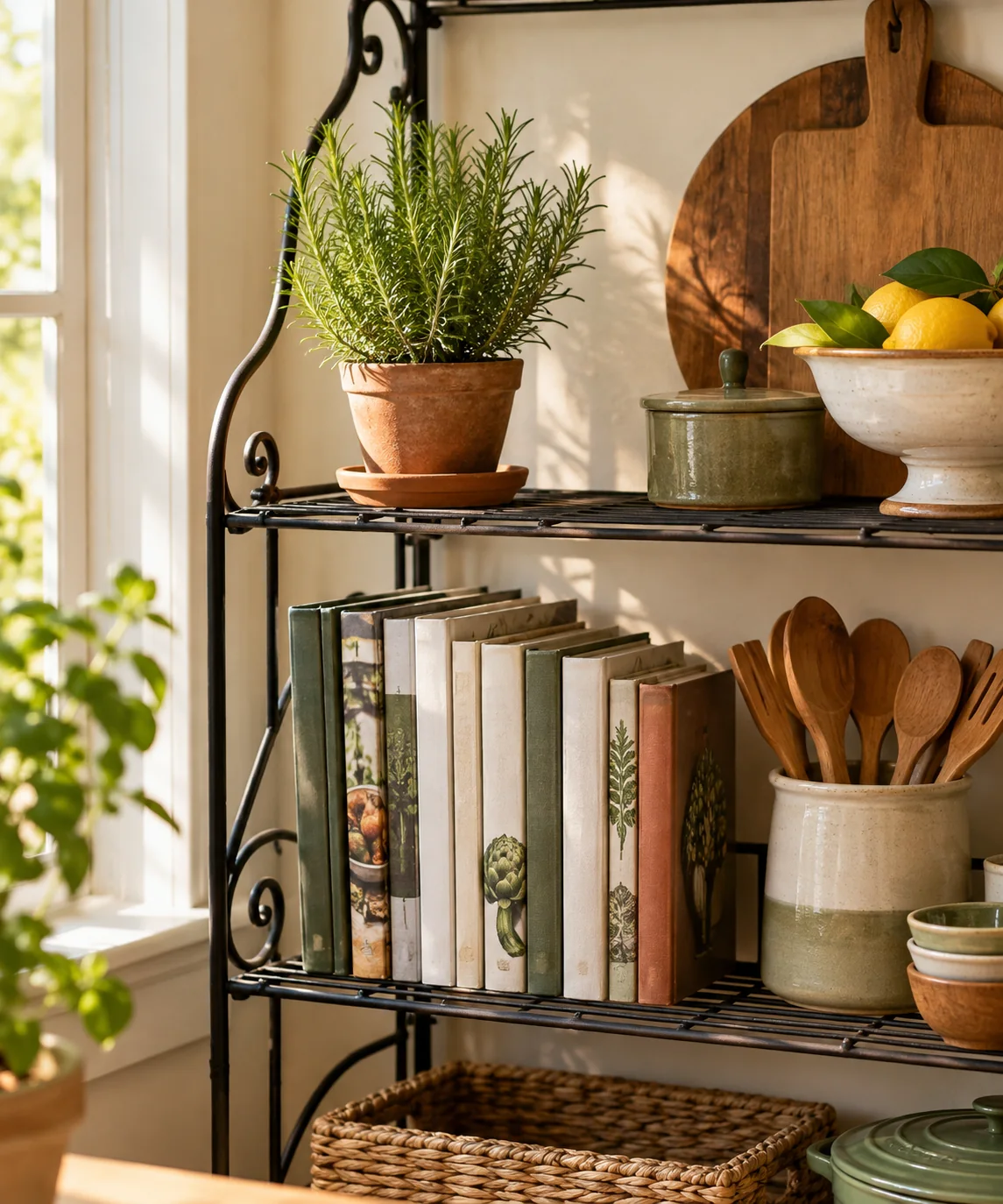
Zoning Wire Shelves for Water Protection
The primary consideration on an open wire baker's rack is downward moisture migration. Avoid positioning potted plants directly above exposed cookbooks, as drainage or accidental spills can seep through wire slats onto the paper below. Designate upper tiers for potted herbs where daylight is strongest and water cannot drip onto sensitive bindings. Keep culinary reference guides, notebooks, and recipe binders on lower tiers, offsetting them horizontally from plant containers whenever possible to minimize splash risks during routine kitchen tasks.
Selecting Dependable Planters and Drainage Trays
Culinary herbs require pots with functional drainage holes to prevent root rot, which makes reliable containment essential on open wire shelving. Select glazed ceramic, stoneware, or durable plastic pots set inside deep, non-porous saucers or rimmed metal trays. Unglazed terracotta saucers can allow moisture to weep through over time, potentially tarnishing metal wire rungs. For safer maintenance, move pots to the kitchen sink for watering, let excess moisture drain completely, and dry the base of each container before returning it to the rack.
Organizing Moisture-Resistant Culinary Literature
Cookbooks stored in working kitchen areas encounter occasional humidity, splashes, and handling with damp hands. Arrange durable hardbound manuals, wipeable reference guides, and laminated notebooks vertically on lower tiers. Because standard wire rungs can cause narrow book spines to lean or slip into gaps, install a rigid acrylic sheet or flat wooden insert across the shelf base. This provides a stable, uniform platform that supports upright bindings and prevents book corners from catching on wire edges.
Managing Herb Light and Air Circulation
Culinary herbs generally need strong natural daylight to sustain compact, healthy growth indoors. Place the baker's rack near a bright window, noting that daylight intensity varies significantly by season, geographic location, and window exposure. Allow adequate spacing between individual pots rather than crowding containers against walls or cabinetry. Good air circulation discourages fungal issues like powdery mildew and helps maintain a balanced microclimate around both foliage and adjacent shelving.
Daily Workflow and Maintenance Routines
Keep daily meal preparation efficient by maintaining clear functional boundaries across the baker's rack. Store small accessories such as timers, kitchen twine, and book weights in a dedicated ceramic crock or shallow dish alongside reference volumes. Clean the rack periodically by dusting wire rungs and shelf liners with a dry cloth. If plants drop dry leaves or soil particles, sweep them up promptly to keep organic matter from gathering around book edges or settling into wire shelf joints.
YOUR STARTING POINT
A little checklist.
Original editorial guidance. Images are AI-generated concepts, not photographs of completed projects. Our sources and approach.
Questions to consider
Can culinary herbs grow on the lower shelves of a baker's rack?
Lower shelves rarely receive sufficient natural daylight for sun-loving culinary herbs like thyme or rosemary. While shade-tolerant ornamental plants or herbs under dedicated supplemental LED grow lights can manage on lower tiers, unlit lower shelves generally cause herbs to stretch and weaken.
How do I protect delicate or antique recipe books on an open kitchen rack?
Delicate, cloth-bound, or heirloom volumes are sensitive to ambient kitchen humidity and grease. Enclose frequently consulted paperbacks in protective archival covers, and consider storing fragile or irreplaceable family heirlooms in an enclosed pantry or living area cabinet away from cooking vapor.
What type of shelf liner works best over wire baker's rack rungs?
Rigid, non-porous acrylic or polypropylene liners cut to the exact dimensions of the shelf work best. They provide a flat, stable surface that keeps books from tilting between wire rungs while acting as a secondary shield against small spills or dust.