Sage and Cream Interiors · THE GUIDE
Style an Over-the-Toilet Storage Unit With Coordinated Linen Boxes
Compact washrooms and powder rooms often feature limited built-in cabinetry, making vertical wall space above the toilet fixture a practical zone for supplemental storage. An over-the-toilet shelving unit introduces tiered organization, yet open shelving can rapidly appear chaotic if loose grooming bottles, personal supplies, and cleaning products sit out in plain view. Pairing a pale neutral or light-toned frame with soft sage green accents and structured storage boxes helps conceal utilitarian items while softening hard tile and porcelain surfaces. Planning around plumbing access, checking manufacturer mounting instructions, and selecting moisture-appropriate materials ensure the shelving remains functional, stable, and visually organized without crowding the space.
Jump to the checklist ↓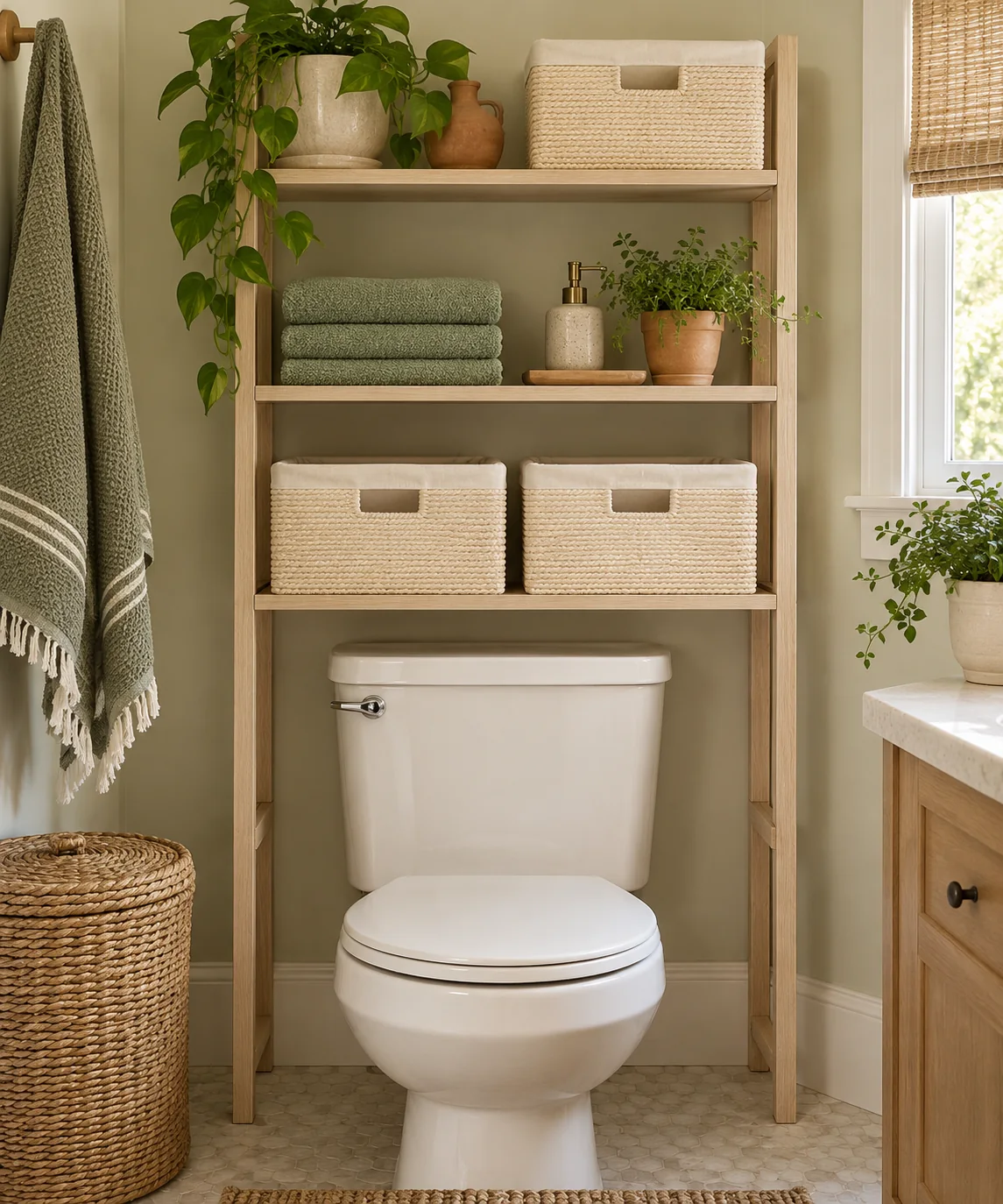
Checking Plumbing and Tank Access Clearances
Before purchasing or assembling an over-the-toilet storage unit, verify the full dimensions of your toilet and surrounding fixtures. Measure the width of the tank, the overall height from the finished floor to the top of the tank lid, and the location of wall-mounted shutoff valves and flexible water lines. Ensure the lowest horizontal shelf sits high enough to allow the tank lid to be removed vertically for routine plumbing adjustments or flapper replacement. Check that the unit's lower crossbar or support brace will not collide with the water supply line or valve handle behind the bowl. Freestanding units should always be leveled and secured according to the manufacturer's anti-tip wall-anchoring instructions to prevent shifting.
Choosing Appropriate Box Materials for Bathroom Conditions
Open shelving leaves packaged goods and toiletries exposed to view, creating visual discord in small rooms. Fabric-covered or woven bins in warm cream and muted sage establish clean borders and conceal packaging. However, standard natural linen and untreated cardboard-core boxes absorb airborne moisture readily. In full bathrooms that include a shower or bathtub, opt for synthetic wipeable weaves, coated canvas, or moisture-resistant bins with lids to help protect internal contents from steam and resist mildew. In half-baths and dedicated powder rooms without bathing fixtures, breathable cotton or linen-wrapped storage boxes perform well without moisture-related degradation.
Organizing Supplies by Weight and Frequency of Use
Distribute everyday items across shelf tiers with ergonomics and safety in mind. Keep heavier items on lower tiers to maintain a low center of gravity and reduce tipping risks. The tier directly above the tank can hold soft goods, such as rolled sage-toned hand towels or folded washcloths, offering quick access and subtle color. Mid-level shelves work well for frequently used daily toiletries, spare hand soaps, or facial tissues kept inside lidded containers. Reserve the uppermost shelves for lightweight surplus stock, such as spare bath tissue rolls or cotton pads, ensuring that reaching overhead does not require maneuvering heavy or awkward containers.
Proportion and Spatial Considerations
Over-the-toilet units can feel imposing if the storage containers extend too far forward or crowd the user when seated. Check the exterior depth of prospective boxes against the shelf depth; containers should rest securely within the shelf perimeter without hanging over the front edge. To test the visual balance and spatial comfort before buying new accessories, place simple cardboard boxes cut to matching dimensions onto the shelves. This mockup exercise helps verify that the arrangement leaves comfortable head clearance when standing up and does not cast heavy shadows over the toilet tank or flush mechanism.
Managing Airflow and Ongoing Maintenance
Bathrooms naturally experience fluctuating humidity levels, which can lead to moisture collecting between storage containers and cold drywall. Position storage boxes with a small setback from the back wall to encourage passive airflow rather than pushing them flush against the surfaces. If the room has an exhaust fan, operate it during and after bathing to exhaust moist air effectively. Periodically pull containers forward to inspect shelf surfaces for dust or condensation, wipe down frames according to manufacturer care instructions, and rotate bathroom textiles regularly to keep the display fresh and hygienic.
YOUR STARTING POINT
A little checklist.
Original editorial guidance. Images are AI-generated concepts, not photographs of completed projects. Our sources and approach.
Questions to consider
Can fabric linen boxes be used safely in bathrooms with showers?
Natural linen and cardboard-core boxes tend to absorb moisture in bathrooms with showers, which can lead to mildew, fabric staining, or warping. In spaces with heavy shower steam, choose storage containers made from woven polypropylene, coated canvas, or moisture-resistant composite materials with removable lids, and always run an exhaust fan during and after bathing.
How much vertical clearance is required above the toilet tank?
Clearance needs vary depending on your toilet model. The lowest fixed shelf must allow enough clearance to lift the tank lid off vertically and access internal components like the fill valve and flapper for repairs. Check your toilet's tank lid height and flushing mechanism—such as top-mounted push buttons—before finalizing shelf heights or crossbar placements.
How do I secure an over-the-toilet shelving unit to keep it stable?
Freestanding over-toilet shelving units are tall and narrow, making them susceptible to tipping if bumped. Most manufacturers provide anti-tip hardware kits. Follow the product guidance to fasten the unit into wall studs or appropriate drywall anchors, and ensure the unit's leveling feet sit squarely on the floor without resting on flexible plumbing lines.