Bookshelf Styling · THE GUIDE
Style Floating Corner Shelves with Tapered Stacks for Small Footprints
Corner floating shelves utilize compact wall angles in small rooms, but their cantilevered design requires mindful styling and balanced weight placement. Rather than crowding the shelf or overloading outer edges, arranging books in a tapered profile creates an open, orderly look. Grouping heavier, wider volumes toward the back junction while keeping lighter, smaller items toward the outer perimeter reduces visual bulk and helps balance the display. Combining practical placement with manufacturer-guided load limits ensures corner shelves remain attractive, functional storage features in modest spaces.
Jump to the checklist ↓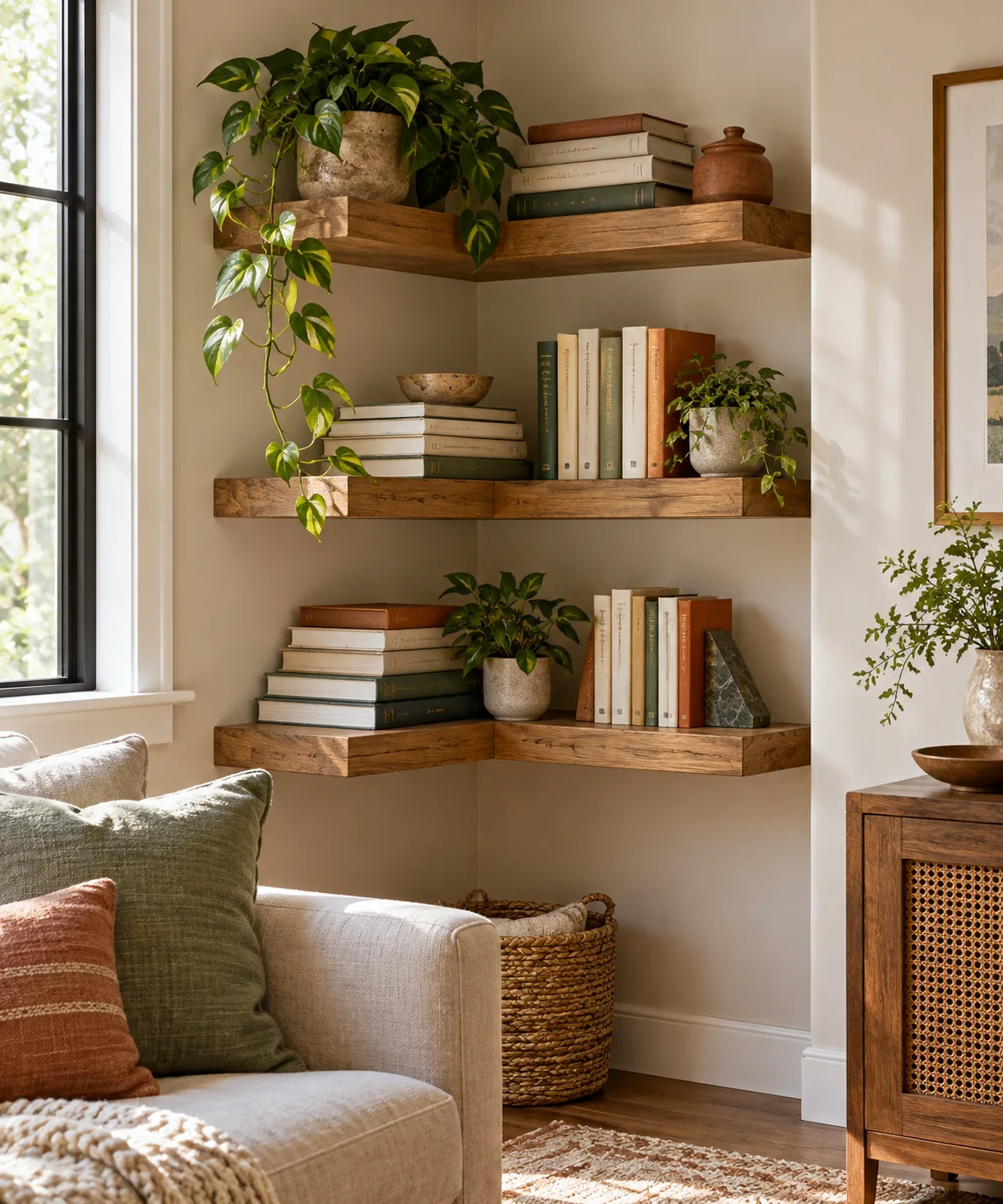
Assessing Wall Mounting and Weight Limits
Before styling any floating corner shelf, review the manufacturer’s documentation for maximum weight capacities and verify how the unit is mounted. Floating corner shelves vary widely in construction, ranging from concealed steel rods fastened into wall studs to lightweight brackets secured only into drywall anchors. Never assume a corner shelf can support heavy loads simply because it rests against two walls. Keep total weight conservative, distribute books thoughtfully, and ensure the shelf was installed according to instructions suited to your specific wall type before adding stacks of hardcovers.
Executing a Tapered Arrangement
Transition book heights gradually from the interior wall junction toward the exposed outer edge of the shelf. Place taller reference volumes or hardcovers closer to the wall angle, moving toward standard trade paperbacks in the midsection and thin notebooks or pocket editions near the outer border. This descending silhouette follows the corner line into the room, reducing visual obstruction in narrow areas. The tapered transition preserves accessible sightlines, helping tight rooms feel more spacious compared to shelves filled uniformly across their full span.
Incorporating Low Horizontal Base Stacks
In place of continuous vertical rows, consider using small horizontal stacks resting securely in the corner intersection. Laying two or three medium volumes flat provides a stable display base that does not require standalone bookends to stay upright on open-sided shelving. The top surface of the horizontal stack offers a neat surface for a lightweight decorative item, such as a small ceramic tray or compact travel souvenir. Keep stack heights modest so volumes remain easy to remove without disturbing upper items.
Maintaining Perimeter Margins and Clearances
Floating corner units often border high-traffic areas, room doorways, or window frames where loose or protruding items can be brushed against accidentally. Recess book spines, stacks, and accessories back from the exposed outer edges rather than letting corners or covers overhang. Avoid displaying spherical objects or unstable vessels that could roll or shift if the shelf experiences vibration. Establishing a modest visual margin along the perimeter keeps the arrangement looking deliberate while minimizing accidental contact in tight quarters.
Distributing Visual Weight Across Multiple Tiers
When styling a stacked series of corner shelves, alternate the arrangement pattern across levels to maintain visual interest. For instance, place a vertical tapered sequence on one level and a low horizontal stack with an open perimeter on the next. Place denser, visually heavier groupings on lower shelves to anchor the installation, reserving higher shelves for more open layouts with lighter paperbacks. Observing the overall grouping from across the room helps you spot uneven clutter and make reversible adjustments.
YOUR STARTING POINT
A little checklist.
Original editorial guidance. Images are AI-generated concepts, not photographs of completed projects. Our sources and approach.
Questions to consider
Why should heavier books be positioned away from the outer edge?
Placing heavier items near the outer edge increases downward leverage on the shelf's mounting points and can make the unit look visually top-heavy. Positioning substantial books closer to the wall corner improves visual balance and keeps the open edge unobstructed.
How much weight can a floating corner shelf safely support?
Weight capacity varies significantly based on shelf dimensions, materials, and whether mounting brackets are anchored into wall studs or hollow drywall. Always consult the manufacturer's specified weight limit and mounting instructions rather than estimating capacity by eye.
What decorative accents work best on tapered corner shelves?
Choose compact, flat-bottomed accents such as small ceramic dishes, unglazed stoneware catchalls, or low wooden trays. Ensure objects have stable bases, avoid round rolling items, and keep accents proportional to the available shelf depth.