Bookshelf Styling · THE GUIDE
Style Floating Wall Picture Ledges as Space-Saving Book Displays
Narrow hallways and tight transition corridors often remain underutilized because standard floor bookcases obstruct walking paths. Installing shallow picture ledges vertically up a bare wall creates an impactful front-facing library display without surrendering valuable floor area. By showcasing cover art rather than hidden spines, this layout transforms circulating reads into dynamic wall features. Success depends on calculating appropriate ledge depth, establishing consistent vertical rhythm, and balancing weight across tiers. A thoughtful approach ensures your corridor remains navigable while providing a functional, rotating stage for current reading materials and visually compelling publications.
Jump to the checklist ↓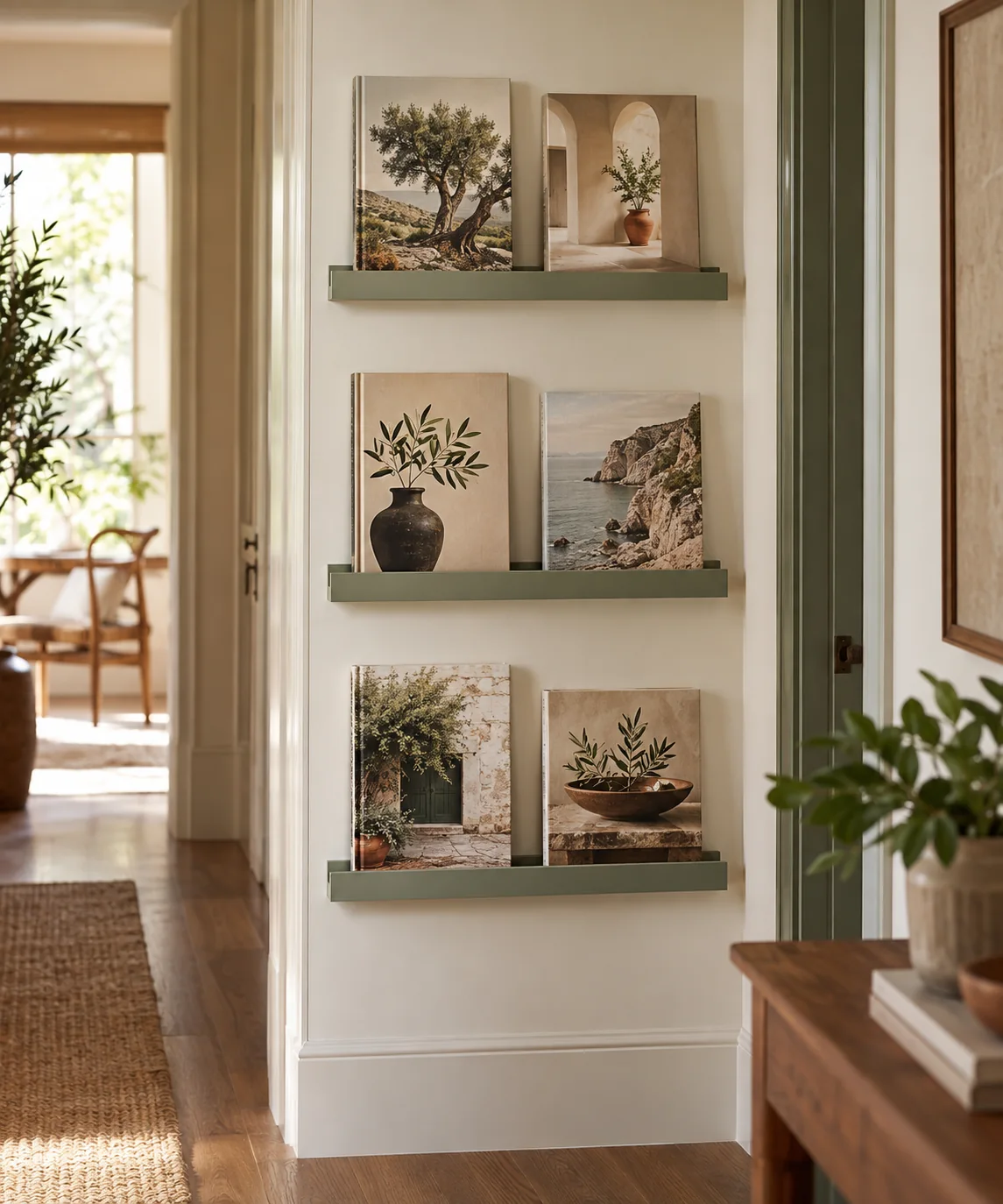
Calculating Hallway Clearance and Depth
Hallways require unobstructed movement, meaning any wall projection must respect everyday pedestrian traffic. Choose picture ledges with a usable depth between two and four inches to prevent bumped shoulders or snagged clothing. Before committing to a layout, test the physical corridor clearance by holding your thickest anticipated art book against the wall. Ensure the walkway retains comfortable passage width according to your household needs. Keeping the overall profile shallow guarantees that the vertical arrangement functions as an architectural enhancement rather than a physical obstacle.
Determining Vertical Spacing and Proportions
Stacking multiple ledges vertically creates an intentional column that draws the eye upward. Measure the height of your tallest display books and add at least three to four inches of clearance above them. This extra gap allows hands to lift volumes in and out without scraping the shelf above. A three-tier or four-tier arrangement generally balances visual proportion on standard eight-foot walls. Maintain uniform vertical gaps between ledges to achieve an orderly gallery aesthetic that anchors the corridor space cleanly.
Selecting and Rotating Forward-Facing Covers
Front-facing ledges highlight graphic typography and illustration, making cover selection an integral part of styling. Choose titles with complementary color palettes, balancing bold graphic jackets with quieter linen or paper covers to avoid visual overstimulation. Limit each ledge to two or three books placed side by side rather than overlapping covers excessively. Periodically rotate titles to reflect seasonal reading habits or personal interest shifts, which refreshes the hallway decor without requiring new decorative purchases or wall reconfigurations.
Managing Leaning Angles and Volume Weights
Because picture ledges feature a raised front lip rather than deep side brackets, books must rest at a slight back-leaning angle. Place hardcovers or sturdy paperbacks on the ledges, as excessively floppy magazines can slump forward over the lip. If a thin volume slides, nestle it behind a heavier, rigid book to stabilize its base. Avoid overloading any single tier with multiple heavy coffee table tomes; distribute weight evenly across the column to maintain structural security and visual equilibrium.
Routine Maintenance and Page Care
Shallow wall displays expose book surfaces directly to ambient household dust and direct sunlight. Position your ledges away from windows where ultraviolet rays could fade cover dyes over time. Weekly maintenance involves running a soft microfiber duster along the top page edges and across the shelf lip where dust collects quickly. Check paperbacks occasionally to ensure humidity has not warped covers, swapping out resting books to keep their bindings flat, square, and well-preserved.
YOUR STARTING POINT
A little checklist.
Original editorial guidance. Images are AI-generated concepts, not photographs of completed projects. Our sources and approach.
Questions to consider
How deep should a hallway picture ledge be?
A usable shelf depth of two to three and a half inches accommodates standard art books and paperbacks comfortably while keeping the profile trim enough to prevent contact with passersby in narrow traffic corridors.
Can paperback books sit upright on picture ledges?
Paperbacks with firm spines stay upright easily, but thin or oversized softcovers may curl forward. Back them against a rigid hardcover or select books with substantial cardstock covers to maintain a clean upright lean.
How do I prevent displayed books from tipping forward?
Choose ledges with a front lip measuring at least half an inch tall. Rest the base of each book firmly against the back edge so the volume leans slightly backward against the wall surface.