Indoor Plant Styling · THE GUIDE
Style High Living Room Shelves with Cascading Foliage
High living room shelving often feels detached from the rest of an interior, functioning as dead space or accumulating forgotten knickknacks. Introducing trailing houseplants to upper ledges draws the eye upward, breaking the rigid geometry of horizontal planks and adding soft vertical movement to plain walls. Long cascades of greenery visually connect high storage with mid-level furniture, grounding the entire wall composition. By selecting reliable trailing cultivars, managing pot weight, and planning accessible maintenance routines, you can cultivate an overhead canopy that enriches living areas while keeping foliage healthy and surfaces clean.
Jump to the checklist ↓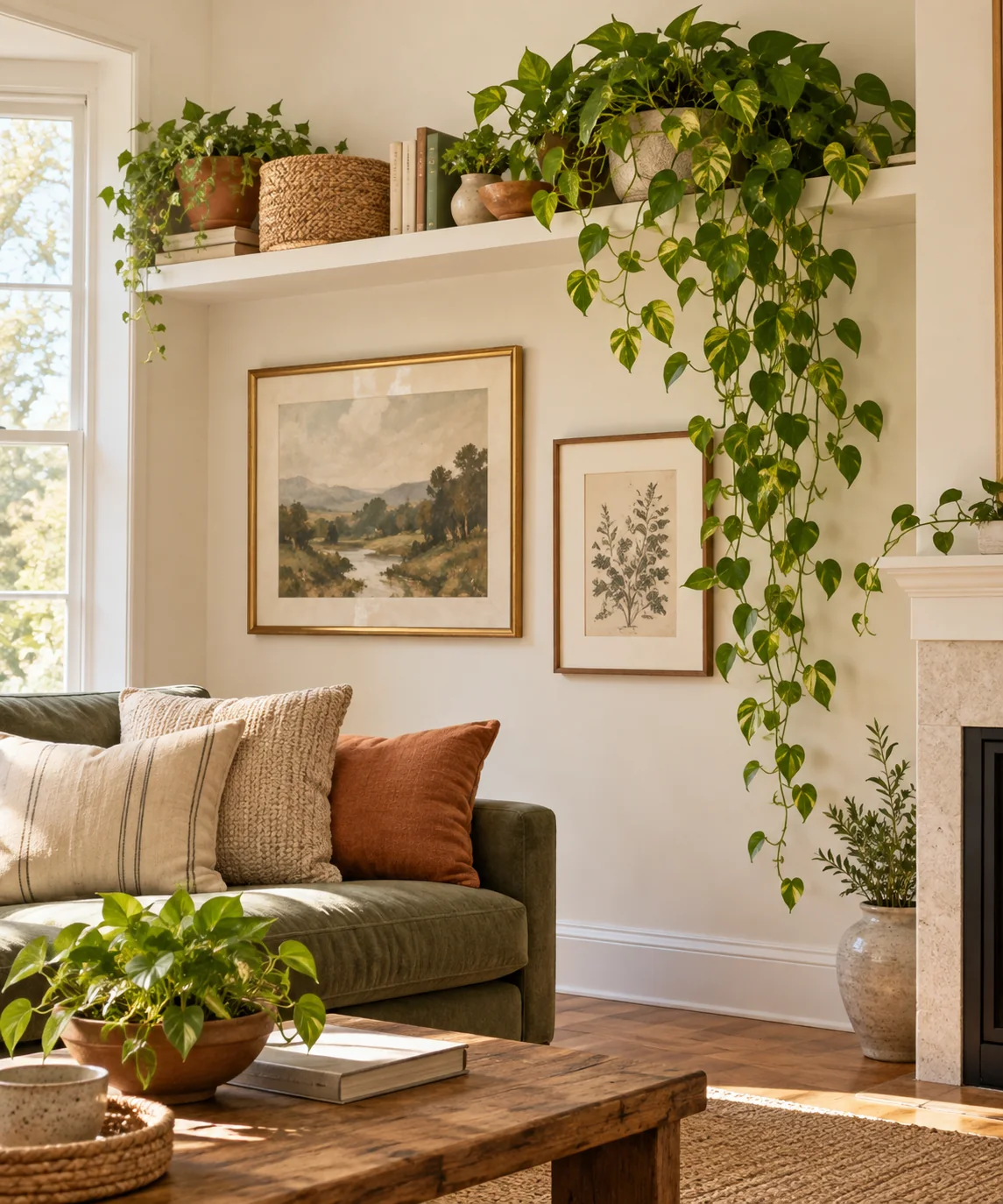
Assessing Shelf Capacity and Overhead Access
Before placing planters on high shelving, consult the manufacturer's published weight limits and check the wall anchor specifications. Overhead ledges must safely support the combined weight of containers, saturated potting medium, and mature foliage without stressing shelf brackets or fasteners. Ensure there is sufficient vertical clearance above the pot rim so air circulates without trapping warm ceiling air and you can reach the soil comfortably with a watering vessel. Keep arrangements uncluttered so inspecting soil moisture and foliage health remains straightforward without dislodging neighboring items.
Selecting Containers for High Placements
Upper elevations benefit from durable, lightweight planters such as composite resin, glazed plastic, or thin spun metal that minimize static dead load on brackets. When using decorative outer pots without drainage holes, place the plant in a standard plastic nursery pot fitted with a snug internal drip saucer or liner. This double-pot approach prevents excess water from running over shelf surfaces or leaking down walls. Choose containers with broad, stable bases to prevent tipping or shifting as trailing foliage grows and shifts weight toward the outer shelf edge.
Directing Trailing Runners and Focal Points
Position trailing stems so they drape naturally across shelf edges without obstructing lower decor or functional fixtures. Guide long runners gently around framed artwork, ceramic bookends, or architectural trim rather than allowing dense foliage to drape blindly over underlying objects. If you wish to guide individual vines along a horizontal span, use gentle, non-destructive cord ties or loose shelf brackets rather than puncturing finishes. Balancing a trailing variety on one side of a shelf with upright objects on the opposite end creates a visually stable composition.
Monitoring Light Levels and Foliage Health
Upper wall elevations often receive weaker ambient light than mid-wall surfaces because daylight from windows slants downward across living spaces. Select trailing species known to tolerate moderate indirect light, such as pothos or heartleaf philodendron. Watch for signs of low light over time, including stretched stems, elongated internodes, or undersized leaves. If growth becomes sparse, prune back spindly runners to stimulate fuller growth closer to the base, and occasionally rotate the pot to a brighter, accessible location to maintain foliage vigor.
Safe Watering and Maintenance Workflows
High shelf maintenance requires a steady, deliberate routine to prevent spills and avoid straining to reach containers. Always use a wide-legged, slip-resistant step stool placed on an even floor rather than stretching from furniture. Check soil moisture directly by lifting the inner pot or feeling the top layer of substrate, keeping in mind that ceiling pockets can be warmer and dry out at different rates than floor-level plants. Removing the inner liner pot to water and drain fully over a basin remains the cleanest way to prevent water damage to high woodwork.
YOUR STARTING POINT
A little checklist.
Original editorial guidance. Images are AI-generated concepts, not photographs of completed projects. Our sources and approach.
Questions to consider
How do I water plants located on high shelves without making a mess?
Lift the nursery pot out and water it thoroughly in the sink, allowing complete drainage before returning it overhead. Alternatively, use a narrow long-spout watering can with an integrated internal saucer.
What happens if trailing vines grow too long for the wall space?
Trim long runners cleanly below a leaf node using sharp shears. Pruning prevents floor contact, keeps pathways clear, and stimulates lateral growth, creating a bushier silhouette at the shelf line.
How can I tell if a high shelf receives adequate light?
Observe new growth over several weeks. If leaves emerge smaller, spacing between leaf nodes widens significantly, or lower foliage fades, the shelf receives insufficient natural light for sustainable growth.