Household Reset Routines · THE GUIDE
Sunday Balcony Railing Planter Deadheading and Soil Aeration
Balcony railing planters require steady upkeep to manage wind exposure, rapid surface drying, and tight soil volumes, but elevated maintenance must always prioritize perimeter safety. Before tending plants, confirm that property management policies and local building codes permit rail-mounted containers, as many jurisdictions restrict exterior attachments above walkways. A structured Sunday maintenance routine keeps allowable container boxes neat without spilling debris or water over the balcony edge. By spending focused minutes trimming spent blooms and loosening crusted topsoil from the interior side of the barrier, you maintain container health while respecting building regulations and pedestrian safety below.
Jump to the checklist ↓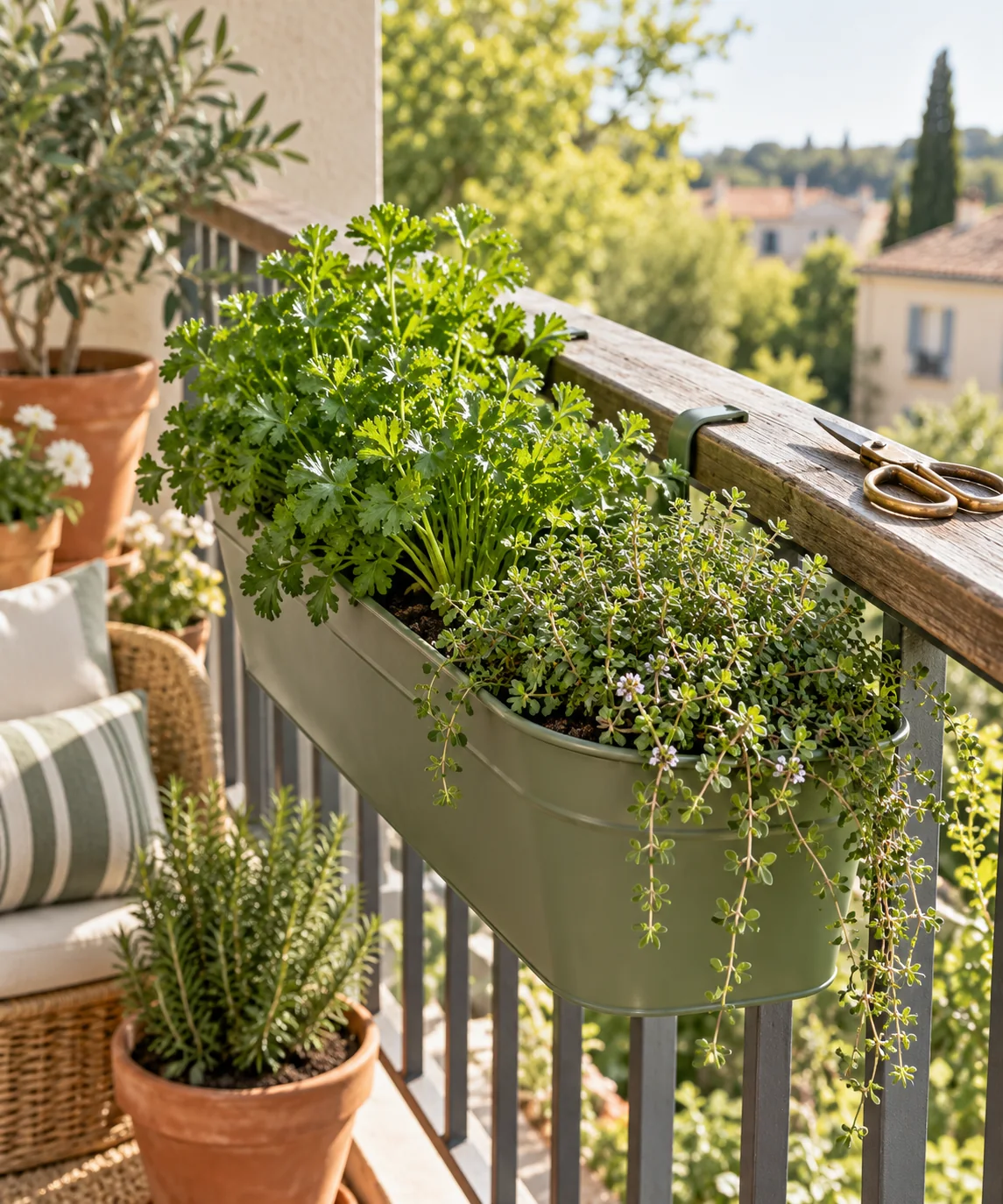
Confirming Regulations and Workspace Safety
Before beginning any planter care, verify that railing-hung containers are permitted under your building rules, lease terms, and local municipal bylaws, which frequently regulate or prohibit exterior balcony attachments to protect ground-level pedestrian traffic. Set a shallow catch tub directly on the balcony floor beneath your working zone to gather loose leaves and soil crumbs. Place all pruning snips, hand forks, and brushes inside a floor-level caddy rather than resting items on the balcony ledge where elbows or wind could knock them over. Work solely from the interior side of the railing to maintain your physical center of balance without leaning outward.
Deadheading Spent Blossoms Inward
Use compact, sharp floral snips to cut spent flower heads just above the nearest set of leaves or active growth nodes. Avoid tugging on tough stems by hand, which can loosen shallow root anchors in container potting mix or dislodge lightweight planters from their positions. Clip each stem cleanly and guide the severed bloom directly into your floor bucket rather than allowing debris to flutter downward or accumulate on the soil surface. Decaying petals left against plant stems can hold excessive surface moisture against crowns during humid stretches, so working methodically along the inner planting line keeps growth clean and visible.
Gentle Surface Soil Aeration
Frequent surface watering under exposed conditions often forms a dense crust on topsoil, causing subsequent water to run off toward planter edges rather than absorbing evenly into the root zone. Take a blunt, narrow three-prong hand cultivator or kitchen fork to gently loosen the top quarter-inch of potting mix. Avoid applying downward body weight or forceful digging pressure that could stress planter brackets or railing hardware. Keep your cultivation shallow and light around plant crowns to avoid tearing delicate surface feeder roots while permitting moisture and ambient air to infiltrate dry crusts.
Addressing Perimeter Gaps and Soil Shrinkage
Potting mixes naturally contract as moisture evaporates and organic particles settle, leaving distinct gaps between the soil block and container walls. These peripheral fissures allow irrigation water to pour straight through drainage holes before saturating the center. Inspect the interior edges of permitted railing planters and lightly crumble loose surface mix into any open side voids, or top-dress with a modest scoop of fresh potting soil. Level the surface smoothly with your hand while keeping all loose substrate well below the container rim to prevent overflow during rain or watering.
Post-Maintenance Sweeping and Tool Storage
Finish the maintenance routine by cleaning any stray soil particles or trimmed foliage from the balcony floor and exterior planter surfaces. Use a small, stiff-bristled hand broom and dustpan to collect dry matter before wind carries debris across neighboring units or down to ground level. Never use open hose sprays to wash planter ledges or balcony slabs, as falling wastewater can violate building codes and impact lower balconies. Wipe tool blades dry with a cloth and store them in an interior utility bin to prevent corrosion and accidental drops.
YOUR STARTING POINT
A little checklist.
Original editorial guidance. Images are AI-generated concepts, not photographs of completed projects. Our sources and approach.
Questions to consider
Are railing-mounted planters permitted on all residential balconies?
No. Many multi-family properties, homeowner associations, and municipal codes strictly prohibit hanging planters on balcony railings due to the risk of falling objects injuring people below. Always check lease terms, association bylaws, and local regulations before purchasing or positioning rail-mounted containers.
How should spent flowers and pruned foliage be managed on a balcony?
Keep a collection bucket or compost caddy on the balcony deck directly beside your feet. Deposit all trimmings immediately into the container rather than letting debris rest on the railing or soil, which prevents wind from blowing plant material onto adjacent units or ground walkways.
How deep should surface soil aeration go in shallow railing boxes?
Limit aeration to the upper quarter-inch of potting mix using a handheld fork with delicate, shallow motions. Deeper cultivation risks damaging fine feeder roots and puts unnecessary downward pressure on planter hardware and balcony railings.