Household Reset Routines · THE GUIDE
Sunday Prep Surface Clearing on a Rolling Kitchen Island
A rolling kitchen island provides crucial work surface in a compact eat-in layout, but it frequently becomes a drop zone for mail, pantry overflow, and miscellaneous household items throughout the week. Reclaiming this mobile butcher block surface during a Sunday reset sets up efficient, stress-free weekday meal preparation. By systematically clearing non-kitchen clutter, scrubbing the wooden surface, and organizing the open shelving underneath, you transform an overloaded cart into an agile culinary station. Maintaining dedicated clearances around the island allows smooth cart movement between dining spaces and sink runs as cooking needs shift.
Jump to the checklist ↓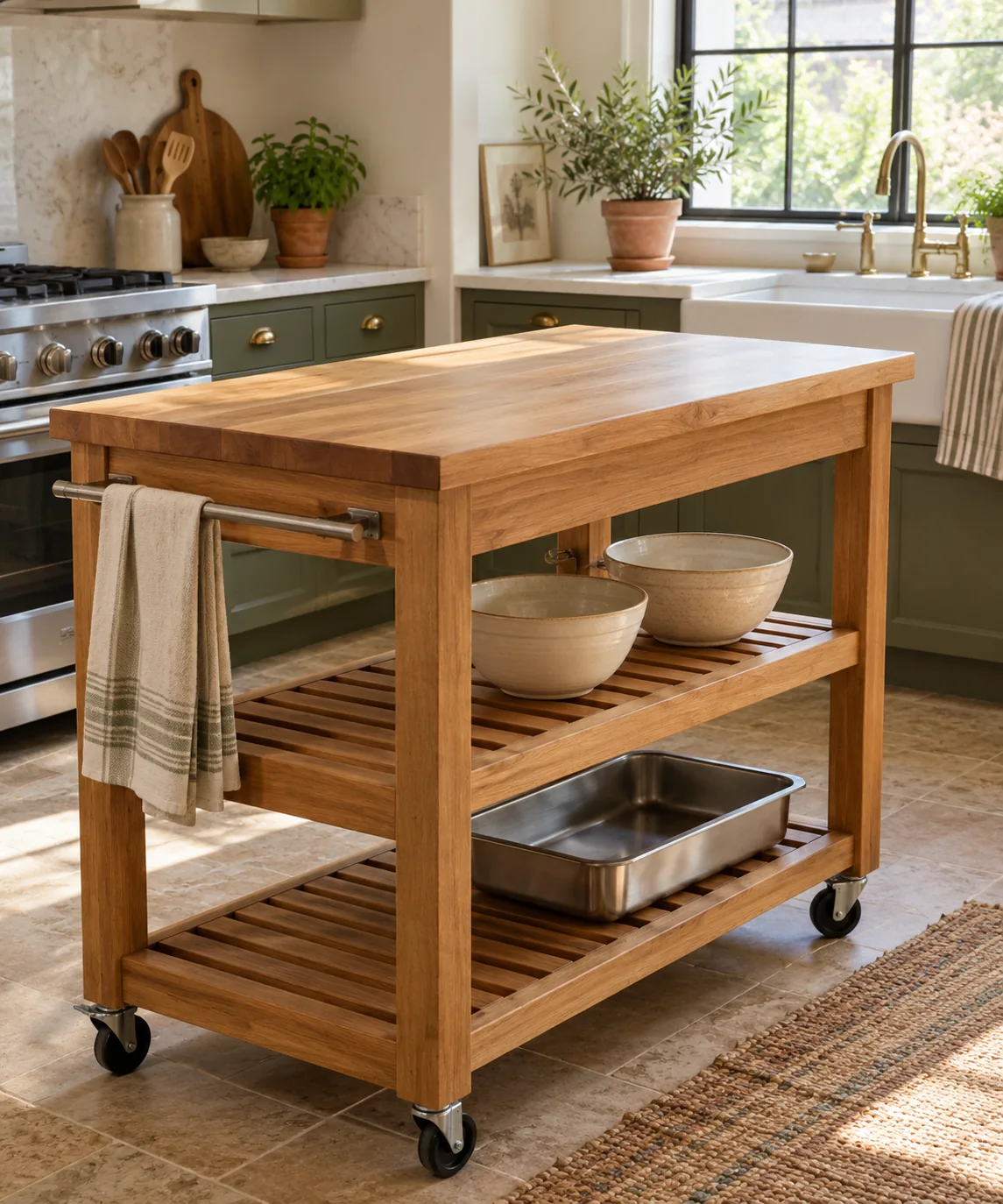
Relocating Non-Kitchen Drop-Zone Clutter
Begin the Sunday routine by stripping the island of all non-culinary items that accumulated during the week. Sort through rogue mail, keys, notebooks, and packaging, returning them to entry consoles or desk drawers. Avoid simply transferring clutter from the cart top to nearby dining chairs or base counters. When items lack designated homes, place them into a small staging basket to carry out of the kitchen entirely. A completely clear butcher block cart top establishes the visual and functional foundation for practical food preparation.
Deep Cleaning and Conditioning the Butcher Block
Clear surface debris with a dry brush or plastic bench scraper, taking care not to gouge the wood grain. Wash the butcher block using a soft sponge dampened with warm water and gentle dish soap, avoiding excessive soaking that causes timber warping. Wipe the surface dry immediately with a clean cotton towel. If the wood appears dull or dry, apply food-grade mineral oil following the grain, allowing it to penetrate before wiping away excess. Never apply vegetable oils, which turn rancid over time.
Organizing Under-Cart Storage Shelves
Open lower shelves on mobile islands quickly gather dust and haphazardly stacked pans. Remove all lower items during the reset, wiping slatted shelves clean with a damp microfiber cloth. Return only essential weekday prep equipment, such as stainless steel mixing bowls, a colander, or sheet pans. Store heavier cast iron or ceramic cookware on the bottom shelf to keep the cart's center of gravity low and stable. Group smaller tools into shallow wire or wood bins to prevent items from falling between slats.
Wheel Lock and Mobility Path Check
Mobile islands rely on smooth maneuverability to serve compact eat-in kitchens effectively. Inspect the cart casters on Sunday to clear away caught pet hair, thread, or floor debris that obstructs rotation. Test wheel locks to ensure they engage firmly, while recognizing that mobile carts retain slight mechanical play compared to fixed cabinetry. Plan the cart's home parking position to leave sufficient clearance around dining furniture and kitchen cabinetry so doors, ovens, and drawers open fully without colliding with the frame.
Setting the Weekday Prep Baseline
Finish the island reset by leaving the top surface completely bare rather than pre-loading it with decorative trays or appliances. If small prep items like salt cellars or pepper mills live on the island, tuck them onto the top corner or along an attached side rail. Keeping most of the wood top empty provides instant staging space for Monday morning breakfast or evening vegetable chopping. This discipline prevents the cart from re-accumulating clutter before the workweek even begins.
YOUR STARTING POINT
A little checklist.
Original editorial guidance. Images are AI-generated concepts, not photographs of completed projects. Our sources and approach.
Questions to consider
Can I leave a microwave or toaster oven on my rolling island?
Only place appliances on a mobile island if the manufacturer approves it and the cord does not stretch taut across pathways. Running appliances on mobile surfaces requires locking casters securely to prevent shifting during operation.
How do I protect the cart top if using it for messy prep work?
Place a large, lightweight composite or plastic cutting board directly on top of the butcher block when slicing raw meat or acidic foods. This preserves the oiled wooden cart surface and simplifies cleanup after meal prep.
What is the best way to clean slatted lower shelves?
Use a narrow vacuum nozzle or dry duster to dislodge crumbs from between the slats, then wipe each slat with a damp microfiber cloth. Dry the wood thoroughly to prevent moisture collection in joints.