Rental-Friendly Decor · THE GUIDE
Suspend Indoor Foliage from a Floor-to-Ceiling Spring Tension Pole
Renting an apartment often limits options for drilling into ceilings to hang planters, leaving bright vertical spaces underutilized. A floor-to-ceiling spring tension pole introduces vertical plant display without requiring anchors, screws, or wall penetrations. By maintaining continuous compressive force between the floor and ceiling, this setup creates a central column for trailing house plants. Successful use requires assessing ceiling suitability, adhering strictly to manufacturer load ratings, and following a controlled watering routine to protect indoor surfaces.
Jump to the checklist ↓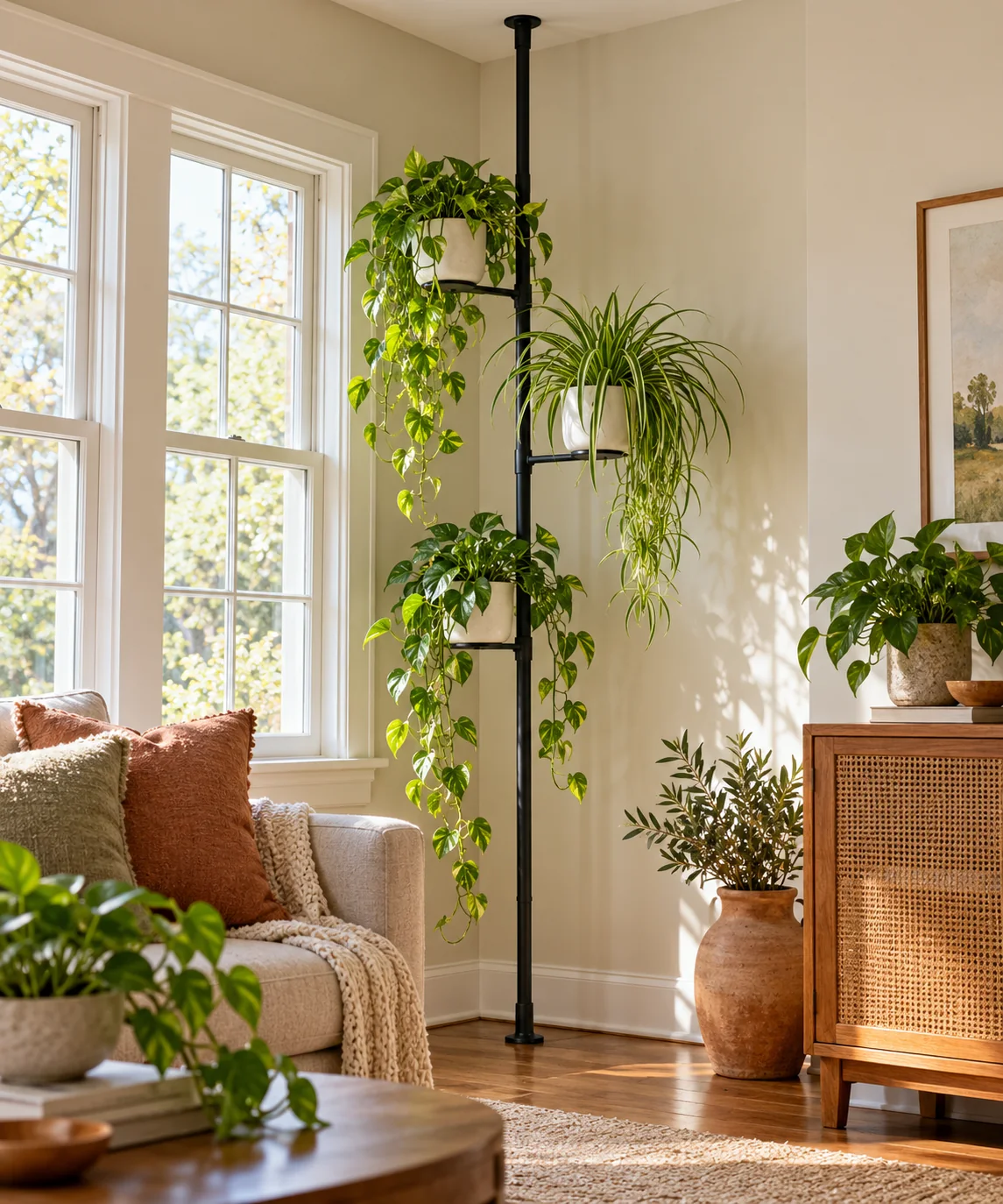
Assessing Ceiling and Floor Suitability
Before setting up a tension pole, check the condition and construction of the contact surfaces. Spring tension poles require solid, unyielding planes to maintain stable pressure. They are generally unsuitable for suspended acoustic ceiling tiles, decorative false beams, or unreinforced ceiling panels that can deflect under upward load. Position the base on clean, level flooring away from high-traffic doorways. Align the rod vertically using a standard level, as out-of-plumb angles weaken friction contact and increase the risk of displacement.
Selecting Containers and Checking Load Limits
Tension poles rely entirely on friction and component strength, so container selection must prioritize low weight. Choose lightweight plastic or resin pots rather than heavy stoneware or terracotta. Trailing varieties like pothos, heartleaf philodendron, or spider plants thrive in modest soil volumes while providing full foliage. Always verify the manufacturer maximum weight allowance for both individual arms and the entire pole, factoring in the added weight of wet potting mix immediately after watering.
Balancing Arms and Center of Gravity
Arranging planter arms symmetrically around the central rod prevents uneven lateral forces. Position brackets in a staggered spiral rather than clustering containers on a single side, which introduces tipping leverage. Keep larger, heavier pots on the lower tiers to maintain a low center of gravity. Higher positions are best reserved for lighter containers with cascading stems that do not obstruct access to lower tiers.
Managing Moisture and Protecting Finishes
Elevated indoor plants require proactive spill prevention to avoid staining flooring or damaging the tension mechanism. Never allow drainage runoff to flow down the central shaft or drip onto wood finishes below. Use pots with integrated, leak-tested catch trays, or lift individual pots down to water them thoroughly over a sink. Allow excess water to drain fully before returning containers to their mounting rings.
Monitoring Stability and Environmental Factors
A friction-fit tension pole responds to physical contact and minor surface movement. Temperature swings and seasonal humidity changes can cause slight expansion or contraction in interior building materials. Perform regular checks by gently testing the pole for firmness and verifying that tension remains tight. Keep the installation clear of swinging doors, active heating vents, and areas accessible to pets or young children.
YOUR STARTING POINT
A little checklist.
Original editorial guidance. Images are AI-generated concepts, not photographs of completed projects. Our sources and approach.
Questions to consider
Can I install a tension pole on carpeted floors?
Carpet pile and padding compress under constant tension. If installing over carpet, check the vertical tightness after several days and adjust tension as the pile settles beneath the base plate.
How can I prevent the top plate from marking the ceiling?
Keep the ceiling surface and rubber pad clean and dry. Avoid inserting cloth, felt, or cardboard between the pad and ceiling, as loose materials reduce friction and create a serious slip hazard.
How many plants can one pole safely hold?
Capacity depends entirely on the specific model design and bracket construction. Consult the product manual for maximum container limits and overall load thresholds, accounting for soil moisture.