Indoor Plant Styling · THE GUIDE
Suspend Kokedama Moss Balls in an Unused Window Alcove
Deep window alcoves often sit vacant because narrow framing prevents the placement of conventional furniture or wide plant stands. Suspending kokedama—living root balls wrapped in sheet moss and binding cord—transforms these awkward recesses into vertical green features. Utilizing translucent monofilament line creates the illusion of floating botanical spheres, maximizing natural light penetration while leaving base sills and walking pathways clear. This Japanese-inspired presentation highlights plant architecture from every angle. Successful execution requires evaluating structural clearance, selecting resilient cultivars suited to ambient drafts, and establishing a methodical watering routine that prevents water droplets from marking interior trim.
Jump to the checklist ↓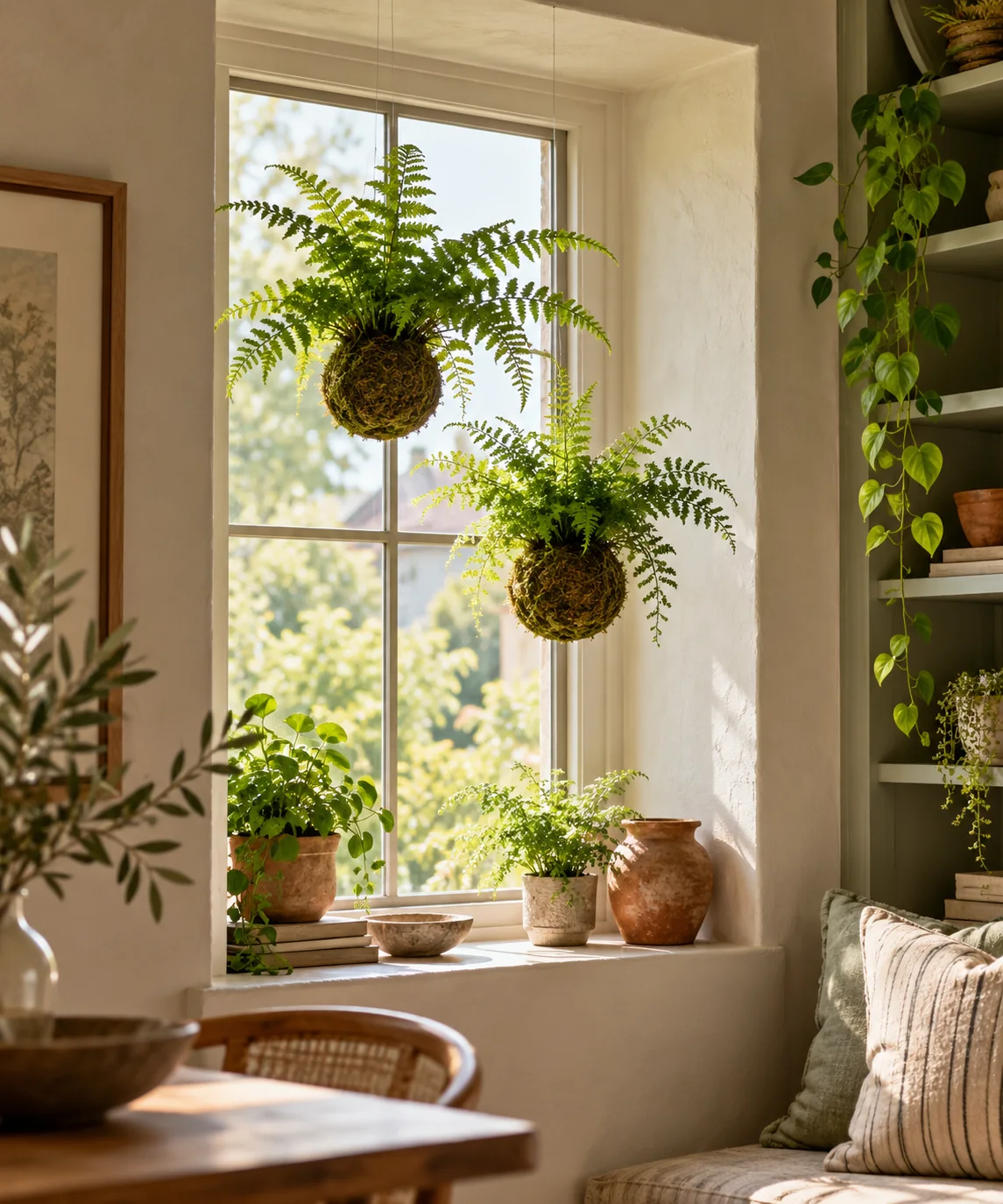
Evaluating Alcove Depth and Spatial Clearance
Inspect the alcove to ensure it offers sufficient physical space for suspended items clear of moving window sashes and blinds. Position the moss balls so foliage does not brush against the glass panes or side jambs, as exterior glass transfers outdoor temperature extremes that can scorch or chill sensitive leaves. Window hardware and latches must remain fully accessible for routine operation and emergency egress. Observing natural lighting angles throughout the day will also help determine how many plants can comfortably share the alcove without shading one another.
Selecting Compatible Moisture-Loving Plant Species
Choose plant varieties whose root systems tolerate the confined environment of a moss-wrapped root core and adapt to indoor household humidity levels. Boston ferns, asparagus ferns, rabbit's foot ferns, and trailing philodendrons generally perform well in kokedama displays. Their fine root systems help hold the damp potting medium together as they establish. Plants with delicate, moisture-sensitive leaves or those requiring prolonged bone-dry dormancy periods tend to decline rapidly, leading to shedding moss and deteriorating core structure.
Suspension Planning and Line Selection
Select hanging line and ceiling attachment points that account for the substantially increased weight of thoroughly saturated soil and moss. Monofilament line, coated wire, or synthetic cord should be rated well above the anticipated wet weight of the plant assembly, taking into account hardware manufacturer specifications and ceiling substrate limitations. Weave the suspension line securely around the core binding cords rather than relying solely on surface moss fibers. Staggering multiple plants at varied drop heights allows each sphere adequate breathing room and balanced exposure to daylight.
Managing Hydration via Submersion Routines
Kokedama require hands-on hydration away from the window alcove to prevent water dripping onto interior surfaces. Establish a consistent routine by taking down each sphere and placing it into a basin of room-temperature water until the ball feels heavy and thoroughly moistened. After soaking, gently press the moss ball with both hands to expel free-running moisture. Set the sphere over a draining rack or tray until it has completely finished dripping before returning it to its overhead suspension point.
Mitigating Air Drafts and Temperature Swings
Window alcoves frequently experience fluctuating temperatures caused by direct solar radiation, seasonal glass conduction, and nearby heating or cooling registers. Check that adjacent window frames seal properly and redirect any forced-air vents that blow directly into the alcove cavity. Continuous dry airflow quickly parches exterior sheet moss, causing the outer casing to brown and shed. If ambient indoor air is dry, light surface misting between submersion waterings can help maintain superficial moss hydration without replacing deep core soaking.
YOUR STARTING POINT
A little checklist.
Original editorial guidance. Images are AI-generated concepts, not photographs of completed projects. Our sources and approach.
Questions to consider
How do you know when a suspended kokedama needs watering?
Lift the kokedama slightly from underneath to evaluate its weight. A noticeably lightweight sphere indicates that the internal soil core has dried out, signaling that it is ready for a thorough water submersion.
Does sunlight weaken clear monofilament suspension line over time?
Yes, ultraviolet radiation from window exposure gradually degrades standard monofilament, causing it to become brittle and lose tensile strength. Periodically inspect the line for clouding or stiffness, and replace the suspension cords before material fatigue occurs.
How can you protect window sills and trim from dripping water?
Always remove the kokedama to a sink or utility basin for watering and allow it to drain completely on a drying rack. You can also position a temporary tray beneath the sphere for the first hour after rehanging to catch any lingering droplets.