Pantry Organization · THE GUIDE
Tackle Deep Pantry Shelves with Pull-Out Wooden Bin Trays
Deep pantry shelves frequently hide everyday food staples behind front-row items, resulting in duplicate purchases, cluttered surfaces, and expired ingredients lost in dark corners. By introducing long, narrow wooden bin trays directly onto fixed lower shelves, you create accessible drawer-style zones without invasive carpentry. These modular wooden units pull forward smoothly across the shelf surface, bringing rear contents immediately into view. Evaluating your existing cabinet depths, grouping items logically by weight while respecting shelf manufacturer limits, and adding simple non-abrasive glider pads transforms dead back-row space into a practical, repeatable storage system that keeps dry staples organized.
Jump to the checklist ↓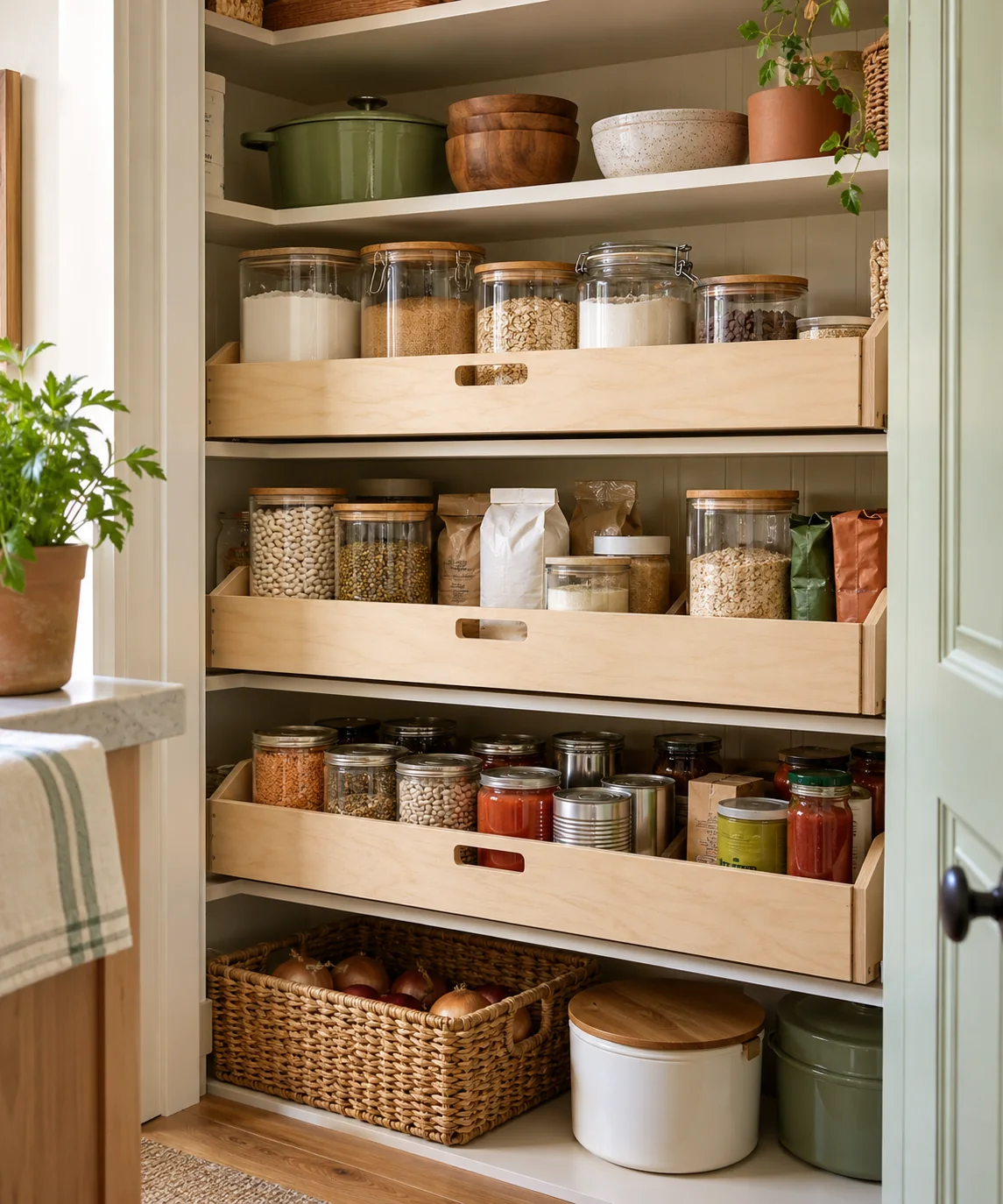
Assessing Shelf Depth and Clearances
Begin by measuring the precise depth and width of each shelf, paying close attention to door hinges, face frames, and latch hardware. While deep base cabinets often exceed twenty inches in depth, usable interior clearance depends on door swing clearances and interior fittings. Measure the distance from the back wall to the inside of closed doors, subtracting sufficient margin so the bins will not strike the door or snag on hardware. Also verify side-to-side clearance to allow fingers to grip bin sides easily, and check vertical clearance against your tallest dry goods containers to ensure items slide out without catching on the shelf above.
Categorizing Dry Staples and Managing Weight
Group your pantry inventory into distinct categories before placing them into bins. Dedicate separate trays to dense baking essentials like flour jars, sugar bags, and leavening canisters, while placing lighter boxed goods or snacks in others. Check the manufacturer's load rating for your shelving, especially on adjustable shelves held by small support pins, before loading substantial quantities of canned goods or bulk grains. Keep open ingredient sacks inside sealed glass or plastic containers within each wooden tray to keep dry powders contained, making spills simpler to manage.
Applying Protective Gliders for Smooth Motion
Sliding bare wood across painted or varnished cabinetry can scuff surfaces over time and increase resistance. Affix adhesive felt pads or smooth high-density polyethylene furniture glides along the bottom edges of each wooden tray. These low-profile gliders reduce surface abrasion, soften movement noise, and help moderately loaded wooden bins slide forward across smooth shelf surfaces. Before sticking the pads in place, wipe the tray bottoms clean of dust and debris to promote reliable adhesive bonding. Inspect and replace the pads periodically if dust accumulation or wear reduces their glide.
Establishing Visual Boundaries and Labels
Wooden trays with solid side walls keep bags and packages upright, preventing narrow packages from slumping over and blocking rear access. Maintain clear visual boundaries by affixing removable cardstock or metal clip-on labels to the front lip of every unit. Designate each tray by culinary category, such as grains, baking supplies, or tinned reserves, rather than assigning them to individual single-use items. This broader classification allows household members to return items to their proper places quickly, maintaining order across varying weekly shopping trips without micromanagement.
Routine Maintenance and Load Balancing
A slide-out bin setup requires simple, periodic care to perform reliably. Inspect tray contents periodically to clear out crumbs and spot-check container seals with a handheld dry brush. Avoid soaking unsealed wood with water or harsh household cleaners; wipe with a lightly damp cloth when necessary and dry promptly to prevent grain swelling. Distribute heavier items evenly across the length of the tray rather than clustering them at the front edge. Keeping the weight centered prevents trays from tipping forward when extended partially forward for item retrieval.
YOUR STARTING POINT
A little checklist.
Original editorial guidance. Images are AI-generated concepts, not photographs of completed projects. Our sources and approach.
Questions to consider
How do I prevent wooden bins from scratching painted or finished shelves?
Attach dense adhesive felt pads or high-density polyethylene furniture gliders to the underside edges of the bins. These pads raise the wooden base slightly above the shelf, minimizing surface contact and reducing friction when sliding the trays.
How should I determine the right bin depth for deep pantry shelves?
Measure from the rear wall to the front shelf edge, then subtract enough depth to clear closed doors, latches, and protruding hinge mechanisms. Testing clearance with a simple cardboard template before buying or building bins helps ensure a clean fit.
Can I stack items inside these deep sliding wooden trays?
Avoid tall stacks inside sliding trays, as repeated forward and backward motion can cause unstable items to tumble. Storing items in a single layer or in uniform, securely nesting containers keeps staples visible and prevents interior jams.