Patio Seating Ideas · THE GUIDE
Tandem Corridor Bench Along Narrow Exterior Siding
Narrow side pathways between townhouse walls, fences, and garden gates are frequently dismissed as mere transit corridors. However, a carefully planned tandem corridor bench can transform a slim, underutilized alleyway into a serene resting spot without interrupting pedestrian flow. By choosing a backless, shallow-depth seat arranged parallel to exterior siding, you preserve the continuous clearance necessary for carrying gardening tools, wheeled bins, or outdoor equipment to the rear yard. Successful integration relies on meticulous ground-level clearance planning, wall-protection strategies, and choosing stable materials suited to linear outdoor spaces.
Jump to the checklist ↓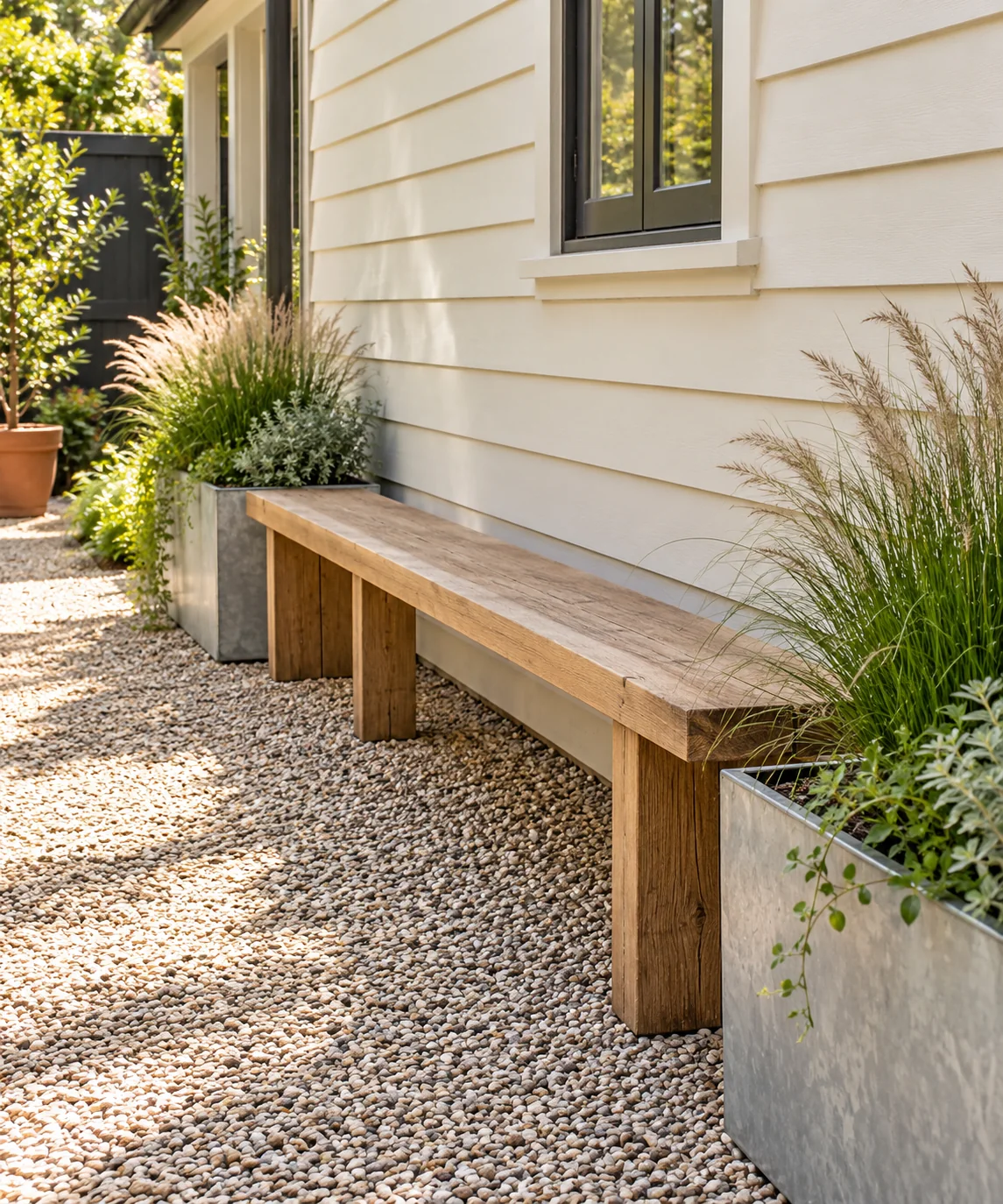
Assessing Pathway Dimensions and Circulation
The practicality of placing seating in a side alley depends entirely on functional transit requirements. Exterior corridors vary widely between properties, and walking space must accommodate regular foot traffic, garden tools, and household service equipment. Rather than relying on generic dimensional formulas, observe how your household uses the walkway. Measure the width of your widest wheeled utility carts or bins, then stage cardboard cartons along the wall to test whether navigating the passage feels natural or restricted before selecting a bench.
Spacing Furniture Relative to Exterior Cladding
Placing any bench directly against residential cladding creates repeated contact points that can scuff, chip, or abrade vinyl, cedar, or composite wall finishes. Maintaining an intentional physical separation between the back of the seat and the wall surface prevents impact wear during everyday use. This setback also simplifies exterior wall cleaning, permits routine visual inspections of siding seams, and keeps resting occupants from leaning their weight directly onto wall panels.
Evaluating Backless Seating Profiles
Backless benches are often practical in narrow side paths because their open profile preserves an uncluttered line of sight. Occupants can sit down or stand up from either direction without navigating armrests or upright backrests that project into shoulder space. Stable rectangular frames or timber plinths that keep feet within the seat's primary footprint help prevent accidental tripping hazards, whereas widely splayed legs can intrude awkwardly into the active walking lane.
Ground Surface Stability on Loose Base Materials
Exterior walkways are frequently finished with gravel, decomposed granite, or unmortared pavers. Loose or uneven surfaces allow furniture legs to settle unequally, resulting in rocking or tilting. Placing flat, solid paver tiles beneath each support point helps distribute weight more evenly over loose aggregate. Check that the bench sits level across its length, adjusting the gravel base beneath the paver pads to achieve firm contact before the seat is used.
Framing with Freestanding Container Plants
A lone bench set against a long exterior wall can feel visually stark. Introducing low, freestanding planters at either end helps integrate the seating into the surrounding garden space while clearly delineating the seating zone. Select sturdy containers that remain stable in gusty conditions, keeping their overall footprint within the depth of the bench so the remaining clear walkway remains open for easy passage.
YOUR STARTING POINT
A little checklist.
Original editorial guidance. Images are AI-generated concepts, not photographs of completed projects. Our sources and approach.
Questions to consider
How do I determine appropriate bench depth for a narrow walkway?
Test comfortable seating depths using a simple board or folding bench against your path. A depth between twelve and fourteen inches generally offers support for temporary resting while keeping pathway intrusion to a minimum.
Will placing a bench near siding damage exterior walls?
A bench can mark or abrade siding if placed in direct contact. Keeping a buffer between the furniture and the exterior wall avoids rubbing, protects surface coatings, and allows room for regular wall maintenance.
How can I ensure wheeled bins still pass smoothly?
Measure your specific utility bins across their widest point, including handles. Compare that measurement against the open path width remaining beside the bench, allowing several inches of margin so maneuvering does not require scraping past furniture.