Kitchen Herb Gardens · THE GUIDE
Tension-Mounted Window Rail for Hanging Herb Pots
Windowsills quickly become crowded when accommodating potted culinary herbs, leaving little space for daily kitchen prep. A tension-mounted window rail utilizes the vertical opening of an existing window frame to create a temporary, reversible display without driving screws into trim or walls. By hanging small, lightweight pots from removable hooks, this approach positions light-demanding culinary greens directly in incoming daylight. The setup keeps sills clear while keeping frequently harvested seasonings accessible. Careful attention to manufacturer hardware specifications, conservative container sizes, and reliable water containment helps maintain a clean, stable indoor setup.
Jump to the checklist ↓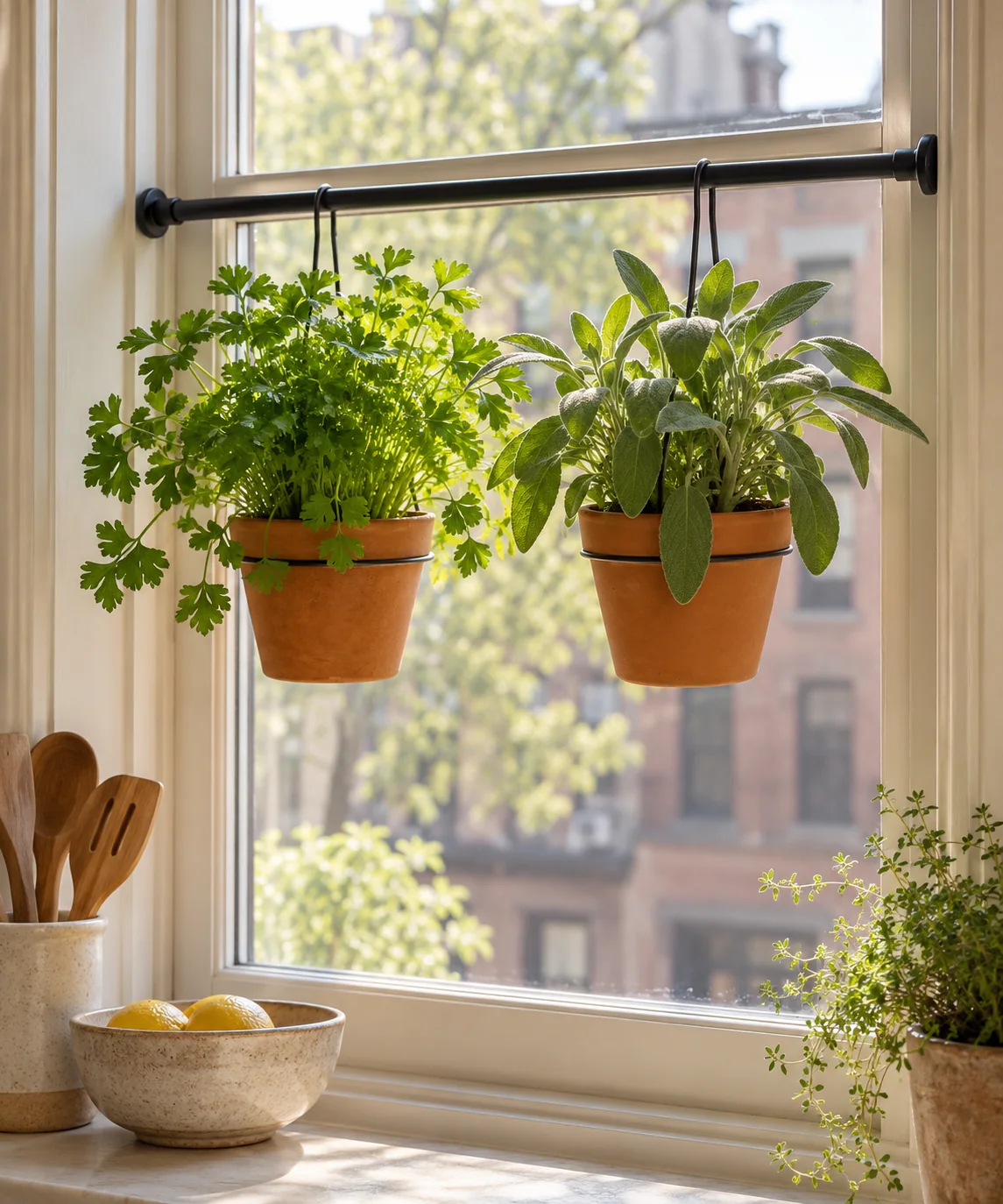
Assessing Window Casing and Hardware Suitability
Before considering a tension rod, inspect the inner window jambs to ensure they are solid, completely flat, and strictly parallel. Friction-based rods depend entirely on constant outward pressure against solid wood or rigid composite trim; soft drywall returns or flexible vinyl tracks can compress or deform, causing the rod to slip. Check the manufacturer's packaging for stated weight thresholds and note whether the hardware is approved for suspended items rather than lightweight sheer drapery. If the frame flexes or the rod lacks non-slip rubberized end caps, a mechanical bracket system is a safer alternative.
Selecting Containers and Managing Moisture
Culinary herbs require aerated potting mix and functional drainage holes, but hanging containers cannot drip freely onto window woodwork or indoor flooring. Pair small, perforated plastic nursery pots with snug-fitting, solid-bottom cachepots, or choose containers with securely attached catch trays. Porous terracotta adds substantial dry and wet weight, so lightweight plastic, resin, or spun aluminum vessels are generally preferred. When watering, lift each inner nursery pot down to the sink and let excess moisture drain completely before returning it to the window rail.
Arranging Heights and Hardware Clearances
Use sturdy steel S-hooks or macrame twine loops to suspend pots at staggered heights across the horizontal span. Varying the hanging drop prevents leaves from tangling and lets sunlight reach lower foliage throughout the day. Confirm that pots hang clear of moving window hardware, sash locks, and blinds to prevent accidental dislodgement when opening the window. Position pots so foliage does not rest directly against the windowpane, as direct glass contact can expose tender leaves to seasonal temperature extremes.
Light Orientation and Plant Selection
Sun-loving culinary herbs like rosemary, thyme, oregano, and flat-leaf parsley benefit from bright exposures found in unshaded south- or west-facing windows. Keep in mind that natural light angles shift across the seasons: lower winter sun penetrates deeply into the room, while high summer sun may cast shadows beneath deep exterior eaves. Place the most light-demanding varieties in the center of the window opening where sun exposure is longest. Rotate pots periodically to encourage balanced, upright growth rather than one-sided leaning.
Routine Maintenance and Hazard Prevention
Friction mountings are vulnerable to subtle shifts caused by thermal expansion, frame contraction, and building vibration. Test the rod's firmness periodically with gentle hand pressure, re-tightening hardware according to manufacturer instructions whenever seasonal humidity changes alter wooden frames. When snipping herbs for cooking, steady the container with one hand to avoid knocking hooks loose. For safety, never position tension-mounted hanging systems above active cooktops, open kitchen ranges, child play areas, or primary emergency exit windows.
YOUR STARTING POINT
A little checklist.
Original editorial guidance. Images are AI-generated concepts, not photographs of completed projects. Our sources and approach.
Questions to consider
Can heavy ceramic pots safely hang on a tension rod?
Ceramic and stone containers generally present too high a slip or fall hazard for friction-mounted poles. Use very small, lightweight alternatives like shallow plastic nursery pots fitted into aluminum sleeves or small baskets, keeping the total suspended arrangement well within the hardware manufacturer's published rating.
How do I prevent water from dripping onto sills and floors?
Use solid-bottom outer cachepots without drain holes, or gently take hanging inner containers down to a sink for watering. Allow free drainage to cease entirely before placing containers back onto the rail so runoff does not compromise the hardware or lower trim.
Will suspended herbs get adequate air circulation in a window opening?
Yes, elevating pots inside a window opening generally provides good air movement. Avoid crowding containers closely together or pressing leafy growth flat against glass surfaces, which allows ambient room air to circulate around foliage and stems.