Small Kitchen Organization · THE GUIDE
Tension Rod Under-Sink Spray Bottle and Rag Organizer
The cabinet beneath a kitchen sink presents challenging storage geometry, dominated by low-hanging drain basins, P-traps, and shut-off valves. This awkward void often collapses into an inaccessible floor heap of cleaning solutions and crumpled cloths. Installing an adjustable, non-permanent spring tension rod spans this vertical space without requiring drilling or fasteners into cabinetry. Suspending plastic spray bottles by their trigger handles elevates fluid bulk, opening the cabinet floor below for organized wipe caddies and secondary bins. The result is a clean, modular setup that keeps daily supplies organized while preserving access to essential plumbing.
Jump to the checklist ↓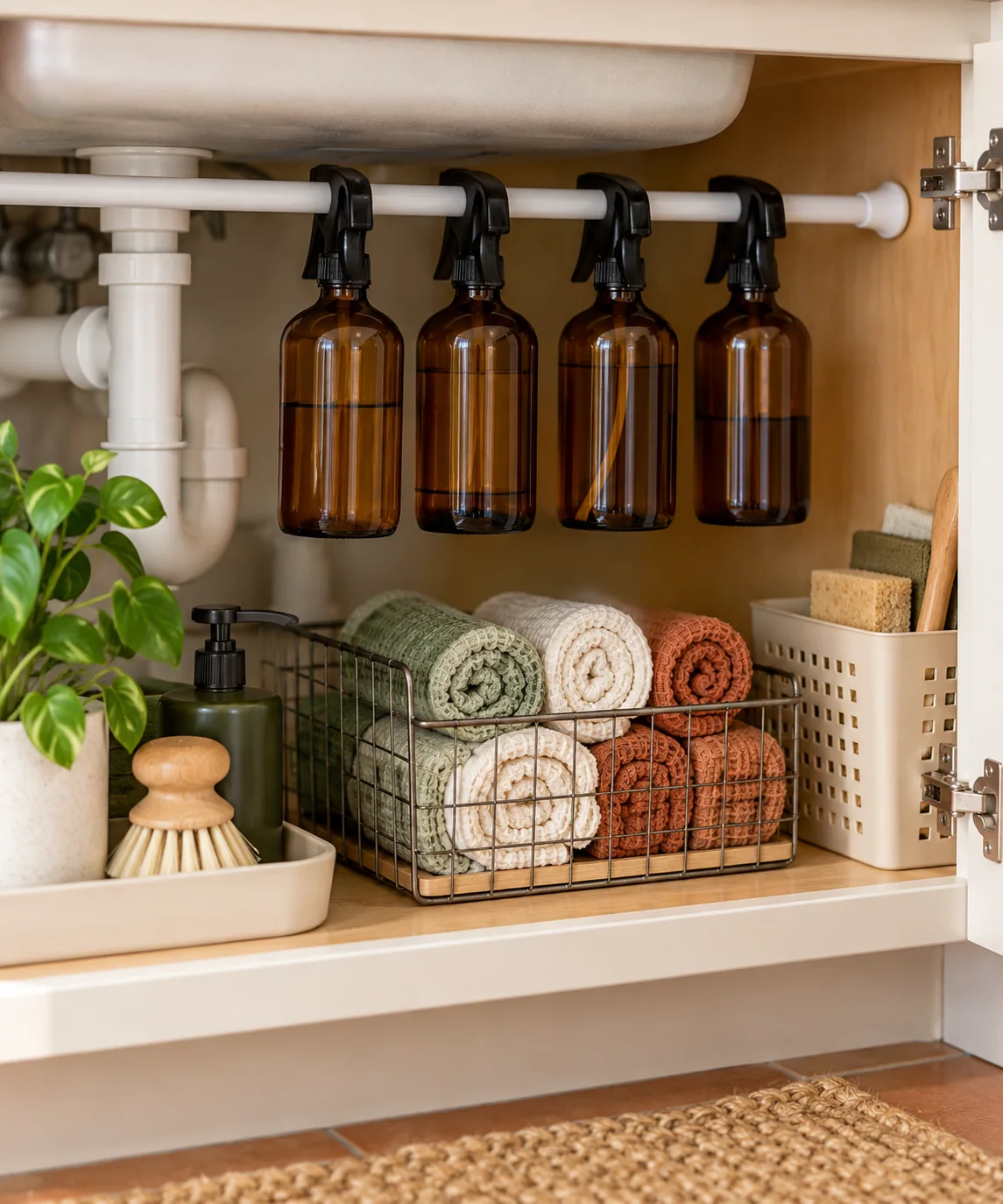
Cabinet Sidewall Inspection and Rod Selection
Before installing any tension hardware, inspect the interior cabinet walls for structural integrity. Solid wood or rigid plywood casework supports outward tension well, whereas thin composite panels, unreinforced laminate veneers, or hollow-core dividers can flex or bow under lateral force, reducing friction and causing the rod to slip. Choose an adjustable spring or twist-lock tension rod that matches your cabinet's internal span. Check the manufacturer's stated weight rating rather than assuming a universal load capacity, and opt for models equipped with wide, non-marking rubber foot pads that provide broad surface contact against the sidewalls.
Clearance and Plumbing Access
Position the rod intentionally in front of central drainage pipes and water supply hardware rather than crowding them. Measure the height of your tallest spray bottles to determine how far below the cabinet frame or sink basin the rod must sit so bottle bases clear lower storage bins. Crucially, confirm that hanging containers leave unobstructed physical and visual access to primary shut-off valves and the P-trap. If an emergency plumbing issue or drain leak develops, you must be able to reach valves immediately without untangling suspended bottles or dislodging the rod.
Load Management and Weight Distribution
Tension rods rely entirely on friction and internal spring tension, both of which can degrade over time or fail under excessive loads. Check the manufacturer's maximum weight limit and treat it as a ceiling, bearing in mind that water and liquid cleaners weigh roughly 8.3 pounds per gallon (about 2 pounds for a full 32-ounce container). Distribute bottles evenly along the length of the bar rather than clustering them at the center, which minimizes rod sag. Avoid hanging heavy concentrate refill jugs, and turn every spray nozzle to the locked or 'off' position to prevent accidental dispensing if a bottle shifts.
Lower Basin Storage and Spill Containment
Elevating frequently used spray bottles creates an open, usable footprint on the cabinet base directly beneath them. Place a shallow, easy-to-clean plastic tray or caddy on the floor to catch any stray chemical drips that may seep from spray nozzles. Within this lower zone, store folded cleaning cloths, scrubbing sponges, or small utility buckets. Keeping dry microfiber towels and cleaning textiles separated into a dedicated plastic bin prevents them from absorbing detergent residue or moisture from accidental leaks while keeping them quickly accessible during routine cleanups.
Routine Monitoring and Slip Prevention
Under-sink environments experience temperature fluctuations, humidity shifts, and vibrations from garbage disposals that can gradually loosen tension mountings. Inspect the rod periodically to ensure both rubber pads remain square against the cabinet walls without slipping downward. If you observe the rod sagging or migrating, remove all items, wipe the cabinet walls with a mild cleaner to eliminate grease or soap residue, let the surface dry completely, and reinstall according to the manufacturer's tensioning guidelines. For safety, avoid hanging heavy glass bottles, as a sudden rod slip could cause glass breakage against plumbing fixtures.
YOUR STARTING POINT
A little checklist.
Original editorial guidance. Images are AI-generated concepts, not photographs of completed projects. Our sources and approach.
Questions to consider
Is it advisable to hang glass spray bottles from an under-sink tension rod?
Hanging breakable glass containers from a tension rod is generally discouraged. Tension rods rely strictly on friction and can shift under cabinet vibrations or temperature changes. If the rod loses tension, glass bottles can shatter against the cabinet floor or strike exposed plumbing fittings, creating a serious hazard. Reserve hanging storage for durable, lightweight plastic bottles.
How can I prevent an under-sink tension rod from slipping over time?
Ensure the cabinet sidewalls are thoroughly cleaned and degreased before installation, as oily residues significantly reduce friction. Choose a rod with wide, pliable rubber end pads rather than slick plastic tips, adjust the tension strictly in accordance with manufacturer instructions, and avoid exceeding the rated load limit with heavy containers.
Can hanging spray bottles by their triggers damage the nozzles or cause leaks?
Over time, continuous downward pressure from fluid weight can stress plastic trigger levers and valve stems, especially on older or lower-quality spray heads. To minimize leakage risks, always ensure nozzles are turned to the secure 'off' position, inspect triggers periodically for cracks, and place a wipeable tray underneath to catch any unexpected drips.