Household Reset Routines · THE GUIDE
Terrace Plant Saucer Scrub and Salt Crust Removal
Outdoor terracotta saucers catch runoff from container plants, but persistent evaporation leaves stubborn white mineral crusts and fertilizer salt deposits over time. On apartment balconies and terraces, unmanaged salt buildup looks unsightly and can leach chalky residues onto timber decking or porous outdoor tiles. Implementing a regular saucer scrub routine preserves container bases and prevents moisture stains beneath heavy planters. By using plain water, a stiff natural-fiber brush, and mechanical scrubbing techniques, you can restore clay saucers without synthetic chemicals, keeping terrace seating areas tidy and protecting balcony flooring materials from damp mineral stains.
Jump to the checklist ↓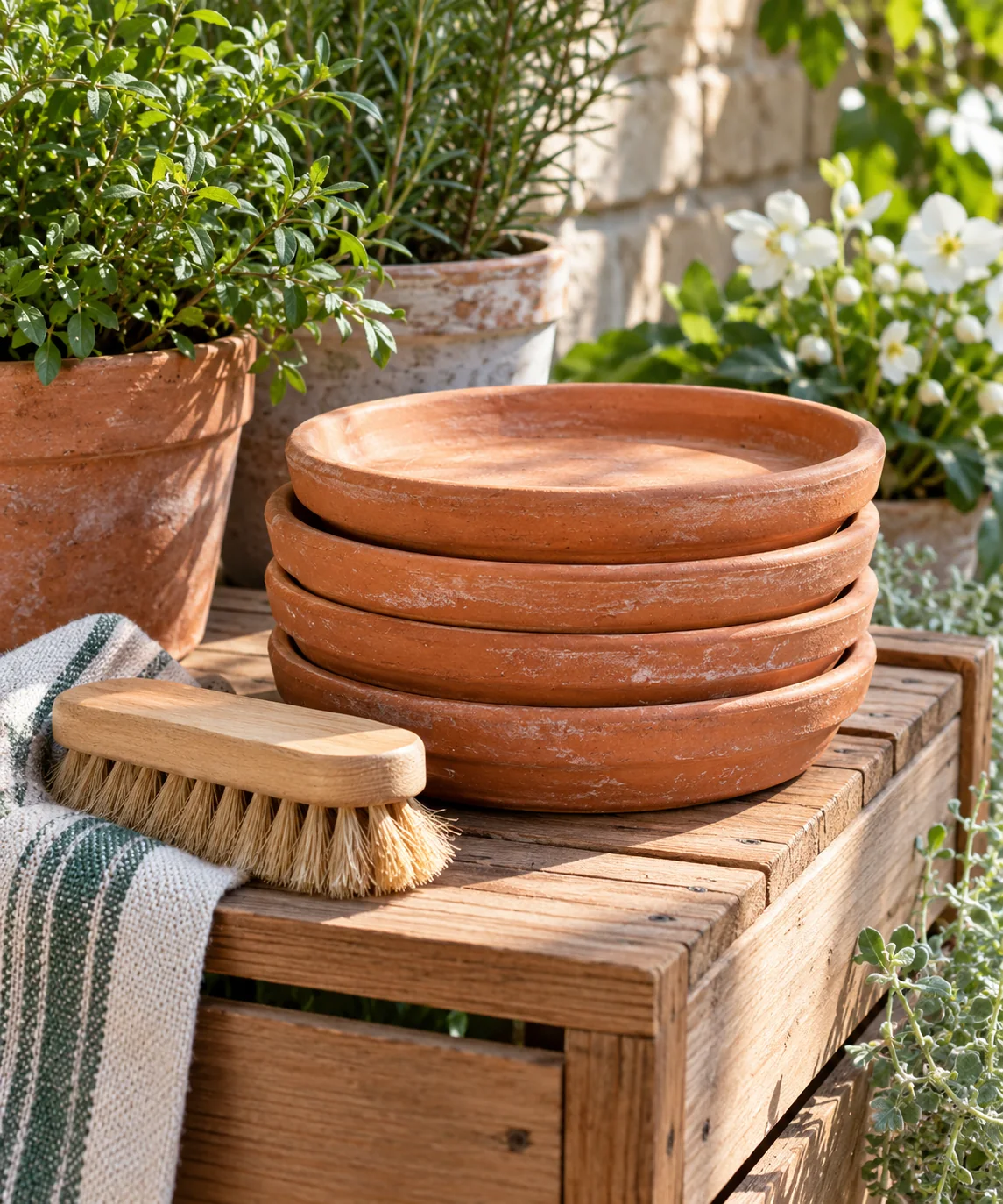
Detaching and Inspecting Outdoor Saucers
Begin by lifting the planter off the saucer during dry weather when the soil pot is lightest. Move the saucer away from balcony edge perimeters to an interior workstation or flat potting crate. Inspect the clay for structural hairline cracks caused by seasonal temperature swings before beginning cleaning. If the base shows severe fracturing, retire the saucer rather than scrubbing it under pressure. Identifying surface salt rings early allows you to address mineral deposits before they bake permanently into porous terracotta walls.
Softening Salt Deposits with Tap Water
Terracotta absorbs salts deep into its walls as water evaporates through the fired clay. To loosen these mineral crusts safely, submerge the saucers in a shallow tub or bucket of warm tap water for twenty minutes. This soaking phase softens crystalline deposits and lifts bonded fertilizer salts without requiring acidic additives or chemical solvents. For large saucers that cannot fit in a basin, saturate a clean cloth with water, drape it across the crust, and allow it to sit until loosened.
Mechanical Scrubbing with Stiff Bristles
Take a stiff natural-fiber bristle brush or coarse scouring pad to work against the softened salt deposits. Scrub in firm, circular patterns along the interior rim and floor of the saucer where crusts concentrate most heavily. Avoid metal wire brushes, which scratch terracotta surfaces and create micro-grooves that trap future mineral buildup faster. Rinse the loosened white paste periodically with fresh water over a utility bucket. Stubborn spots may require a second brief soak before brushing smooth.
Drying Saucers to Protect Decking
Never return freshly scrubbed, damp saucers directly onto balcony floorboards or composite deck surfaces. Porous clay holds internal moisture that creates dark condensation rings or mildew on outdoor flooring. Stand the cleaned saucers vertically on an outdoor potting bench or rack in a shaded, well-ventilated spot to dry thoroughly. Once the clay lightens to its uniform dry color, place small cork pads or pot risers underneath the saucer to ensure air circulates between the clay and the deck.
Balcony Maintenance and Runoff Habits
Prevent heavy salt crusts from recurring by managing how terrace containers are watered. Excess runoff pooling in saucers causes minerals to concentrate as standing water evaporates. Empty excess water ten minutes after watering using a baster or small sponge. Avoid dragging heavy saucers across balcony surfaces, as coarse clay scuffs delicate deck finishes. Establish an alternating rotation where saucers are cleaned twice per growing season to maintain clean perimeters and extend the working lifespan of terrace containers.
YOUR STARTING POINT
A little checklist.
Original editorial guidance. Images are AI-generated concepts, not photographs of completed projects. Our sources and approach.
Questions to consider
Why do white crusts form so quickly on terracotta saucers?
Terracotta is porous, allowing moisture to evaporate through its sides and base. Dissolved minerals in tap water and fertilizer salts remain behind on the clay surface, crystallizing into visible white deposits as the water evaporates.
Can I use household vinegar to dissolve stubborn saucer crusts?
Diluted vinegar can dissolve mineral buildup, but unrinsed acid residues can alter the pH of the saucer surface and contact root tips through capillary action. Thorough soaking in plain warm water paired with firm mechanical brushing cleans effectively without leaving acidic residues.
How do I prevent clean saucers from staining wooden balcony decks?
Elevate saucers slightly using rubber feet, cork spacers, or commercial pot risers. Elevating the base ensures adequate airflow beneath the clay, preventing trapped condensation and residual dissolved minerals from transferring directly onto wood or composite boards.