Kitchen Herb Gardens · THE GUIDE
Thirsty Herb Duo Trough for Parsley and Cilantro
Soft-stemmed culinary herbs like flat-leaf parsley and cilantro demand consistent moisture levels that quickly deplete in standard porous containers. When exposed to dry kitchen heat, their tender root systems dry out rapidly, causing stems to flop and triggering premature seed production. Pairing these two complementary annuals in an elongated glazed trough with dual root sections provides the steady moisture retention they need. This layout stabilizes root zone temperatures while keeping essential garnishes within arm's reach of your cutting board, creating a functional culinary station that stays productive through continuous harvest cycles.
Jump to the checklist ↓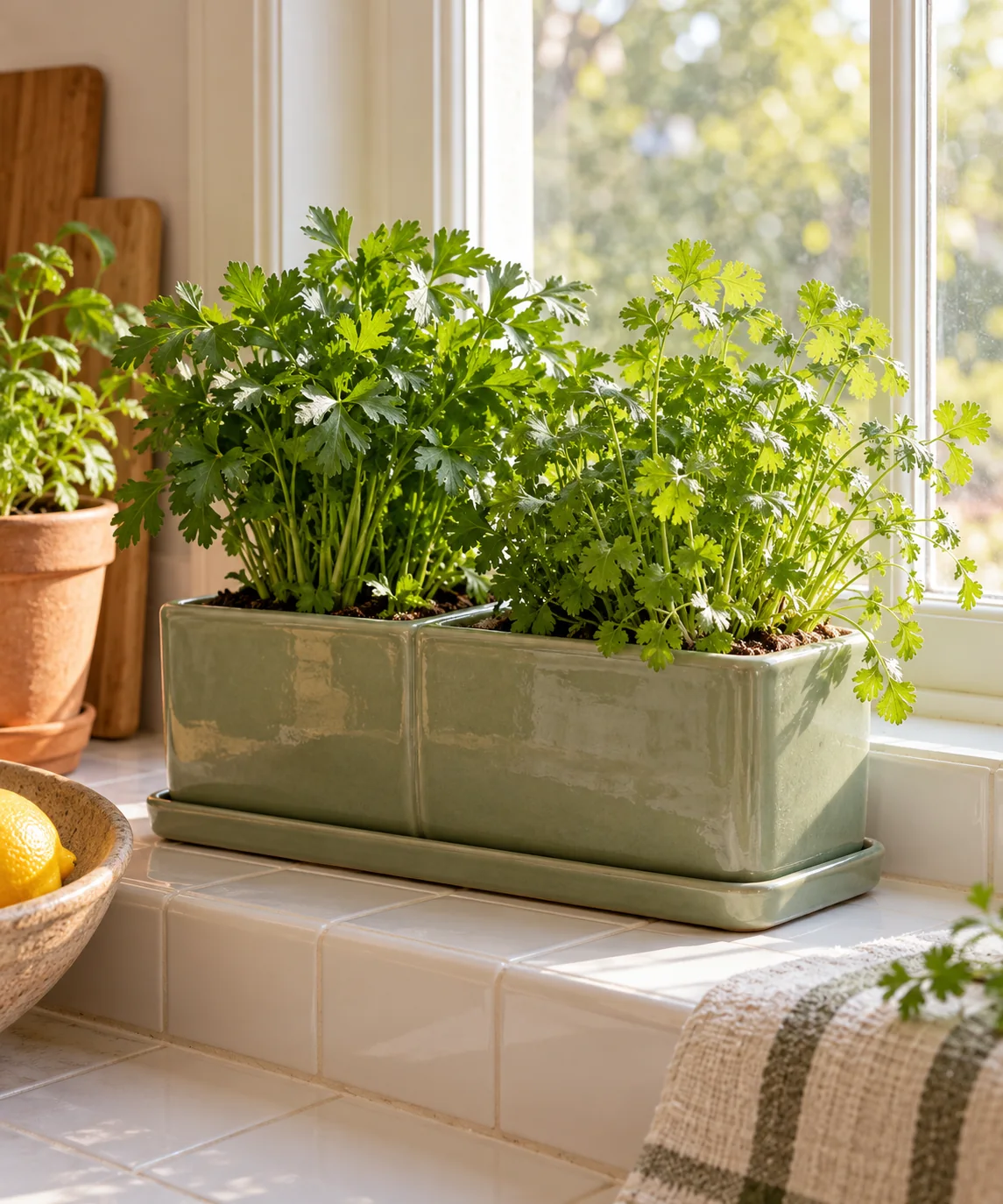
Dual-Chamber Glazed Container Benefits
A rectangular ceramic trough coated with an exterior glaze slows evaporation through the planter walls, preserving soil hydration between cooking sessions. Choosing a trough divided into two internal compartments isolates cilantro's delicate taproot from parsley's vigorous fibrous network while presenting a unified appearance. Confirm that each compartment features independent drainage holes to prevent anaerobic water accumulation at the bottom of the vessel.
Moisture-Retentive Potting Formulations
Unlike woody perennials, soft-stem herbs flourish in rich substrates designed to hold balanced moisture without packing tightly. Combine high-grade potting soil with finished compost and coco coir to retain even moisture throughout the container profile. Avoid coarse gravel drainage layers, which reduce functional root depth and elevate water tables. Instead, mix a modest pinch of perlite uniformly throughout the medium to encourage gentle oxygen diffusion.
Balancing Intense Light with Heat Protection
Cilantro and parsley require robust, direct light to synthesize essential oils and produce dense foliage, but intense midday heat trapped against glass windows can induce thermal stress. Position the trough on a bright sill receiving morning sun or under full-spectrum grow bulbs positioned according to the lighting manufacturer's recommended clearance above the foliage canopy. Shield the trough base from direct heat vents to protect the root systems from rapid moisture loss.
Succession Pruning and Bolting Management
Harvest stems from the outside edge of each plant crown, leaving central growth points undisturbed to produce new leaflets. Cilantro moves through its life cycle rapidly and tends to bolt into flowers when daytime temperatures spike; clip emerging central flower stalks immediately to extend leaf harvest. When cilantro finishes its growth cycle, gently excavate its chamber and replant with fresh nursery starts without disrupting the parsley.
Monitoring Drainage Catchment and Spill Safety
Place a fitted ceramic or enameled tray beneath the trough to collect excess drainage water after thorough irrigations. Check the tray roughly twenty minutes post-watering and discard any accumulated liquid to avoid root saturation. Keep the trough seated squarely on flat, level sills with adequate physical clearance from window latches and handles to prevent accidental contact or tip-overs during daily window operation.
YOUR STARTING POINT
A little checklist.
Original editorial guidance. Images are AI-generated concepts, not photographs of completed projects. Our sources and approach.
Questions to consider
Can flat-leaf parsley and cilantro share an undivided planter?
They can, but divided chambers are preferable. Parsley establishes dense, aggressive roots that quickly crowd cilantro's delicate taproots, making seasonal cilantro replacement difficult without damaging the parsley.
Why does indoor cilantro turn pale and stretch outward?
Elongated, weak stems indicate insufficient light. Most culinary herbs require bright direct sun or supplemental grow lights; move the trough closer to illumination to restore sturdy stem growth.
How often should these soft-stem herbs be watered?
Water when the soil surface feels dry to the touch, roughly one half-inch down. Test moisture with your fingertip rather than relying on a rigid calendar schedule.