Kitchen Herb Gardens · THE GUIDE
Tiered Corner Wall Shelf for Sunlit Galley Kitchens
Galley kitchens demand efficient use of vertical surfaces to keep countertops open for food preparation. Utilizing an underused corner adjacent to a window with a tiered shelving unit can support a compact culinary herb collection. Success relies on evaluating wall structure, checking natural daylight patterns throughout the seasons, and choosing moisture-resistant, low-emission finishes suitable for indoor living spaces. By integrating lightweight containers and dedicated drainage saucers, you can establish an accessible indoor herb station that respects kitchen traffic paths and cabinet clearance.
Jump to the checklist ↓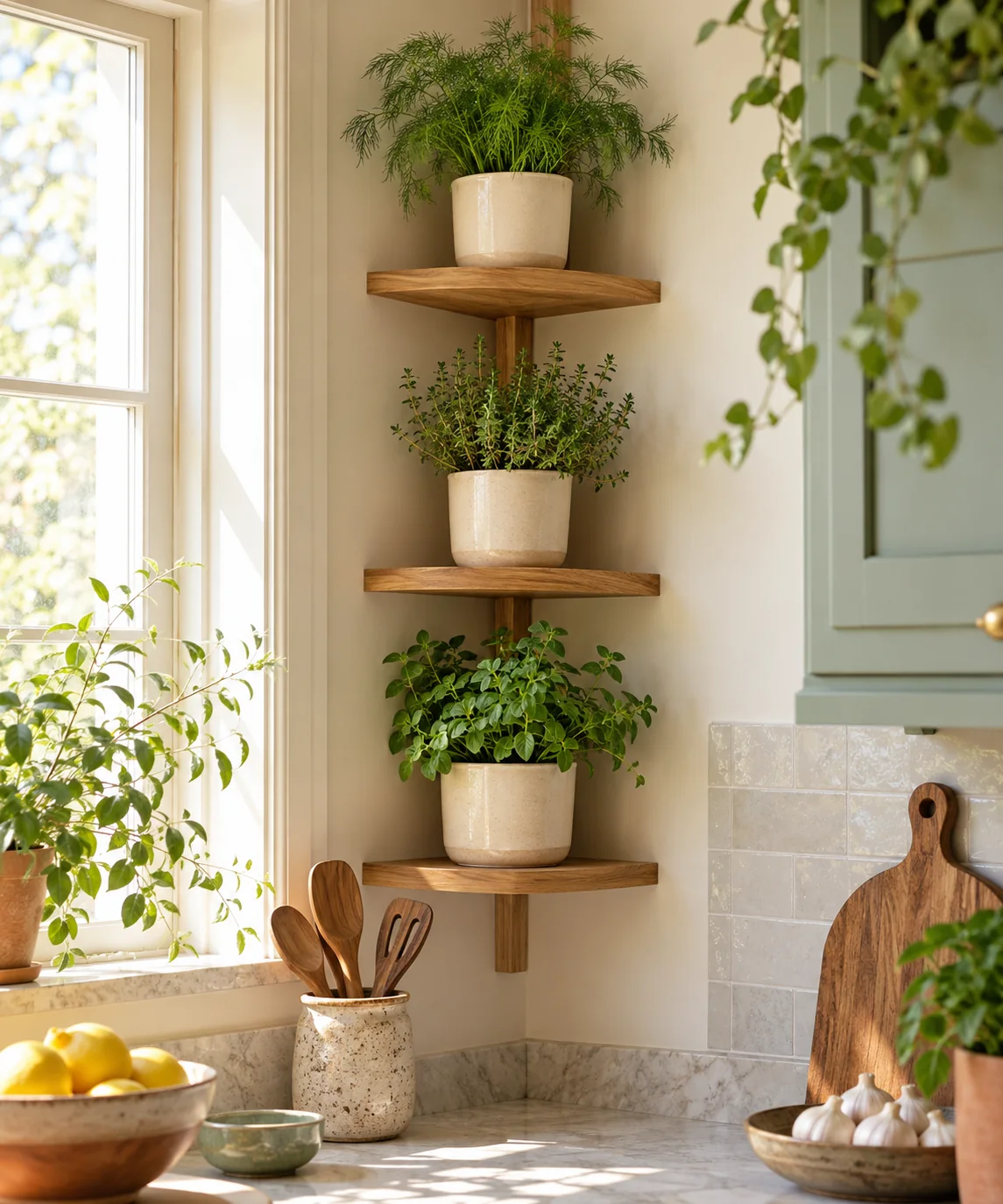
Assessing Galley Clearance and Natural Light
Before planning a corner shelf, assess the return space between the window frame and neighboring cabinetry. Verify that the shelf depth allows cabinet doors, drawers, and window sashes to open fully without striking shelf edges. Track the movement of daylight across the corner over several days, noting how surrounding structures, awnings, or seasonal sun shifts alter exposure. Culinary herbs thrive in consistent, bright natural light; observing actual light patterns helps identify whether compact herbs will receive sufficient illumination.
Selecting Materials and Low-VOC Finishes
While hardwoods like oak offer good stiffness across compact spans, moisture from everyday watering can damage unfinished wood fibers. Treat timber with indoor-rated, low-emission protective coatings such as water-based polyurethanes or food-contact-safe oil and wax finishes. Avoid exterior marine spar varnishes, which release persistent fumes and off-gas solvents unsuited to enclosed kitchen cooking environments. Regularly inspect timber surfaces and wipe away condensation to protect wood joinery.
Evaluating Wall Mounting and Weight Distribution
A tiered corner shelf holding multiple pots, damp growing medium, and plant foliage carries noticeable weight. Inspect wall composition to determine whether you are anchoring into solid wood studs, masonry, or hollow drywall. Always use fasteners rated appropriately for your specific wall material and adhere to the shelf manufacturer's stated weight limits. Place heavier pots on the lower tiers closer to the primary wall support points to maintain a balanced center of gravity.
Moisture Containment and Surface Protection
Never plant herbs directly into decorative shelf tiers. Instead, keep plants in individual nursery containers fitted inside glazed, non-draining outer cachepots or onto leakproof saucers. Place thin silicone bumpers or cork coasters beneath each saucer to prevent condensation from getting trapped against the sealed wood. During routine watering, carry containers to the kitchen sink so that excess water drains out completely before pots are returned to the wall unit.
Pruning, Plant Rotation, and Maintenance
Regular tip-pruning encourages dense, bushy branching and keeps foliage within the shelf's vertical footprint, preventing leaves from pressing against walls or blocking light to lower tiers. Rotate pots a quarter-turn weekly to promote balanced growth as stems reach toward window glass. Periodically clean shelf surfaces with a soft, damp cloth to remove airborne cooking oils and dust, maintaining hygienic surfaces adjacent to culinary plants.
YOUR STARTING POINT
A little checklist.
Original editorial guidance. Images are AI-generated concepts, not photographs of completed projects. Our sources and approach.
Questions to consider
What is the best protective finish for indoor kitchen herb shelving?
Opt for indoor-rated, low-emission finishes such as water-based polyurethane or food-grade mineral oil and wax. Avoid marine-grade spar varnishes, which emit strong solvent fumes unsuitable for interior culinary spaces.
How do you evaluate whether a kitchen corner receives adequate light?
Track daylight patterns across several weeks. If plants develop pale foliage, elongated weak stems, or slow growth, the location may lack sufficient natural light and could benefit from relocation or supplemental horticultural lighting.
How can you prevent pots from shifting on corner shelves?
Choose shelves designed with raised edge lips or guard rails, and place non-slip silicone pads beneath each pot base. Keep container dimensions well within the shelf boundary to prevent accidental bumps during prep.