Small Kitchen Organization · THE GUIDE
Tiered Drawer Inserts for Stacking Flatware and Tools
Deep kitchen drawers often accumulate tangled utensils or leave vertical headroom unused. When square footage restricts kitchen base cabinetry, a two-tier sliding drawer insert effectively doubles the usable horizontal area inside a single drawer box. By placing everyday forks, knives, and spoons on a smooth upper gliding tray, less frequently used items like potato peelers, whisks, and measuring spoons remain neatly sequestered underneath. This setup prevents items from jamming the drawer glides while keeping daily essentials within arm's reach without rummaging or cluttering valuable adjacent counter surfaces.
Jump to the checklist ↓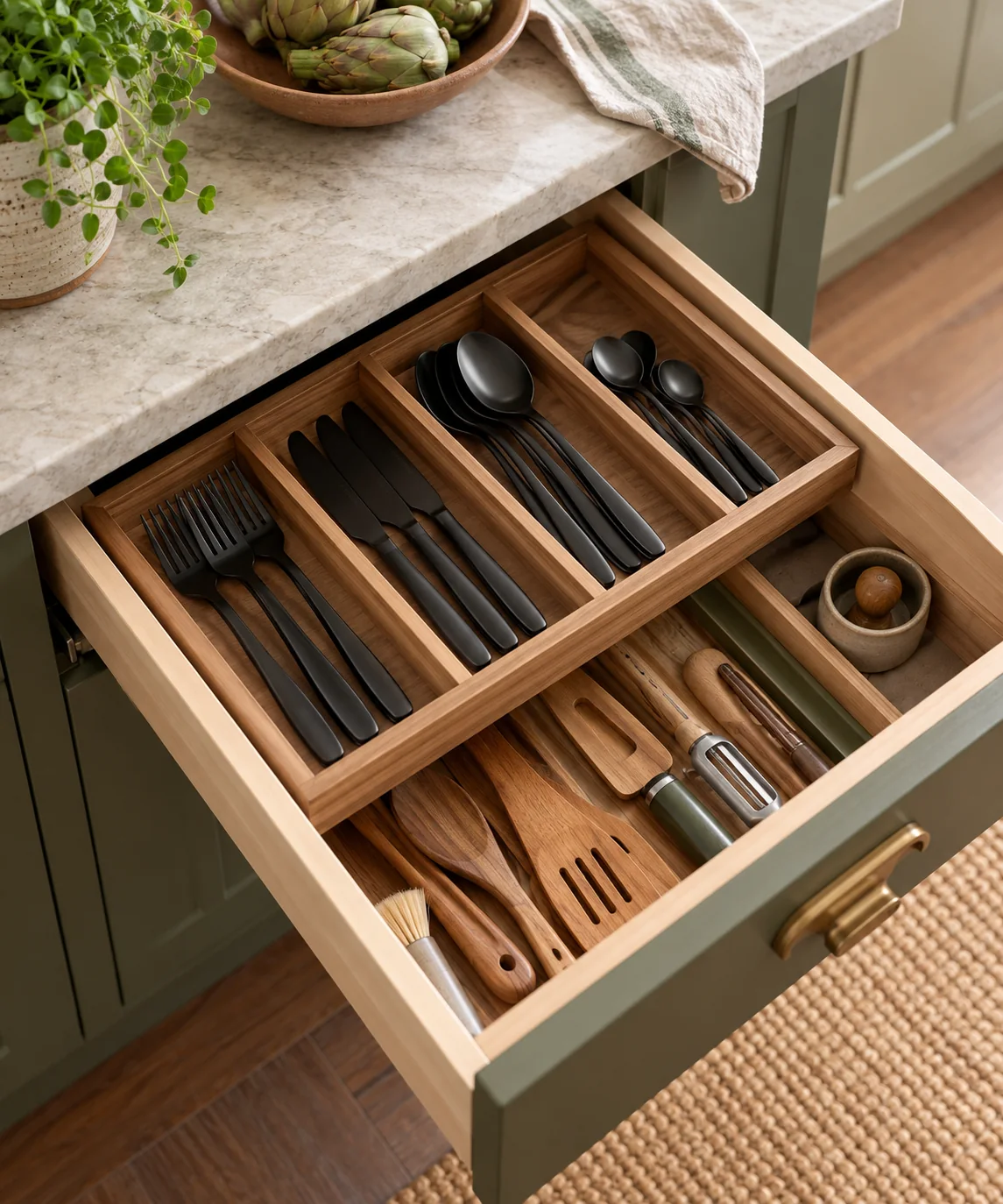
Vertical Clearance and Measurements
Check drawer box depth before purchasing an insert. Standard shallow drawers measure about 3 to 4 inches deep, which cannot accommodate two levels. Tiered inserts require at least 4.5 to 5.5 inches of internal clearance to allow upper trays to slide freely over lower dividers without snagging handles. Measure the internal width, front-to-back depth, and clear height from the drawer floor to the cabinet frame lip. Account for any protruding screw heads or drawer face overhangs that could obstruct the sliding tray travel.
Zoning Flatware versus Prep Tools
Dedicate the top sliding tray exclusively to daily eating utensils. Because forks, spoons, and table knives are flat and uniform, they nestle neatly within shallow compartments. Reserve the lower compartment for bulkier prep tools such as garlic presses, citrus reamers, and silicone pastry brushes. Group lower items into modular rectangular dividers to keep them from shifting when the drawer pulls open. This distinct zoning ensures primary dining tools are accessed instantly without shifting heavy gear around.
Trialing the Fit with Scrap Containers
Test the layout before buying a rigid insert by using shallow cardboard lids or spare plastic organizers stacked on small blocks inside the drawer. Slide the makeshift top tray back and forth to observe daily workflow patterns. Notice whether long spatulas in the bottom impede the upper tray motion. This trial highlights whether you need a fully removable lift-out tray or a track-guided sliding system, saving you from purchasing organizers that bind against inner drawer walls.
Drawer Weight and Runner Maintenance
Stacking two layers of metal tools significantly increases drawer weight. Inspect your existing drawer glides to ensure they can manage the combined load without sagging or grinding. Wipe down the sliding tracks of both the drawer and the internal tiered organizer every few months to remove stray crumbs and dust. Avoid stacking excessively heavy cast-iron or dense metal accessories in the upper slider, as excess weight creates friction against the lower support lip.
Practical Limitations and Overflow Control
Two-tier inserts cannot accommodate exceptionally tall items like bulbous balloon whisks, deep ladles, or rolling pins. Forcing thick handles under the sliding tray will catch on the upper tray bottom and jam the drawer shut. Keep a strict inventory limit: if an item prevents the top tray from gliding back to reveal the lower tier, store it elsewhere, such as a vertical utensil crock or an open wall rail.
YOUR STARTING POINT
A little checklist.
Original editorial guidance. Images are AI-generated concepts, not photographs of completed projects. Our sources and approach.
Questions to consider
How do I stop the lower tools from blocking the upper tray?
Store only utensils with a profile lower than the bottom of the gliding tray. Place bulky items in separate storage zones or turn handles sideways so they lay completely flat against the base.
Can I install a tiered insert in an older frameless cabinet drawer?
Yes, as long as the interior dimensions match the insert specifications and clear the drawer opening. Measure the narrowest point of the drawer opening to ensure the tray clears smoothly.
How should I clean crumbs that fall beneath the bottom tier?
Remove the top sliding tray and lift out the base unit every few months. Vacuum the corners with a crevice tool, wipe the drawer floor with a damp cloth, and dry thoroughly.