Kitchen Herb Gardens · THE GUIDE
Tiered Window Sill Riser for Sunlight Staggering
Cultivating culinary herbs on a kitchen windowsill requires careful management of direct sunlight, especially within compact rental spaces where window area is limited. Sun-loving herbs quickly compete for solar access when arranged in a single flat row on a narrow sill. Tall, vigorous foliage naturally casts shade over low-growing or creeping varieties, stunting their development. Installing a simple two-step wooden riser maximizes south-facing window exposure by staggering plant heights. This vertical arrangement elevates trailing herbs into the upper light stream, preserves valuable sill clearance, and keeps kitchen workspaces organized without altering walls or structural woodwork.
Jump to the checklist ↓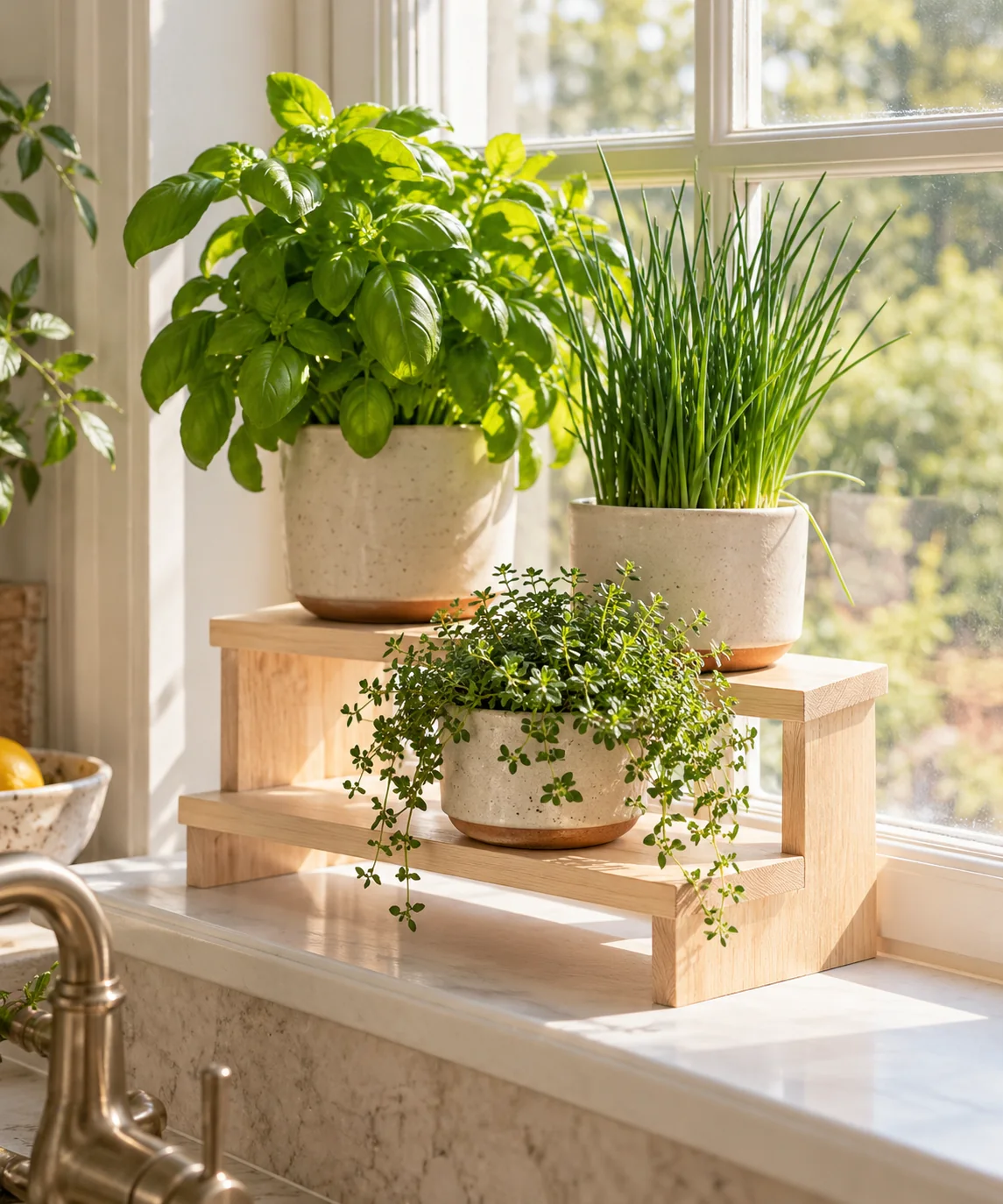
Measuring Sills and Evaluating Natural Light Angles
Before introducing a riser, measure your kitchen windowsill depth, width, and sash clearance. A stable riser must rest completely flat on the sill without overhanging the front apron, leaving room to operate window latches easily. South-facing apertures provide the strong direct light essential for culinary herbs, but the angle shifts throughout the day. A two-step riser elevates smaller pots into the path of direct rays that would otherwise be blocked by window frames or large neighboring plants, substantially improving overall light distribution.
Arranging Herbs by Growth Habit and Canopy Height
Optimal sunlight staggering relies on pairing plant heights deliberately with riser levels. Position upright, leafy growers like sweet basil or tall chives on the lower platform or closer to the window glass edge where they expand upward freely. Place low-profile, spreading herbs such as creeping thyme on the elevated rear step. Raising the low-growing thyme keeps its dense foliage from falling into the shadow cast by the broad basil canopy, ensuring both containers receive unhindered solar access simultaneously.
Selecting Water-Resistant Wood and Protective Trays
Kitchen sills experience regular moisture from cooking steam, plant misting, and inevitable watering spills. Untreated wood risers can warp, stain, or foster mildew under damp pots. Choose sealed hardwoods such as pale birch treated with a moisture-resistant polyurethane or food-grade mineral wax finish. Always place non-porous ceramic saucers or shallow metal trays beneath every pot on the riser steps. Drip trays capture stray drainage water immediately, safeguarding the timber riser and sill paint from moisture discoloration.
Balancing Pot Proportions and Center of Gravity
A tiered structure increases the risk of tipping if paired with disproportionate containers. Choose small, sturdy ceramic or terracotta pots between four and five inches in diameter with flat, broad bases. Heavy containers or tall top-heavy planters can destabilize narrow steps if bumped during meal preparation. Distribute the weight evenly across both tiers to maintain structural balance. Ensure the combined height of the top pot and herb does not touch the upper window casing or obstruct opening mechanisms.
Rotating Containers for Balanced Foliage Development
Even with a tiered riser in a south-facing window, herbs naturally reach toward the glass in search of the brightest light vector. Unchecked, stems will lean aggressively outward, thinning the back foliage and destabilizing small pots on the step edges. Rotate each container a quarter turn every few days during regular watering checks. This simple rotation promotes symmetrical growth, maintains an upright posture, and ensures all sides of creeping thyme and leafy basil photosynthesize evenly.
YOUR STARTING POINT
A little checklist.
Original editorial guidance. Images are AI-generated concepts, not photographs of completed projects. Our sources and approach.
Questions to consider
Can culinary herbs grow successfully in windows that face north?
Most culinary herbs require substantial direct sun to produce essential oils and maintain compact growth. North-facing windows rarely deliver sufficient light intensity, which often results in leggy, weak growth regardless of riser height or arrangement.
How do I prevent a wooden sill riser from sliding on paint?
Attach small clear silicone bumper pads beneath the riser feet. These non-slip pads prevent shifting during daily watering, cushion the contact points, and elevate the wood slightly to stop trapped condensation from damaging the sill paint.
What herb pairings work best on a two-step window riser?
Pair low, sun-demanding spreading herbs like creeping thyme or oregano on the higher tier with upright growers like basil or chives on the lower step, ensuring both receive full light without shading each other.