Indoor Plant Styling · THE GUIDE
Train Indoor Climbing Vines Around a Bamboo Hoop Trellis
Climbing houseplants often sprawl outward across surfaces, quickly outgrowing narrow console tables and small desks. Guiding pliable stems around a circular bamboo hoop trellis transforms vigorous growth into a sculptural living wreath without requiring wall hooks or excessive footprint. Bamboo hoops offer lightweight support that anchors securely within a standard container. This structured arrangement controls trailing stems, evenly exposes foliage to ambient light, and keeps tabletop styling crisp and deliberate. By selecting flexible varieties and securing stems gently as they lengthen, you can maintain a balanced, leafy loop that suits compact indoor spaces.
Jump to the checklist ↓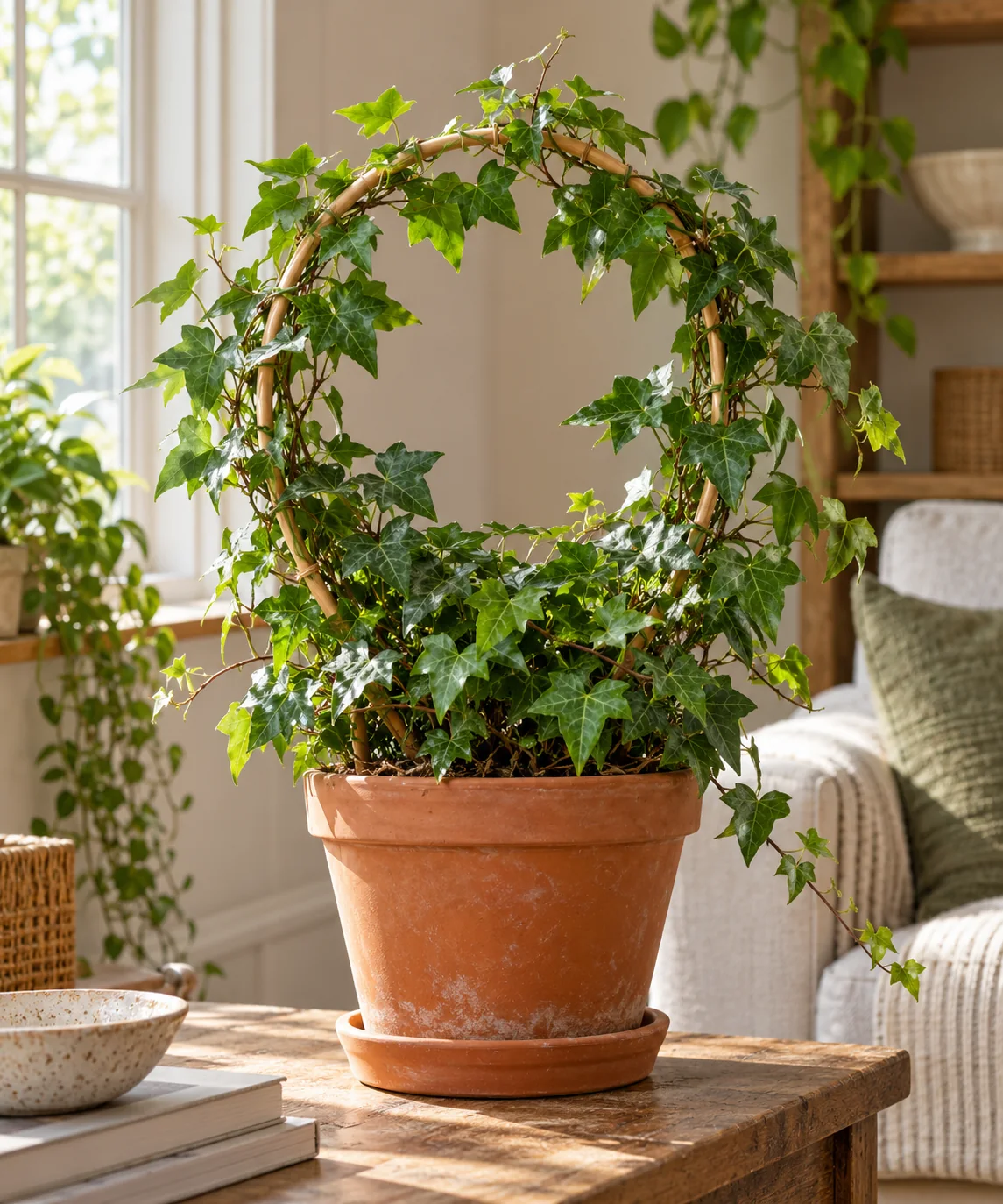
Selecting the Trellis and Container Balance
Pair a bamboo hoop trellis with a pot that provides sufficient base weight and soil volume to maintain balance as foliage expands. A sturdy ceramic, stoneware, or terracotta pot lowers the overall center of gravity, reducing the likelihood of tipping when long runners cover the frame. Choose a hoop scaled comfortably to the container diameter and the natural growth habit of the chosen plant. Carefully guide the prongs of the bamboo hoop downward into the potting substrate along opposite inner sides of the container, inserting them deeply enough into firm soil to create a stable anchor without forcing the ends into structural root masses or pot bottoms.
Winding Stems and Securing Nodes
Begin training by loosening and untangling long trailing vines on a flat, clean surface so you can assess their length and flexibility. Select the sturdiest runner and wind it gently upward along one side of the bamboo arch, honoring the stem's natural curve rather than bending it sharply against the grain. Fasten the vine using soft cotton twine, padded plant ties, or lightweight plant clips positioned just beneath leaf nodes where growth is sturdiest. Keep fastenings loose to allow stems room to expand as they mature without pinching tender stems or restricting normal sap flow. Route secondary runners up the opposing arch to balance the structure.
Managing Density and Foliage Direction
Foliage naturally reorients toward incoming daylight over several days, which can cause the side facing a window to appear noticeably fuller. Rotate the pot periodically by a quarter or half turn to promote more balanced leaf development across both sides of the hoop. As individual vines reach the top or complete a full circuit around the hoop, continue gently weaving them along the established track or snip active terminal tips to encourage branching lower on the stems. Periodically thin out yellowing or crowded interior leaves that become shaded out, which helps maintain fresh air movement through the center of the ring.
Display Placement and Surface Clearances
Position the hoop trellis where the plant can enjoy adequate indirect daylight suited to its species while avoiding exposure to hot heater vents, air conditioning drafts, or exterior doors that open frequently in winter. Provide sufficient open clearance between the trellis and nearby walls or window panes so leaves do not rest directly against cool glass or dry plaster, which can lead to localized foliage damage or restrict airflow. The circular geometry of a hoop trellis softens hard vertical lines on desks, credenzas, or console tables while keeping trailing stems from interfering with desk items, books, or everyday tasks.
Routine Care and Re-Tying Schedules
Daily care routines should accommodate the trellis structure to keep the plant thriving and the bamboo in good condition over multiple seasons. Water the potting mix near the soil line rather than pouring liquid over the lower bamboo joints or plant ties, which helps preserve the integrity of natural fibers. Periodically examine ties along the vines to ensure thickening stems have adequate room, loosening or replacing any ties that begin to press into plant tissue. When the plant eventually requires repotting, unclip the vines and lift the root ball gently from the pot rather than pulling upward on the bamboo hoop itself.
YOUR STARTING POINT
A little checklist.
Original editorial guidance. Images are AI-generated concepts, not photographs of completed projects. Our sources and approach.
Questions to consider
Which plant varieties work best on a hoop trellis?
Fast-growing climbers with flexible stems, such as English ivy, wax plant varieties, and trailing philodendrons, adapt best. Stiff or thick-stemmed plants resist curving and can snap if bent forcibly along the circular frame.
How tight should the ties be secured to the bamboo?
Ties must remain loose enough to slip a pencil tip between the stem and the bamboo. Constricting ties pinch plant vascular tissue, causing stunted growth or stem breakage as vines expand in diameter.
What should I do when stems outgrow the hoop completely?
Once stems circle the frame, guide them around for a second loop to build lush thickness, or pinch back the growing tips with clean shears to encourage bushier growth lower down on the frame.