Entryway Organization · THE GUIDE
Transform an Awkward Hall Radiator Cover Into a Drop Shelf
In older apartments and historic homes, cast-iron radiators frequently occupy practical wall space in entrance halls where a console or landing table might otherwise sit. Placing a free-standing, well-ventilated cover over or around a radiator can create a temporary surface for daily essentials, but heating appliances require careful planning. Because radiators transfer heat through both convection and radiation, any enclosure affects airflow and warms nearby objects. Selecting appropriate materials, checking clearances against building guidelines, and leaving full access for maintenance allows you to stage entryway items while respecting the mechanical function of your heating system.
Jump to the checklist ↓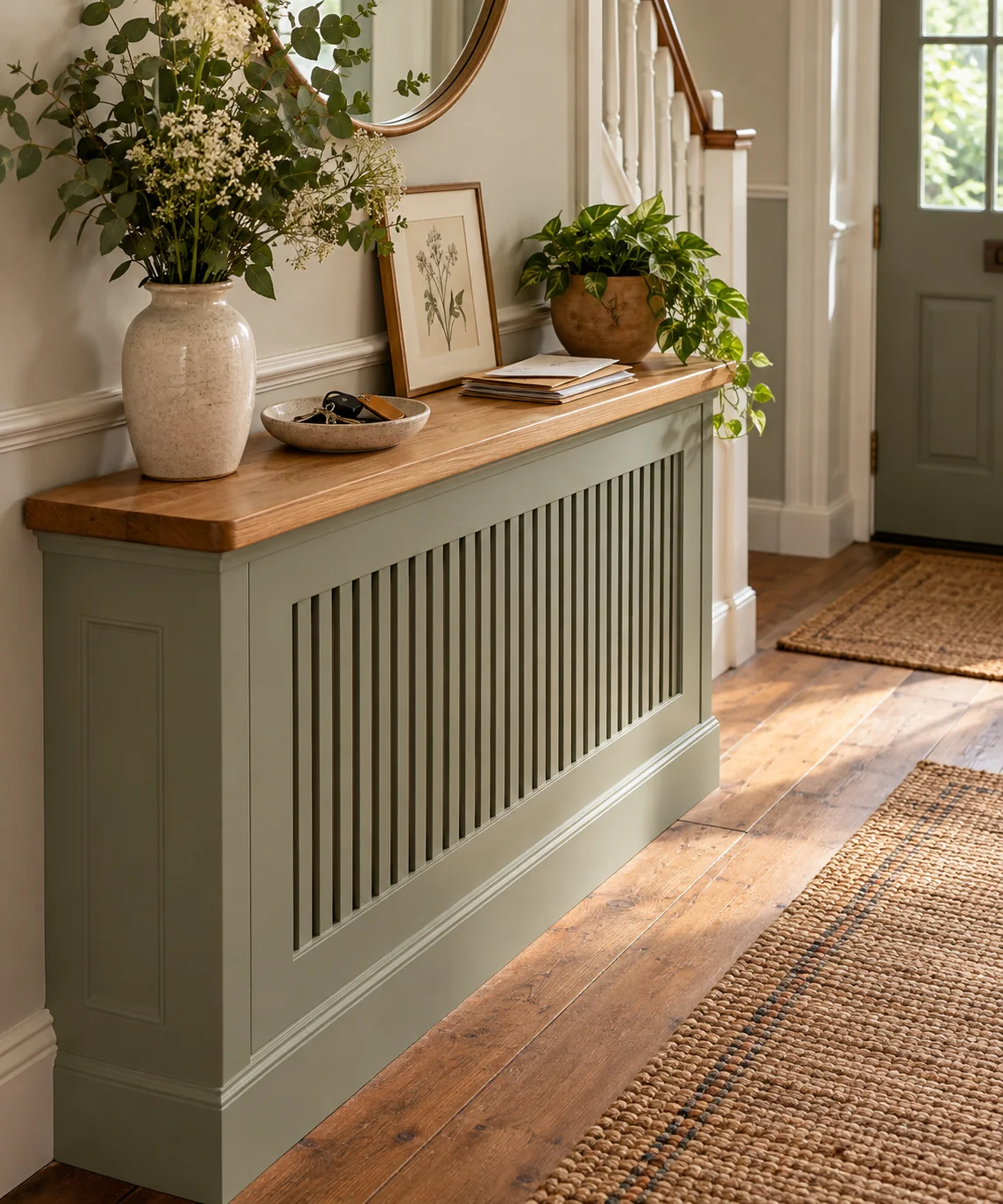
Understanding Convection Airflow and Clearance
A hydronic or steam radiator relies on natural air movement, pulling cooler air from the floor, warming it between the cast-iron columns, and discharging it into the room. Introducing a solid shelf above the radiator restricts this upward current unless generous ventilation is provided. While some homeowners leave an air gap of several inches between the appliance and the shelf, exact clearance needs depend on radiator size, output, and manufacturer or municipal heating codes. The front and sides of any decorative casing should feature open mesh, slats, or perforated screens to permit unhindered air circulation, avoiding heat buildup beneath the furniture.
Evaluating Heat Transfer and Surface Materials
Radiators can become hot during prolonged winter cycles, transferring ambient heat directly to the shelf above. Thin laminates, synthetic adhesives, and soft woods may dry out, bow, or release odors when exposed to repeated warming and cooling. Dense solid hardwoods or metal console tables with ventilated tops handle temperature fluctuations better than plastic-veneered particle board. Even with a deflector or insulating backer installed beneath the shelf, the surface will still absorb residual warmth, making it unsuitable for heat-sensitive items.
Selecting Heat-Resistant Catchall Accessories
Because a drop shelf positioned over a radiator will experience elevated temperatures, everyday drop-zone items must be selected with care. Use heat-stable materials such as ceramic trays, enameled stoneware dishes, and powder-coated metal bowls to hold house keys and metal transit cards. Avoid resting items that soften, melt, or degrade in warm environments, such as wax candles, lip balms, chocolate, medication, or thermal cash register receipts, which can darken and become unreadable when warmed.
Managing Paper Goods and Fire Precautions
Entryway drop zones easily collect mail, fliers, and receipts, but loose paper near an active heat source presents both clutter and safety considerations. Enclosed vertical mail organizers made from wire or metal keep correspondence upright and prevent loose envelopes from slipping between the radiator sections or contacting hot metal. Routinely sort and remove paper goods rather than allowing tall stacks to accumulate, ensuring the perimeter around the shelf remains open and unobstructed.
Preserving Access to Shutoff Valves and Air Vents
Radiators require regular inspection and seasonal maintenance, including bleeding trapped air from valves or shutting off manual supply knobs. Any cover or shelf placed over the unit must be entirely free-standing and easy to slide away from the wall without specialized tools or structural dismantling. Never block access to the air vent valve on steam radiators or the bleed valve on hot water units, as restricted vents can cause uneven heating or water leaks. Keep the area around connections clear so you can spot and address valve weeping immediately.
YOUR STARTING POINT
A little checklist.
Original editorial guidance. Images are AI-generated concepts, not photographs of completed projects. Our sources and approach.
Questions to consider
Can I place electronic devices on a shelf above an active radiator?
Electronic devices, including mobile phones, tablets, and rechargeable batteries, should not be kept on a surface warmed by a radiator. Prolonged exposure to elevated temperatures can accelerate battery wear and shorten hardware lifespan.
Will a radiator cover reduce the amount of heat entering the room?
Any barrier placed around a radiator alters natural convection and can reduce heat distribution into the room. Using open, perforated grille fronts and maintaining open space beneath the shelf helps mitigate heat loss, but some drop in warming performance may still occur.
How can I prevent small items from falling behind the radiator?
Select or adapt a shelf design with a raised perimeter lip or back rail along the rear edge. A physical barrier along the back helps keep small objects, keys, and letters from sliding off into the narrow space between the radiator and the wall.