Reading Corners · THE GUIDE
Transform an Old Armoire Cavity into a Book Niche
Freestanding vintage armoires and large wardrobe cabinets possess rich architectural character, yet their deep hanging cavities often sit underutilized in homes with modern built-in closets. Converting that expansive interior into a dedicated book niche creates an immersive, private library pocket without altering permanent room walls. By safely taking out existing hanging hardware, installing horizontal shelving cleats, and introducing targeted interior lighting, you give a retired heirloom furniture piece an entirely fresh functional purpose. This approach preserves historic woodwork while offering quiet, contained organization for extensive book collections and reading accessories.
Jump to the checklist ↓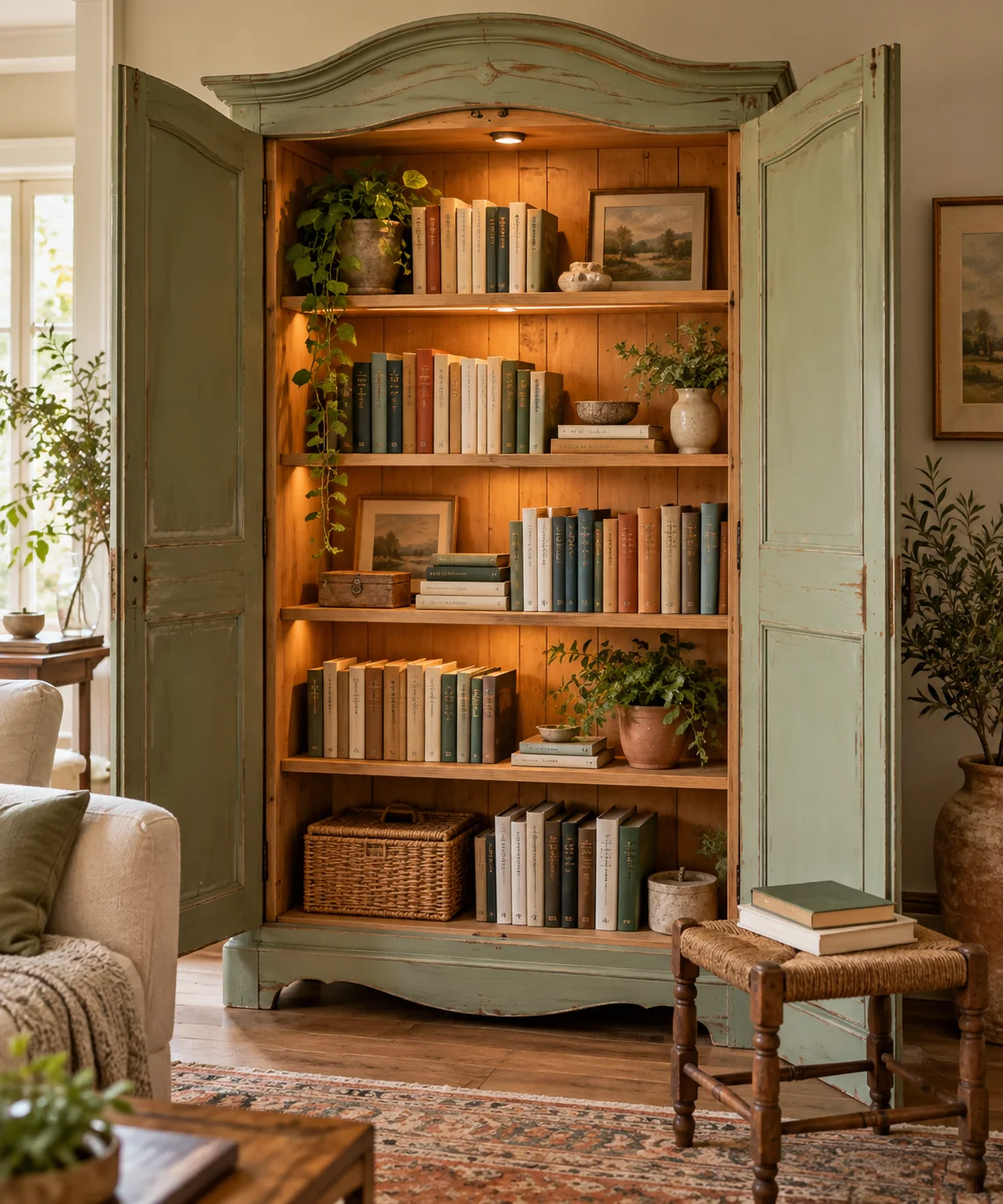
Dismantling Hanging Hardware Safely
Begin by opening both armoire doors fully and examining the existing interior closet rods, brackets, and garment hooks. Use standard manual hand screwdrivers rather than high-torque power drivers to avoid stripping aged screw threads or damaging historic wood rails. Carefully label and store all original brass fittings, brackets, and fasteners in protective bags, allowing the furniture piece to be returned to its wardrobe layout in the future if desired. Inspect the interior panel surfaces for any signs of loose joinery, previous adhesive repairs, or wood degradation before introducing new components.
Measuring Cavity Dimensions and Adding Cleats
Aged furniture pieces rarely feature square interior cavities due to natural wood movement and seasonal expansion over time. Measure the inner cavity width across the top, middle, and bottom to detect minor dimensional differences before sourcing shelving material. To support shelves without modifying the exterior, cut hardwood support cleats and test-fit them along each interior flank. Pre-drill shallow pilot holes through the cleats to prevent splitting the dry antique side panels, using appropriately short screws that will not penetrate the outer cabinet face. Because book collections add substantial weight, evaluate the overall stability of the armoire and verify with anti-tip safety standards or manufacturer guidelines to secure the cabinet to structural wall studs.
Selecting Shelving and Weight Distribution
Choose sturdy three-quarter-inch solid hardwood boards or hardwood-banded plywood cut to fit the recorded interior dimensions. For stability and balance, distribute your book collection with intention: position heavy reference volumes, large hardcovers, and thick folios on the base or lower shelves. Reserve upper tiers for lightweight paperbacks, pamphlets, or decorative objects. This tiered arrangement lowers the unit's center of gravity and reduces long-term sag across the timber spans. If an armoire cavity is particularly wide, consider adding a central vertical support batten to prevent gradual deflection under load.
Incorporating Low-Heat Interior Illumination
Deep wardrobe cavities often block room lighting, which can make locating books difficult. Add battery-operated or rechargeable low-voltage LED bars mounted with removable adhesive pads or non-marring magnetic plates beneath the shelves. Selecting warm-spectrum LEDs that emit negligible operating heat protects both dried paper pages and historic wood finishes from prolonged thermal exposure. Avoid drilling cord openings through solid antique backboards or running high-voltage extension cords across door jams, which creates cord-pinch risks and permanently alters the historic piece.
Managing Door Clearance and Daily Access
Ensure the depth of any newly added shelving remains recessed at least one to two inches behind the interior door rebate so the original doors can close flush without contacting book spines. If you plan to keep the doors swung open during reading sessions, check that their swing radius does not obstruct nearby walkways or strike adjoining furniture. Floor bumpers or discrete felt stops can protect the open doors from over-extending on original hinges, preserving the cabinet's hardware while keeping browsing paths open.
YOUR STARTING POINT
A little checklist.
Original editorial guidance. Images are AI-generated concepts, not photographs of completed projects. Our sources and approach.
Questions to consider
How do I prevent shelf sagging inside a wide armoire?
Opt for thick hardwood planks or reinforced plywood rather than composite board. If the unsupported span exceeds thirty inches, add an upright center divider or an underside stiffener to help manage the weight of books over time.
Is anti-tip wall anchoring required when converting an armoire to a bookcase?
Yes, tall freestanding cabinets become significantly heavier and front-heavy when loaded with books or when doors are opened. Securing the armoire to wall framing with appropriate furniture safety straps or brackets prevents tipping hazards.
How should interior lighting be powered safely without damaging the wood?
Cordless rechargeable LED pucks or low-voltage light strips mounted with removable adhesive strips provide illumination without drilling holes through historic backboards or creating pinch hazards with power cords.