Small Bathroom Storage · THE GUIDE
Tuck a Corner Wooden Shelf Unit Behind the Bathroom Entry
Inward-swinging bathroom doors routinely waste substantial square footage by leaving a deep 90-degree corner blocked from primary sightlines. Placing a freestanding wooden corner shelf in this recessed pocket converts dead space into organized storage for folded washcloths, backup paper goods, and grooming supplies. Because this zone sits behind the door swing, selecting the right footprint requires strict attention to clearance angles and door handle swing paths. Thoughtful organization in this quiet alcove provides discreet, accessible utility without obstructing daily foot traffic or damaging surrounding door trim.
Jump to the checklist ↓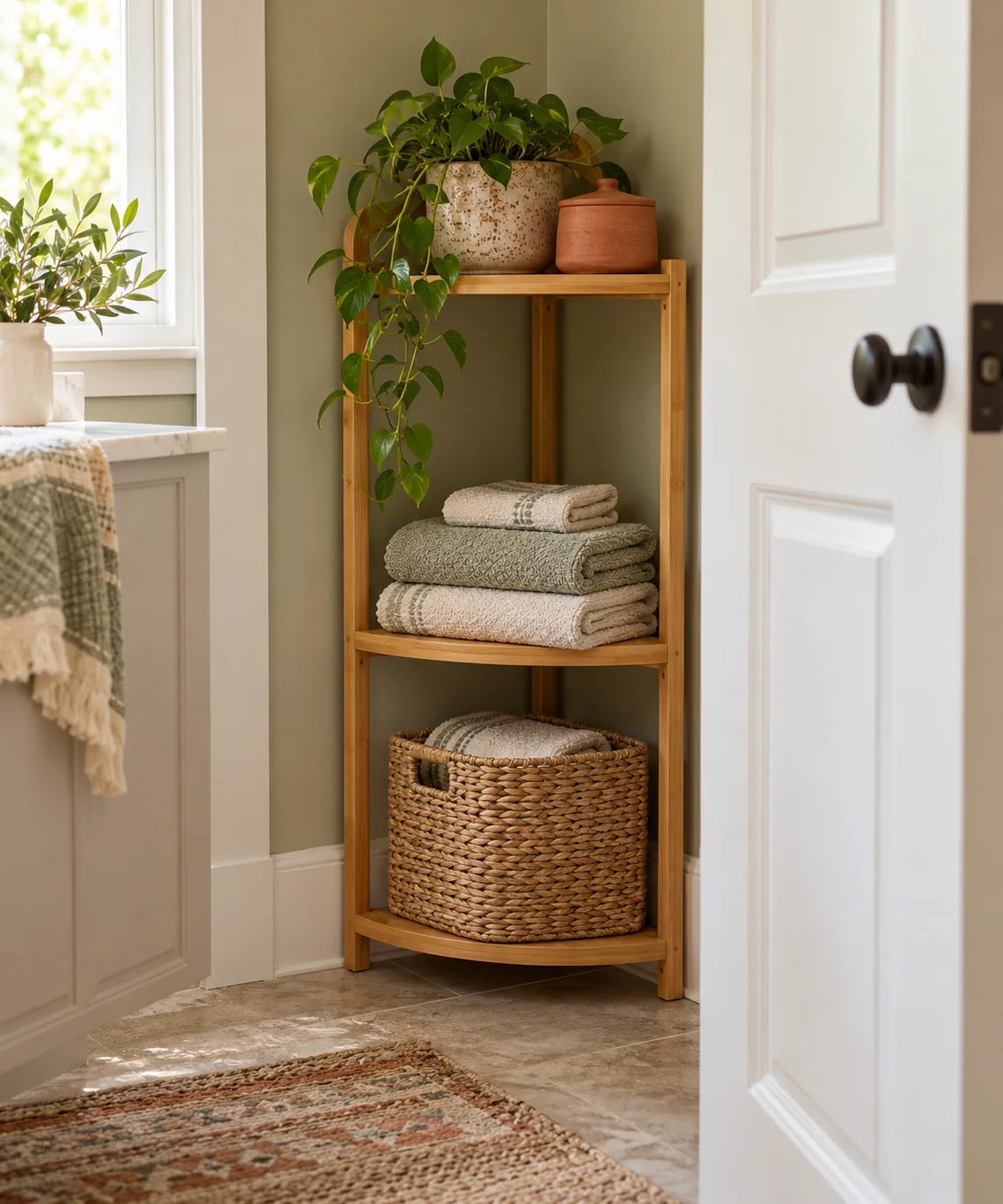
Assessing the Door Swing Envelope
Before selecting furniture for the corner behind a door, map out the door's actual arc of movement. Open the bathroom door to its resting position and measure from the corner to the edge of the door leaf. Be sure to account for the handle or doorknob, which projects outward beyond the face of the door. Selecting a triangular, quadrant, or slender rectangular shelving unit that stays within this protected footprint allows the door to open smoothly without striking the shelf frame.
Selecting Materials for Enclosed Corners
Recessed corners behind doors often experience reduced airflow, making material selection an important consideration. Raw, unfinished softwoods can absorb moisture or warp in high-humidity bathrooms. Moisture-resistant options such as sealed bamboo, teak, or properly sealed composite shelving with durable water-resistant finishes perform better over time. Slatted shelf surfaces are advantageous because they allow air to circulate beneath stored supplies rather than trapping condensation against flat surfaces.
Arranging Shelf Tiers for Stability
Organize stored supplies to support the shelf unit's balance. Place heavier items, such as surplus shampoo bottles, bulk body wash, or cleaning supplies, on the lowest tier to keep the center of gravity low. Use middle shelves for frequently needed items like spare washcloths or cotton supplies in lidded organizers. Keep upper shelves reserved for lighter essentials to minimize the risk of items toppling if the door is opened briskly.
Protecting Surfaces from Door Contact
Even with careful dimensioning, a door pushed back quickly can bump adjacent furniture. Verify that an existing baseboard or hinge stop prevents the door handle from hitting the shelf, or place self-adhesive silicone bumper pads on the corner of the unit where contact could occur. These soft buffers protect both the door finish and the wooden shelf frame from accidental scuffs without altering permanent door hardware.
Maintaining Airflow and Regular Cleaning
Pockets behind doors naturally gather airborne dust and bathroom lint. Leave a slight gap between the shelving unit and surrounding walls to encourage continuous ventilation and make routine maintenance simpler. Dust shelves periodically using a soft cloth, and wipe down sealed wood surfaces if condensation gathers after hot showers. Keeping smaller personal care items in breathable bins makes it easy to lift items off shelves when wiping down surfaces.
YOUR STARTING POINT
A little checklist.
Original editorial guidance. Images are AI-generated concepts, not photographs of completed projects. Our sources and approach.
Questions to consider
Could a corner shelf restrict access or clearance in a small bathroom?
It should not, as long as the unit remains entirely behind the open door leaf. Ensure the shelf does not extend into the doorway threshold or reduce the clear entry opening required for comfortable passage.
How can I prevent wood shelves from degrading in humid bathrooms?
Select shelving with factory-sealed, water-resistant topcoats, operate the bathroom ventilation fan during and after showers, and choose slatted shelves that prevent pooled moisture under bottles.
What should I do if baseboards prevent the shelf from sitting flush?
Many free-standing corner units feature legs that set the frame slightly away from the wall, clearing baseboard trim naturally. A small gap behind the shelf is beneficial as it maintains airflow along the walls.