Laundry Space Organization · THE GUIDE
Tuck a Folding Steamer Mat Over the Dryer Top
Standard freestanding ironing boards require dedicated floor area and setup time, which can feel impractical for quick touch-ups. A heat-resistant, foldable pressing mat placed over the top of a front-loading dryer or washer creates a flat, temporary surface for steaming lightweight fabrics as they exit the cycle. However, modern laundry appliances feature enamel, powder-coated, or electronic touch surfaces that can be sensitive to sustained heat, concentrated pressure, and moisture buildup. Selecting appropriate pad materials, respecting appliance design, and maintaining good moisture management help keep the workspace practical without compromising machine surfaces.
Jump to the checklist ↓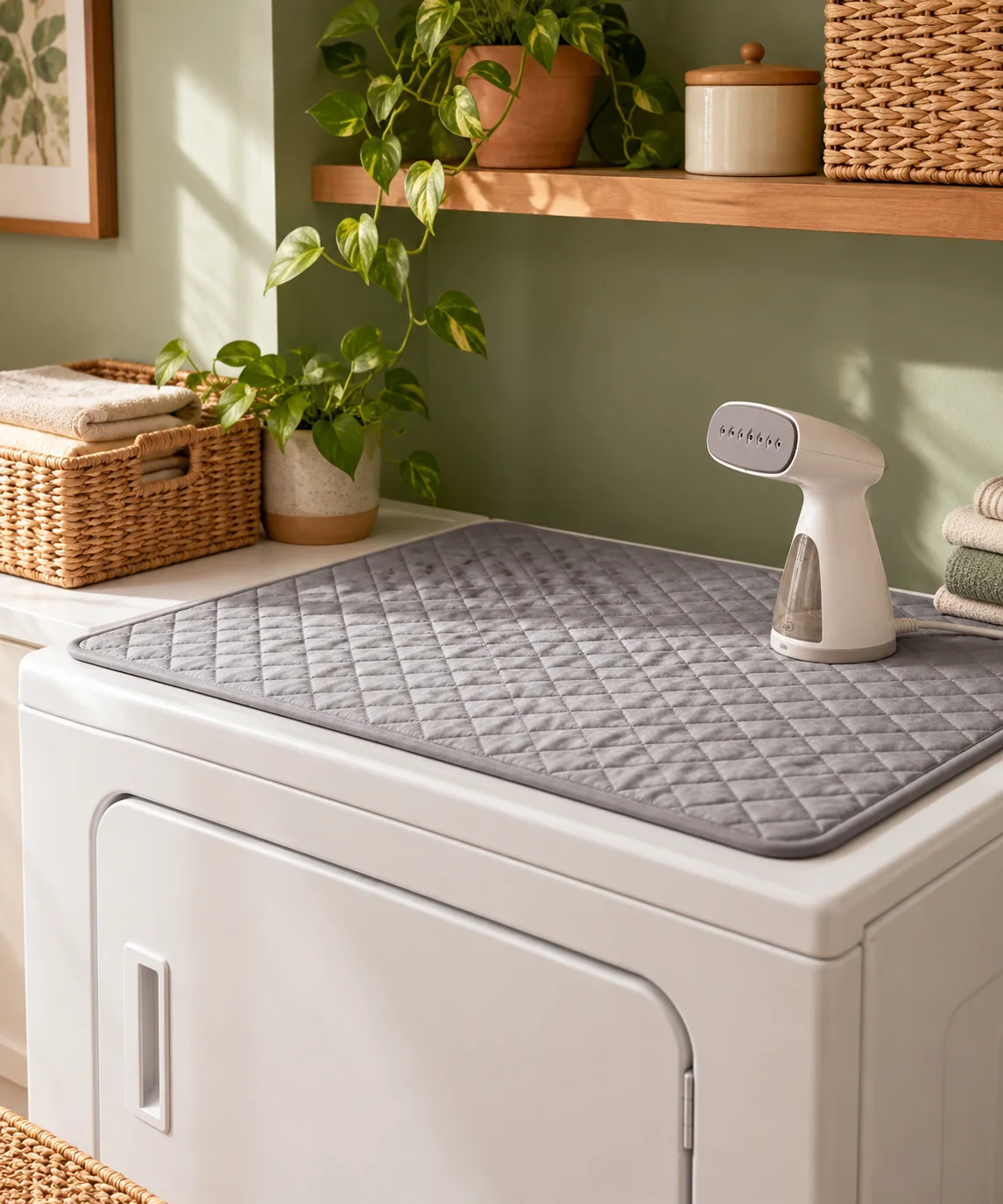
Checking Appliance Compatibility and Clearances
Before placing any mat onto an appliance, inspect the manufacturer's user manual regarding surface loads, heat exposure, and placement around controls. Flat-top, front-loading machines generally offer the most level surface, while models with slanted consoles, top-loading lids, or raised control knobs are unsuitable. Ensure the mat does not cover lint screens, cooling vents, or digital touchscreens. Any grit, lint, or detergent residue on the appliance lid should be wiped away beforehand to prevent scratching when pressure is applied during fabric care.
Evaluating Pad Construction and Surface Backing
Choose a pressing mat specifically engineered with multiple heat-diffusing layers, such as a silicone-treated or woven heat-reflective upper fabric backed by dense padding. The underside should provide a non-marring, slip-resistant texture to minimize movement during use. Avoid bare single-layer fabrics that allow steam and dampness to pass directly through to the appliance casing. While some pads feature magnetic edges, verify that magnets are completely encapsulated to prevent metal-on-paint abrasion, and keep them away from sensitive control displays.
Managing Steam, Moisture, and Heat Dissipation
Handheld garment steamers produce warm water vapor that can condense quickly when it encounters cool metal appliance panels. Prolonged steaming on a localized area can cause moisture to gather beneath the pad, which may dull finishes or promote rust along panel seams if left unattended. Keep steaming sessions brief, use light passes, and rest hot steamer heads on an external, heat-safe silicone tray rather than directly on the appliance casing. Lift the mat promptly after use to check for condensation.
Establishing Safe Touch-Up Workflows
Use the appliance top primarily for gentle steaming, touch-ups, and fabric relaxing rather than heavy pressing. Do not use standard dry or steam irons on appliance surfaces unless the appliance manufacturer explicitly permits it, as high soleplate temperatures and downward pressing force can deform sheet metal or damage underlying electronics. Work only while appliances are stationary; operating a steamer while a machine is in an active spin cycle introduces vibration risks and increases the likelihood of spills or dropped equipment.
Drying, Storing, and Maintaining the Pad
After completing touch-ups, remove the mat immediately to let both the pad and the appliance surface air out. Wipe the machine lid with a clean, dry microfiber cloth to remove residual dampness. Allow the mat to cool and dry flat before folding or rolling it for storage. Most portable mats can be rolled into a narrow profile to fit inside a storage basket, shelf organizer, or cupboard. Inspect the pad periodically for worn fabric, scorch marks, or deteriorating backing, replacing it if the heat barrier thins.
YOUR STARTING POINT
A little checklist.
Original editorial guidance. Images are AI-generated concepts, not photographs of completed projects. Our sources and approach.
Questions to consider
Can using a steamer mat on a dryer void the appliance warranty?
Some appliance manufacturers caution against placing hot items, moisture, or heavy accessories on appliance lids. Review your dryer warranty terms to ensure external heat or moisture exposure will not affect coverage.
Is it safe to use a standard clothes iron on top of a dryer mat?
Standard irons generate higher temperatures and require downward pressure that can dent sheet metal, degrade appliance finishes, or harm internal components. Heavy pressing is best reserved for a conventional ironing board.
How do I prevent moisture from collecting under the mat?
Limit steaming sessions to quick touch-ups, avoid soaking fabrics, and lift the mat immediately after use to allow any trapped vapor to evaporate completely.