Garden Tool Organization · THE GUIDE
Tuck a Galvanized Watering Can Station Below an Outdoor Water Spigot
Outdoor water spigots frequently become cluttered zones where hoses, detachable nozzles, and damp containers gather in messy corners. Setting up an organized station for galvanized watering cans, brass roses, and delicate plant misters near the tap helps streamline daily watering tasks. Storing these containers off bare soil protects their protective zinc coating, minimizes splash-back mud, and keeps accessories accessible right at the fill point, provided drainage away from the home foundation and clear access to backflow devices remain properly managed.
Jump to the checklist ↓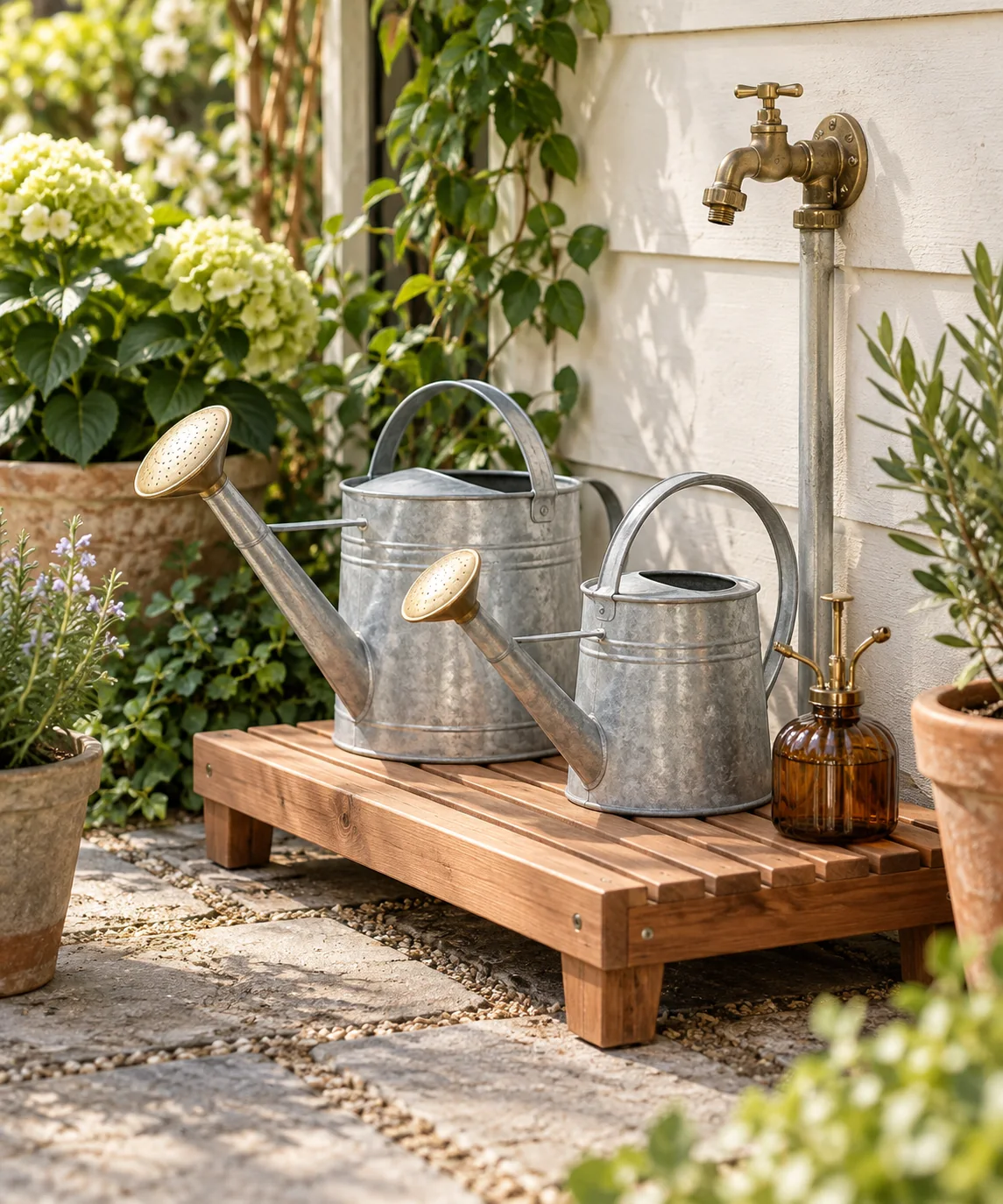
Setting Up a Stable, Free-Draining Surface
Resting metal cans directly on damp soil or lawn surfaces can accelerate corrosion and introduce mud to container bases. A slatted duckboard crafted from rot-resistant cedar, thermally modified wood, or composite decking provides an elevated, level resting area. Position the platform on well-drained gravel or a firm paver base so runoff water can soak away rather than pooling against building foundations or siding. Ensure the platform remains stable and does not wobble when supporting filled containers.
Clearances, Spigot Operation, and Backflow Access
Outdoor spigots require unobstructed access for daily operation and seasonal winterization. Maintain comfortable clearance between the spigot discharge and container handles so vessels slide under the water stream without striking the faucet, vacuum breaker, or splitters. Ensure hose connections and shut-off handles remain fully accessible. Never block access to backflow prevention devices, and verify that splashing water drains away from electrical outlets, foundation vents, or exterior wall cladding.
Arranging Containers, Roses, and Spray Misters
Organizing containers by size helps keep the station orderly and safe from accidental tipping. Place broader, larger-capacity cans toward the back or center of the platform, reserving outer spots for compact indoor cans or narrow-spout vessels. Store detachable brass roses in a well-drained wire basket or on corrosion-resistant hooks beside the spigot to keep fine spray holes free of grit. Keep delicate misters in sheltered, shaded spots to prevent direct sunlight from degrading internal seals or warming water.
Managing Splash Water and Pest Deterrence
Any outdoor watering station will experience occasional overflow and dripping. Ensure the ground beneath the platform slopes gently away from the structure to prevent standing water near masonry or timber sill plates. Empty containers fully when not in active use, storing them inverted or angled on slatted surfaces so residual moisture evaporates. This practice discourages mosquito breeding and prevents mineral scale from building up around bottom seams.
Seasonal Inspection and Freezing Weather Care
While galvanized zinc coatings provide durable rust resistance, trapped water inside metal vessels expands when freezing, which can compromise soldered joints and distort container bases. Before the first seasonal freeze, disconnect hoses, service the exterior spigot according to local winterization guidelines, and completely drain all watering cans and sprayers. Store delicate misters indoors, and move metal cans to an unheated shed, garage, or sheltered porch protected from snow accumulation.
YOUR STARTING POINT
A little checklist.
Original editorial guidance. Images are AI-generated concepts, not photographs of completed projects. Our sources and approach.
Questions to consider
How can I prevent mineral deposits from clogging fine watering can roses?
Mineral scale from hard tap water can gradually restrict fine spray holes. Soak removable brass or metal roses in a mild white vinegar and water solution once or twice per season to dissolve deposits, then rinse thoroughly before reattaching.
Will standing a galvanized can on wet wood cause it to rust?
Constant contact with standing water can eventually degrade galvanized coatings. Using slatted duckboards allows air circulation beneath the can base so both the wood and metal dry out between watering sessions.
How should I manage hose connections alongside a watering can station?
Install a brass dual-port manifold or hose splitter on the spigot if local plumbing codes allow, directing one outlet to your garden hose and reserving the second for container filling. Ensure all valves are completely accessible and do not interfere with container clearance.