Small Bathroom Storage · THE GUIDE
Tuck a Lidded Rattan Waste Bin with Integrated Roll Storage
Small bathrooms often experience floor clutter when multiple separate containers occupy the narrow gaps around the toilet. Placing an independent waste can next to an unattached spare roll stand divides limited floor space and complicates floor cleaning. A dual-purpose rattan container consolidates waste disposal and paper storage into a single upright profile. Natural woven materials add warmth to functional storage, but positioning and lining require thoughtful planning to protect fibers from damp conditions and keep stored paper dry in high-moisture rooms.
Jump to the checklist ↓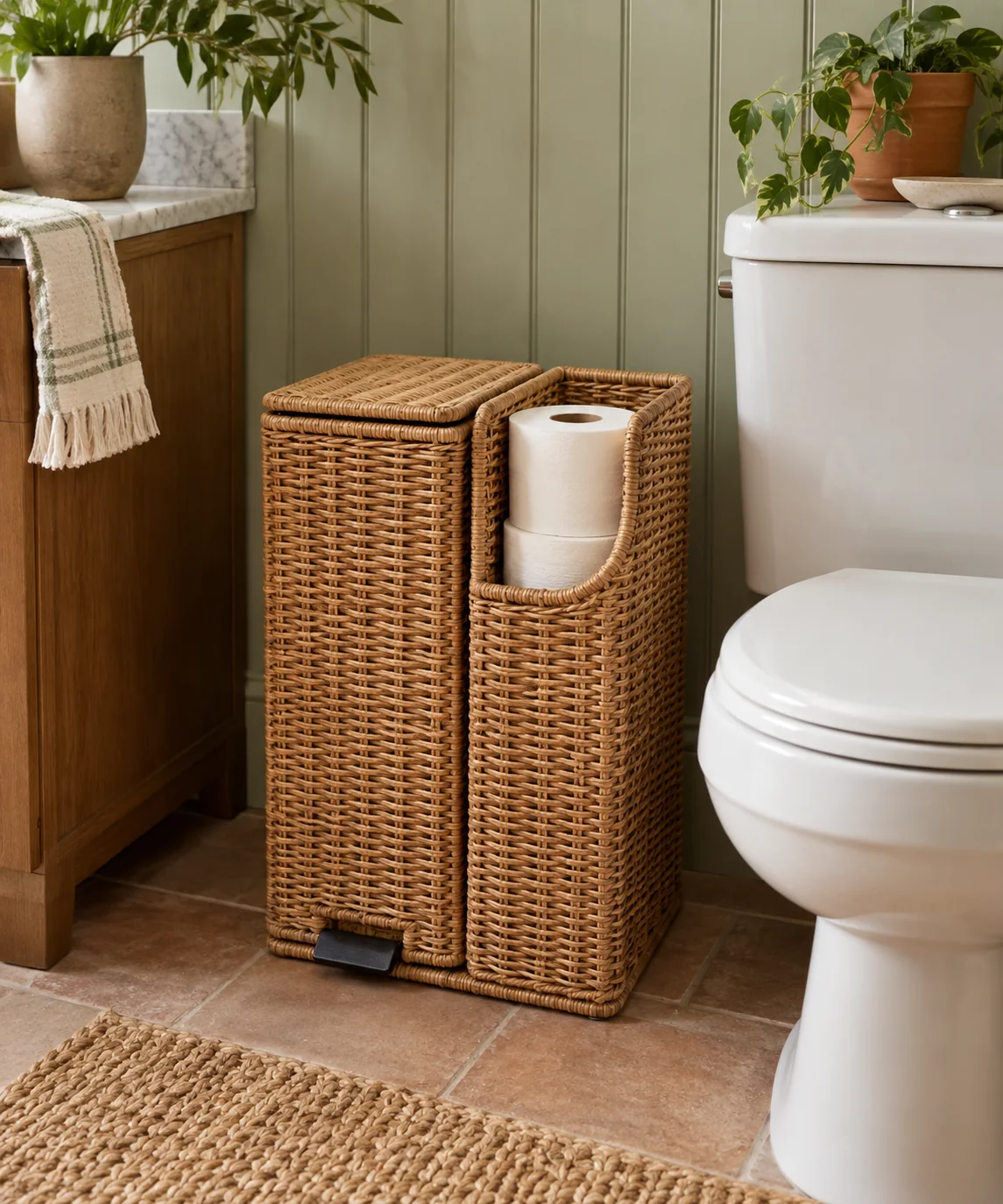
Measure Floor Gaps and Lid Operation Clearances
Before purchasing a combination waste and paper caddy, measure the available floor width between the toilet base and adjacent walls or cabinets. Ensure the total footprint allows comfortable seated legroom and does not block shutoff valves or water supply lines. Check the vertical clearance required to open the hinged or removable lid without hitting vanity counters, low-mounted towel rings, or the toilet tank. Testing the footprint dimensions with a paper template helps verify that lid operation remains unobstructed.
Account for Bathroom Humidity and Direct Moisture
Natural woven plant fibers such as rattan and seagrass absorb ambient moisture and can degrade or discolor if subjected to repeated soaking. Keep the container positioned outside direct splash zones from open showers, bathtubs, or spray wands. Ensure the waste compartment features an impermeable, removable plastic liner bucket so damp trash does not touch the outer woven shell. Operating a mechanical exhaust fan during and after bathing helps moderate room condensation and protects organic weaves.
Protect and Rotate Spare Paper Supplies
An integrated paper compartment stores backup rolls close to the fixture, but porous materials can allow humid bathroom air to soften paper fibers over time. Leaving individual spare rolls inside their protective retail packaging or placing them in lightweight moisture-resistant liners helps shield them from damp air. Periodically rotating stored rolls so that the oldest stock is used first prevents unused rolls from resting indefinitely in humid floor-level corners.
Maintain a Reliable Waste Lining Routine
Keeping a combination caddy sanitary requires careful trash containment. Choose small waste bags that fit the internal plastic insert snugly without spilling excess plastic over the exterior decorative rim. Securing the liner beneath the inner bucket rim preserves the appearance of the woven exterior while preventing liquid drips, cosmetic residues, or damp tissues from contacting the rattan casing. Empty the trash insert regularly to maintain clean separation between discard storage and unused rolls.
Establish Routine Cleaning for Woven Surfaces
Woven patterns naturally catch lint, hair, and dust particles common to compact bathroom environments. Clean the outer weave periodically using a vacuum cleaner equipped with a soft dusting brush attachment or a dry micro-fiber duster. If spot cleaning is needed, wipe the affected strand lightly using a cloth dampened with dilute mild soap, then immediately blot dry with a clean towel. Avoid saturating the fibers with water, abrasive cleansers, or harsh chemical sprays that can break down surface seals.
YOUR STARTING POINT
A little checklist.
Original editorial guidance. Images are AI-generated concepts, not photographs of completed projects. Our sources and approach.
Questions to consider
Can natural rattan be used safely in bathrooms with high humidity?
Natural rattan can perform well if it is kept away from direct water splashes and the room has adequate exhaust ventilation. For bathrooms without operational ventilation, synthetic resin wicker provides higher moisture resistance.
How do I keep paper rolls from absorbing moisture in a combination caddy?
Keep backup rolls in their original packaging or inside a protective pouch within the compartment. Running an exhaust fan to manage ambient steam also helps prevent paper cores from absorbing moisture.
What should I check if a foot-pedal lid on a woven bin fails to lift smoothly?
Inspect the lower linkage and hinge assembly for trapped hair or lint. Ensure the removable inner plastic bucket is seated correctly within the housing, as a misaligned insert can press against the pedal mechanism.