Warm Neutral Living Rooms · THE GUIDE
Tuck a Narrow Bench Under the Living Room Window for Indoor Seedlings
Low window zones often remain underused in living areas, yet they provide the consistent natural exposure necessary for early spring propagation. Positioning a slim wooden bench beneath the glass creates an organized staging tier for seedling trays and individual starter pots without obstructing walking lanes. This setup keeps tender starts off drafty floors while blending horticultural utility into warm neutral decor. By pairing natural wood grains with uniform terracotta or waterproof drip trays, you protect interior finishes while cultivating tender plants where daily moisture and light levels remain easy to monitor throughout early growth cycles.
Jump to the checklist ↓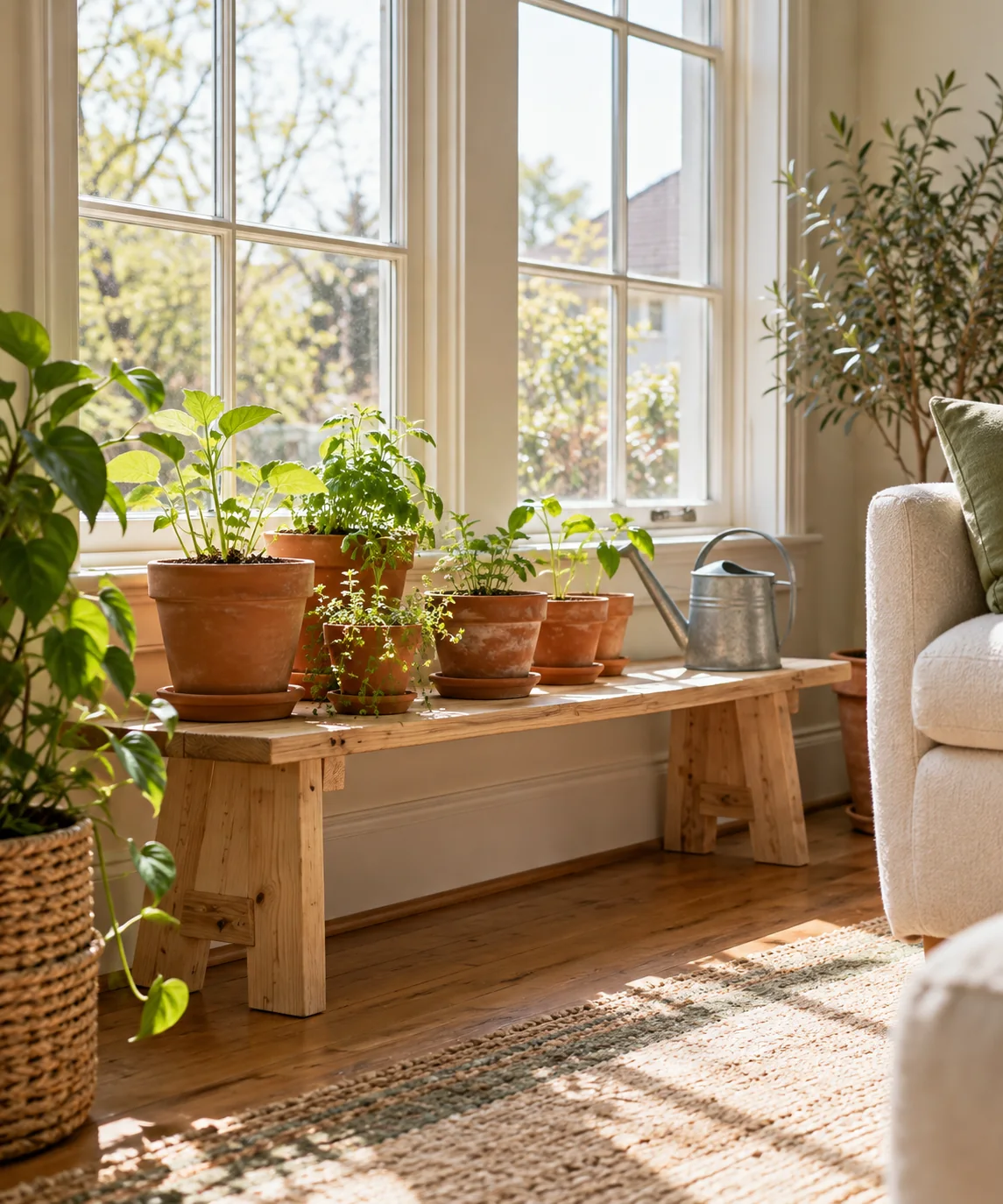
Assessing Window Exposure and Clearance
Before selecting a bench, measure the sill height and clear floor pathway. A bench top should sit at or slightly below the sill so containers receive unobstructed overhead light without projecting into room traffic. Ensure at least three feet of walkway space between the bench edge and any adjacent seating. South- or east-facing windows supply the intense morning and midday solar energy young greens demand. If natural light proves weak or directional, rotate the bench containers every few days to prevent leggy, tilted stem development.
Moisture Protection and Tray Selection
Direct contact with damp potting soil will permanently warp or stain unsealed timber surfaces. Line the bench with an edge-rimmed tray made of galvanized metal, sturdy ceramic, or food-grade plastic before arranging pots. Even porous terracotta pots weep fine moisture rings onto porous wood. Grouping small containers inside a unified shallow vessel contains routine overspill and simplifies bottom-watering tasks. Keep a soft cloth nearby to wipe accidental drips immediately, preventing standing water from pooling beneath liner trays where hidden condensation can degrade furniture finishes.
Selecting Sturdy Seed Containers
Opt for containers with dependable drainage holes that fit neatly within your tray boundaries. Standard two- to three-inch starter pots work best for early stages, leaving adequate elbow room between vessels for air circulation. Crowded containers invite fungal issues such as damping off, especially in indoor environments with modest airflow. Uniform containers made of unglazed clay or recycled paper cells maintain a clean, rhythmic aesthetic against warm neutral furnishings while allowing you to inspect root growth and soil dry-down rates at a quick daily glance.
Managing Indoor Airflow and Heat
Proximity to windowpanes exposes tender seedlings to microclimate extremes. Glass surfaces radiate chill during cold nights and concentrate heat during direct afternoon sun. Position the bench three to four inches back from cold glass to buffer against thermal shock. Additionally, verify that baseboard heaters or forced-air vents do not direct dry, forced heat directly toward delicate foliage. If natural household airflow is stagnant, crack an interior door or run a gentle ceiling fan on low in an adjacent space to encourage sturdy stem fiber.
Seasonal Transition and Repurposing
Indoor seed starts outgrow bench containers within four to six weeks, requiring hardening off outdoors or transplanting into larger vessels. Plan for the bench's post-seedling purpose before spring begins. Once transplants move outside, clean the timber surface with mild soap and water, dry thoroughly, and reintroduce standard living room essentials. A low bench seamlessly transitions into stack storage for linen-covered storage baskets, neutral hardcovers, or a single resilient mature houseplant, ensuring the furniture investment remains functional through summer and winter months alike.
YOUR STARTING POINT
A little checklist.
Original editorial guidance. Images are AI-generated concepts, not photographs of completed projects. Our sources and approach.
Questions to consider
Which window direction works best for indoor vegetable and flower seedlings?
South-facing windows offer the strongest, most consistent sunlight for indoor starts. East-facing glass provides gentle morning rays suitable for cooler starts. If you only have north-facing exposures, supplemental grow lamps will be necessary to prevent weak, elongated growth.
How do I prevent water damage to an unfinished wooden bench?
Always use solid, leakproof plastic or enameled metal trays beneath all pots. Never set unglazed ceramic or nursery pots directly on raw wood. Wipe up stray droplets immediately after misting or watering to prevent grain swelling and water rings.
How often should I water seedlings situated by the window?
Monitor the top layer of soil daily, watering only when it begins to feel dry to the touch. Because sun exposure varies daily, check moisture with a fingertip rather than relying on an arbitrary calendar schedule to avoid root rot.