Garden Tool Organization · THE GUIDE
Tuck a Narrow Wall-Hung Cupboard onto a Protected Balcony for Cutting Tools
Balcony gardening requires careful space management, especially when organizing delicate cutting tools in compact areas exposed to the elements. Pruners, snips, and grafting knives deteriorate quickly when exposed to rain, outdoor humidity, or trapped grit. A shallow, wall-adjacent storage cabinet can offer an enclosed staging area without occupying precious floor space. However, adding fixtures to balconies involves clear safety and regulatory limits. Exterior walls often form part of a shared building envelope where drilling is restricted, and balconies are subject to property management rules and strict weight thresholds. By prioritizing reversible planning, verifying building permissions, and selecting weather-resistant materials, gardeners can keep cutting tools organized responsibly.
Jump to the checklist ↓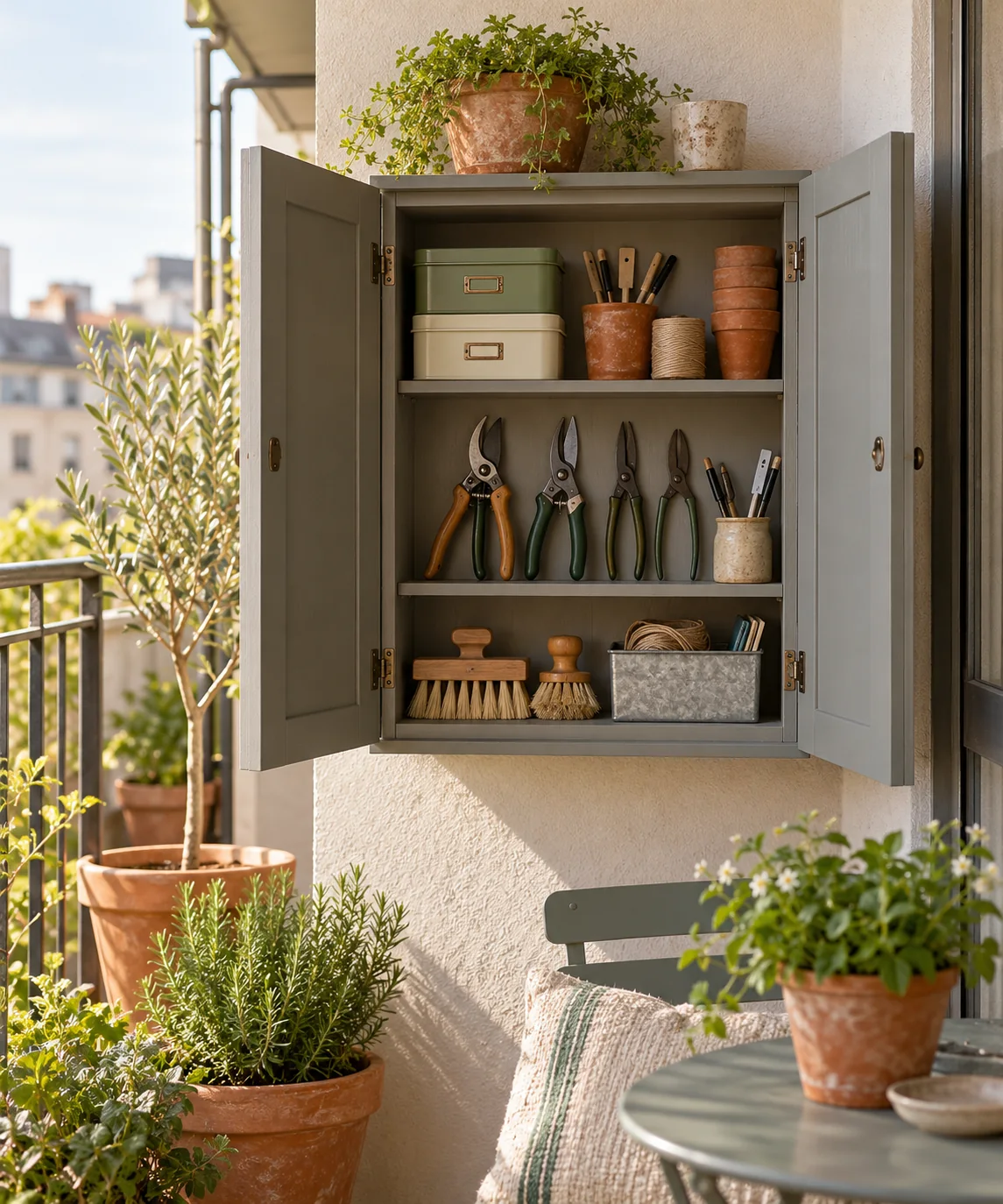
Review Building Regulations and Exterior Wall Restrictions
Before planning any balcony storage, consult your building bylaws, landlord terms, or property management rules. Many multi-family properties strictly prohibit drilling into exterior facades to protect moisture barriers, exterior insulation, and architectural uniformity. Balconies often serve as designated emergency egress paths, meaning any added furniture or cabinetry must not restrict walkways or door swings. If exterior wall mounting is not permitted, consider freestanding, low-profile storage units or removable rail-compatible organizers vetted by property management rather than mechanical anchors.
Account for Balcony Load and Spatial Boundaries
Never assume an exterior balcony can support arbitrary furniture or storage loads based on its appearance or structural corner position. Balcony capacity varies considerably based on age, design, and construction materials; refer load limits directly to building management or a qualified structural engineer. Choose an ultra-shallow cabinet profile that leaves ample room for safe pedestrian movement and clear access to utilities. Ensure the cabinet placement does not block drainage scuppers, exterior outlets, or natural air vents designed to keep the balcony deck dry.
Select Weather-Resistant Materials and Hardware
Exterior cabinets face constant fluctuations in temperature and humidity. Look for storage units built from exterior-grade materials, such as sustainably sourced rot-resistant timber, coated aluminum, or UV-stabilized resins that resist warping and cracking. Inspect door construction to confirm seams fit snugly to shed wind-blown mist, and check that hinges and catches are made of corrosion-resistant stainless steel or brass. Avoid untreated plywood or raw fiberboard, which swell quickly when exposed to outdoor condensation.
Organize Cutting Implements for Safe Access
Arrange the cabinet interior so sharp cutting edges remain shielded and simple to retrieve. Shallow battens, slotted tool blocks, or dedicated leather sheaths keep pruners and snips upright with blades pointing downward, preventing accidental cuts when reaching inside. Group smaller accessories, such as spare tension springs, replacement blades, and sharpening stones, into clearly labeled tins on upper ledges. Keep a coarse-bristle brush on hand to wipe dried soil and sap off blades before returning them to their compartments.
Manage Outdoor Humidity and Tool Preservation
Enclosed exterior cabinets inevitably experience shifts in ambient humidity, which can lead to surface rust on carbon steel cutting tools. Store only completely dry implements; never put away pruners that are damp from washing or wet foliage. Placing a reusable desiccant pack or moisture absorber inside the cabinet helps mitigate humidity spikes during wet spells. Periodically inspect the cabinet interior for signs of moisture ingress, clean off accumulated dust, and lubricate tool pivot points with tool-safe oil to maintain clean cutting performance.
YOUR STARTING POINT
A little checklist.
Original editorial guidance. Images are AI-generated concepts, not photographs of completed projects. Our sources and approach.
Questions to consider
Is drilling into an exterior balcony wall generally permitted?
In many apartments and condominiums, drilling into exterior cladding or balcony walls is strictly prohibited to prevent moisture leaks and preserve structural warranties. Always check with property management before attempting to mount any fixtures.
How can I keep pruners from rusting inside an outdoor cabinet?
Never store tools wet. Wipe blades clean and dry after each use, apply a light coat of protective mineral or camellia oil, and place a rechargeable silica desiccant inside the cabinet to manage ambient humidity.
What should I do if my balcony cannot accommodate a wall-hung cabinet?
If wall mounting is restricted, use a slim freestanding storage caddy, a weatherproof tool tote, or a small storage box kept inside near the balcony door, bringing cutting tools outside only during active garden care.