Small Balcony Layouts · THE GUIDE
Tuck a Slim Freestanding Potting Cabinet Under the Eaves
Balcony gardening requires specialized tools, organic fertilizers, potting mixes, and watering cans that quickly clutter limited deck space. Placing a slim, freestanding outdoor utility cabinet against a sheltered exterior wall under existing eaves consolidates essentials into an efficient vertical hub. This solution shelters vulnerable dry amendments from driving rain, preserves clear walking corridors, and maintains an orderly outdoor environment. By prioritizing freestanding units with modest depths, gardeners can create dedicated potting workstations that respect balcony weight capacities and egress pathways without permanent alterations to building facades.
Jump to the checklist ↓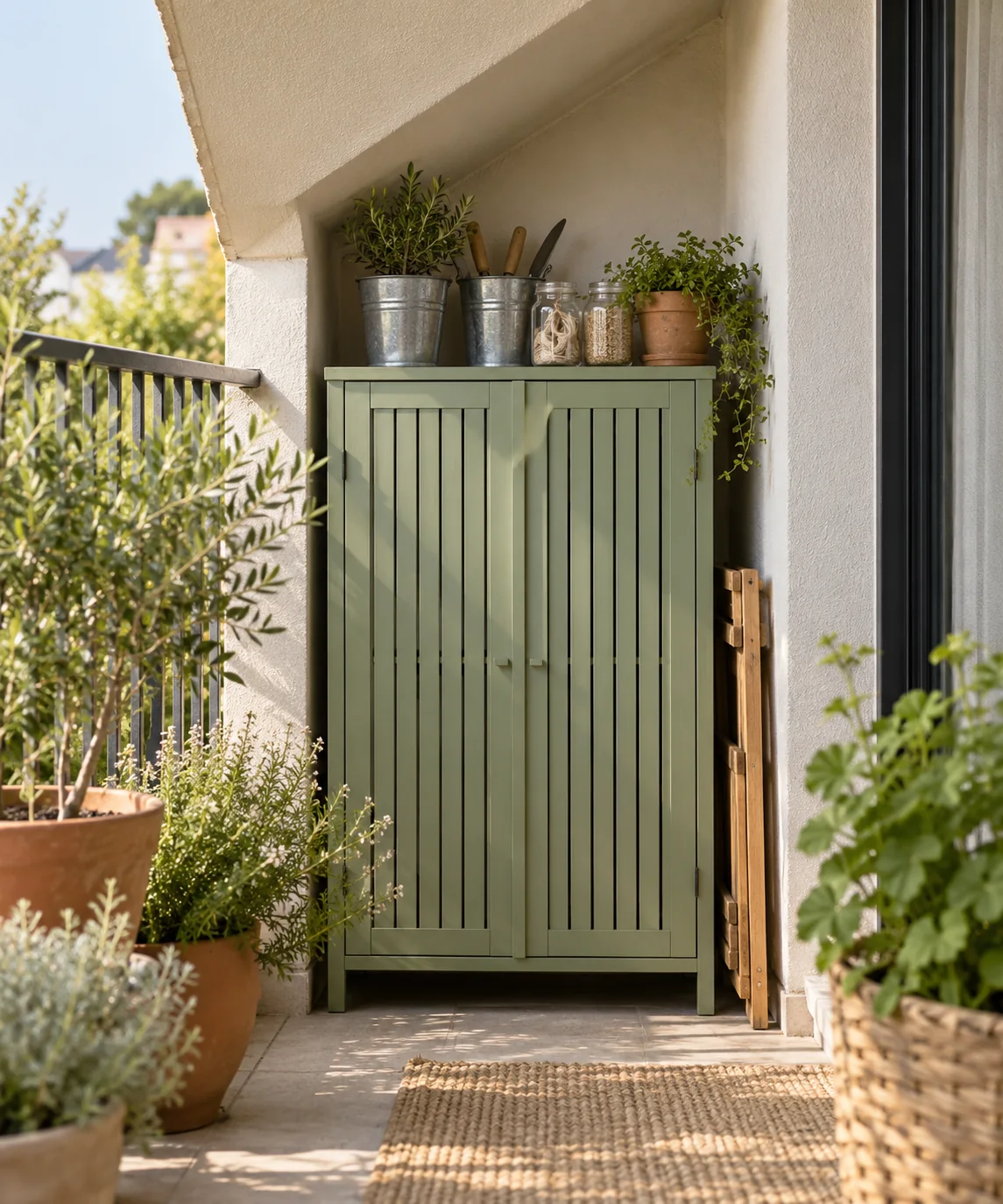
Evaluating Overhead Eaves and Wall Space
Survey your balcony’s architectural overhang before selecting an exterior cabinet. Overhead eaves offer shelter from falling rain, but wind can still drive moisture against exterior surfaces. Select an exterior wall location that provides coverage while avoiding fresh-air vents, utility shutoffs, or drainage paths. Keep a modest gap between the cabinet back and the building siding to allow air circulation and facilitate visual inspection for trapped moisture or debris.
Selecting Narrow Freestanding Dimensions
Cabinet depth is the primary dimension to verify on a compact balcony. Shallow models generally sit neatly against the wall without encroaching excessively on walking corridors. Look for freestanding units built from exterior-grade materials such as treated wood or UV-stabilized resin designed for outdoor exposure. Freestanding construction avoids drilling into exterior building claddings, which is often restricted in rental and condominium properties, and allows the unit to be shifted during routine cleaning.
Arranging Interior Storage for Stability
Organize stored supplies to keep the unit balanced and steady. Place the densest items, such as unopened bags of soil amendment or watering vessels, onto the lowest shelf to maintain a low center of gravity. Store lighter hand tools, seed packets, and spare plant labels on higher shelves in moisture-resistant bins. Keeping heaviest items at the bottom helps keep tall, shallow furniture stable during typical breezy conditions, though high-wind events may require temporary indoor storage.
Managing Moisture and Drainage Protection
Even under sheltering eaves, outdoor utility cabinets encounter high humidity and wind-driven dampness. Choose a cabinet featuring adjustable feet or an elevated base so bottom panels stay clear of standing deck water. Store dry amendments in sealed plastic containers with tight lids rather than leaving paper bags exposed to ambient moisture. Periodically inspect beneath and around the cabinet to clear accumulated foliage that could trap water against the decking or building wall.
Preserving Door Swings and Egress Clearances
Ensure cabinet doors can open fully without colliding with railings, nearby seating, or sliding screen doors. If your balcony corridor is especially narrow, consider open shelving or sliding door configurations rather than wide hinged doors that momentarily obstruct walking space. Always confirm that the remaining corridor meets building bylaws and allows clear, unhindered passage between the doorway and the perimeter at all times.
YOUR STARTING POINT
A little checklist.
Original editorial guidance. Images are AI-generated concepts, not photographs of completed projects. Our sources and approach.
Questions to consider
Can I use an indoor wooden bookcase under eaves?
Indoor furniture lacks moisture-resistant adhesives, weatherized finishes, and UV stabilizers. Humidity and condensation under eaves will quickly warp particleboard and delaminate veneers. Always invest in storage specifically rated for outdoor utility use.
How do I keep tools from rusting inside?
Clean soil from hand trowels and allow them to dry completely before storing. Place tools in a breathable lidded plastic bin inside the cabinet, adding silica gel packets to absorb ambient atmospheric moisture.
What should I do during high-wind advisories?
Ensure cabinet doors are latched securely to prevent wind catch. If the unit is lightly loaded, add weight to the bottom shelf using heavy terracotta pots or temporarily store it flush against an interior corner.