Warm Neutral Living Rooms · THE GUIDE
Tuck a Slim Writing Console Behind the Living Room Couch
Carving out a functional workspace in an open-plan home rarely requires dedicating an entire spare room. A floating couch provides an underutilized boundary that can ground a secondary surface without interrupting main walking paths. By placing an ultra-slim writing console directly against the back of your seating, you establish a compact station for laptop work, household administration, or focused journaling. Warm neutral tones, paired wood grains, and low-profile seating keep the setup subtle. This arrangement preserves sightlines across the living room while keeping daily paperwork and office supplies contained within a tidy, reversible footprint.
Jump to the checklist ↓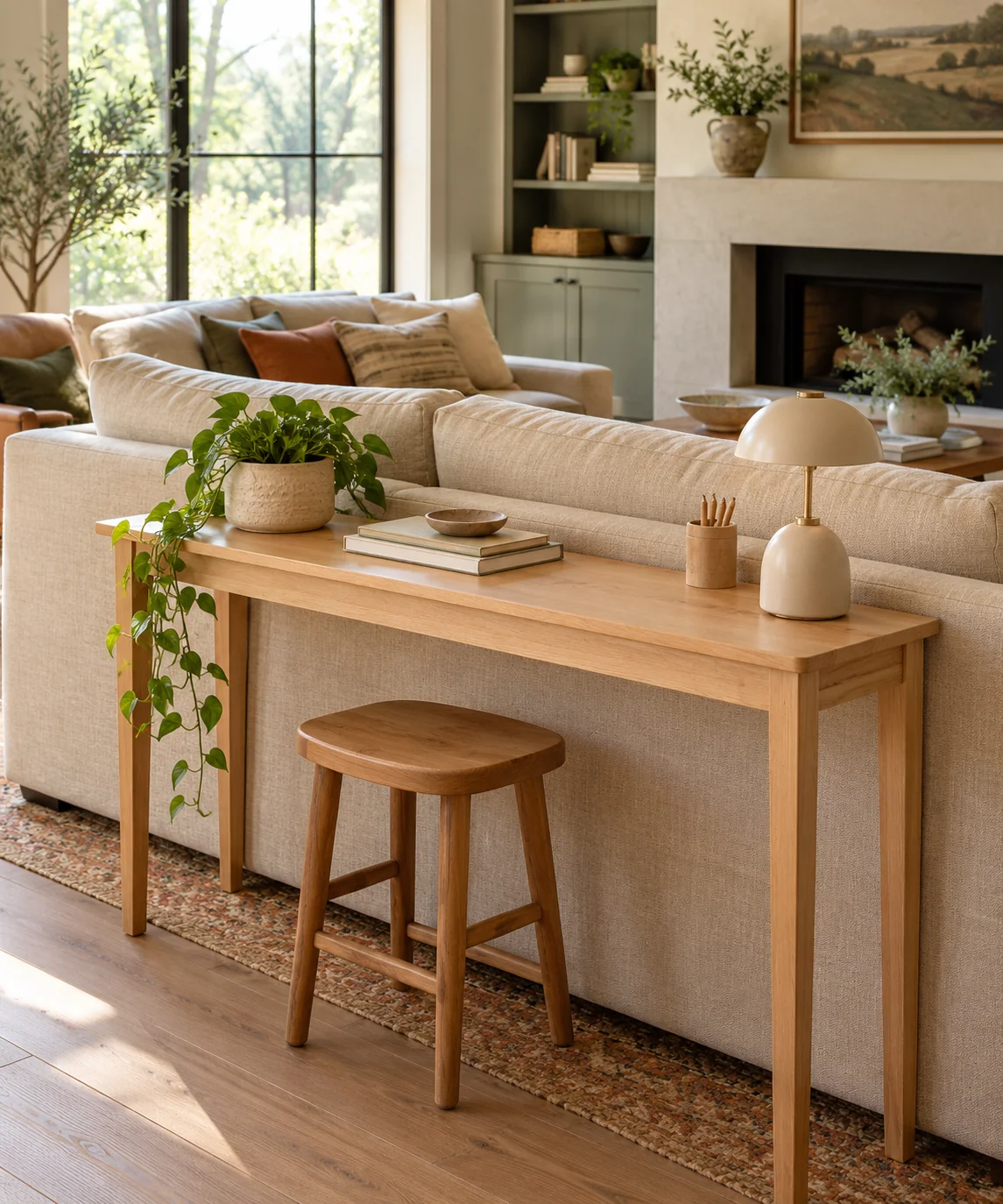
Measuring Sofa Backs and Walkway Clearances
Select a console that stands one to two inches lower than the top of your sofa back cushions to preserve a clean line. Measure depth carefully; a work surface between twelve and fourteen inches wide accommodates a laptop without crowding the room. Behind the desk, maintain at least thirty inches of clear walkway space to allow comfortable movement past an occupied seat. Mock up the intended footprint using painter's tape on the flooring for several days to confirm the additional furniture piece will not obstruct natural room circulation.
Selecting Minimalist Furniture and Seating
Pair the desk with backless seating to keep the silhouette discreet. A solid wood stool or tailored upholstered bench slides completely beneath the console when not in use, preventing tripping hazards along the aisle. Choose pale timber species like ash, maple, or light birch to complement warm neutral textiles. Ensure the desk features narrow legs or an open trestle base rather than solid slab sides. Open designs allow light to pass beneath the furniture, which prevents the living area from feeling crowded or overly partitioned.
Managing Power and Essential Work Tools
Keep technical hardware unobtrusive by running cords along the interior of the desk leg using adhesive clips. Position the console within reach of an existing floor box or perimeter wall outlet rather than stretching cords taut across open carpet. Use a low-profile ceramic task lamp with an inline switch to provide focused warm illumination without occupying valuable writing space. Limit desk contents to daily essentials by placing writing utensils in a small stoneware pot and storing charging cables in a small linen-covered box.
Testing Layouts with Existing Furniture
Before purchasing new furniture, test the layout using an existing narrow console table, drop-leaf surface, or sturdy bench. Move your couch forward twelve to sixteen inches to observe how the adjustment impacts your main television viewing angle, coffee table distance, and window access. Spend an afternoon working at this makeshift station to evaluate whether ambient room noise and family movement disrupt your concentration. This trial confirms whether a behind-the-couch workspace suits your daily habits before you invest in dedicated pieces.
Recognizing Spatial Limitations and Upkeep
A slim console cannot replace a full executive office desk. It lacks deep storage drawers and cannot support multiple desktop monitors, large printers, or heavy desktop towers without cluttering the main living space. Dedicate this zone exclusively to handheld devices, laptops, and physical notebooks. Maintain visual order by clearing the desk surface at the end of each evening. Paper stacks left in the center of an open living room quickly create visual noise, diminishing the restful, warm atmosphere of your primary seating area.
YOUR STARTING POINT
A little checklist.
Original editorial guidance. Images are AI-generated concepts, not photographs of completed projects. Our sources and approach.
Questions to consider
Can I use an office chair with armrests here?
Armchairs or rolling office seats typically obstruct open walkways and collide with the sofa. A simple backless stool or low timber bench slides away completely, preserving necessary circulation space through the living room.
How do I hide cords if no floor outlet exists?
Guide cords down the console leg and along the baseboard using low-profile neutral raceways or flat floor cord covers. Keep cables slack, completely flat, and away from frequent foot traffic to prevent trip hazards.
Will laptop glare be an issue facing the sofa?
Glare depends on nearby windows. If light falls directly onto your screen, angle the laptop slightly or lower translucent window shades to diffuse bright daytime sunlight without darkening the entire living room.