Patio Seating Ideas · THE GUIDE
Tuck-Away Woven Polypropylene Poufs Under Open-Frame Benches
Hosting gatherings in compact outdoor areas often strains standard seating arrangements, leaving pathways obstructed by spare chairs. An open-frame bench paired with tuck-away woven polypropylene poufs offers practical flexibility by utilizing the vacant opening beneath the seat. By planning dimensions carefully and observing how ground contact affects outdoor textiles, secondary seating remains accessible without disrupting routine foot traffic. Successfully coordinating this setup requires comparing furniture specifications, assessing ground moisture patterns, and following textile manufacturer care recommendations to ensure longevity.
Jump to the checklist ↓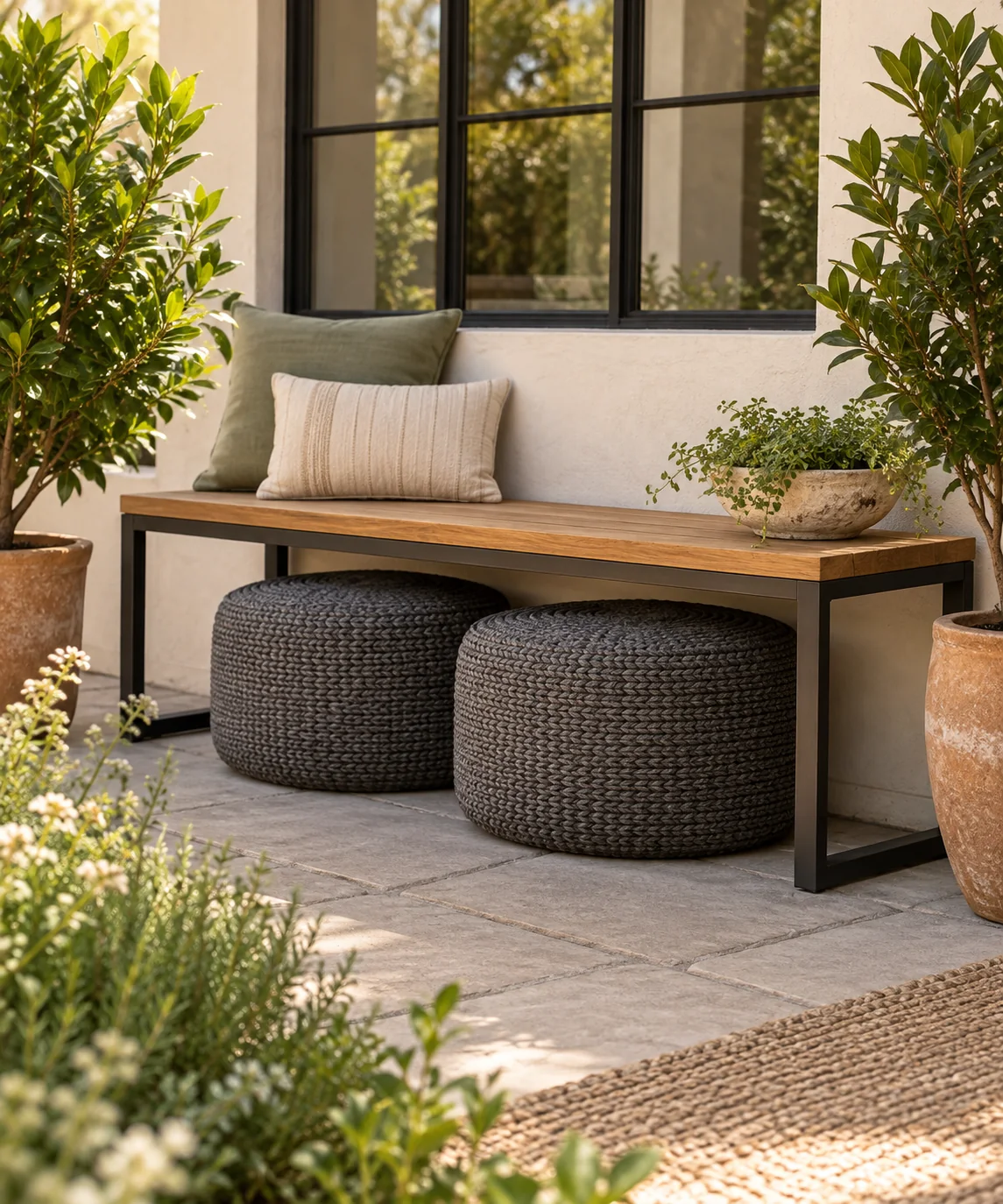
Bench Clearance and Bay Dimensions
Before pairing floor cushions with an existing garden bench, compare the physical dimensions of both pieces. Benches with low stretchers, angled corner braces, or decorative aprons can prevent poufs from sliding freely underneath. Rather than relying on generic clearance assumptions, measure the distance from your patio surface to the lowest horizontal rail of the bench frame, along with the interior width between the bench legs. The open bay should provide comfortable clearance around your chosen poufs so they can slide in and out without snagging against fasteners or rough frame edges.
Woven Synthetic Textile Characteristics
Synthetic weaves such as polypropylene are widely used for low outdoor cushions due to their low moisture absorption compared to untreated natural fibers like jute or cotton. However, prolonged exposure to standing dampness or saturated patio slabs can still trap grime and encourage surface mildew in textured crevices. Check product labels for UV stabilization ratings and cleanability guidelines. High-density foam inserts or bead fills designed specifically for outdoor use allow air to circulate better than standard indoor upholstery foams, but they still require periodic drying if exposed to rain.
Floor Mockups and Clearance Planning
Testing the planned layout before finalizing purchases helps confirm whether nested seating integrates smoothly with existing traffic routes. Use simple templates or containers matching the target pouf dimensions to verify that nested items sit flush with or slightly behind the front plane of the bench. Keeping the items clear of primary walking lanes helps prevent tripping hazards. When pulled out for guests, floor poufs provide a lower seating position than standard dining chairs, making them best suited for relaxed, casual seating rather than formal dining.
Debris Inspection and Surface Care
Items stored close to the ground beneath outdoor furniture naturally accumulate windblown dust, fallen leaves, and insects. Regularly slide the poufs out to sweep the paving and inspect the cushion undersides. When cleaning polypropylene covers, follow the manufacturer's care tag, which typically advises using a soft brush, mild diluted dish detergent, and cool water. Avoid harsh pressure washing or abrasive scrubbing pads, which can fray woven synthetic strands or damage protective finishes.
Air Circulation and Moisture Management
Even moisture-tolerant outdoor fabrics should not remain pressed against persistently damp paving. After rain, move the poufs onto a dry surface or set them upright to promote ventilation along the bottom panels and the ground beneath. If your patio surface tends to hold puddles or drains slowly, store floor cushions in a ventilated deck storage box or indoors between uses. Ensuring adequate airflow prevents persistent dampness from creating odors or leaving mineral marks on the fabric.
YOUR STARTING POINT
A little checklist.
Original editorial guidance. Images are AI-generated concepts, not photographs of completed projects. Our sources and approach.
Questions to consider
Can woven polypropylene poufs remain outdoors through all seasons?
Manufacturers generally recommend storing outdoor soft furnishings indoors or within a weatherproof deck box during winter or extended stormy periods. Prolonged exposure to freezing temperatures, snow, and persistent dampness can degrade stitching and internal core materials.
How can I prevent outdoor poufs from abrading on textured paving?
Rough aggregate concrete, split flagstone, and brick can gradually wear down woven fabric if dragged repeatedly. Lifting the poufs rather than sliding them across coarse surfaces reduces friction and extends fabric life.
What should I look for in terms of pouf support and fill?
Examine the manufacturer's fill specifications to ensure the pouf is intended for seating rather than purely decorative use. Dense bead fills or reticulated outdoor foam cores offer firmer support and recover their shape more effectively under regular use.