Compact Home Offices · THE GUIDE
Turn a Basement Masonry Alcove into a Whitewashed Office Nook
Basement masonry alcoves often sit vacant, presenting cool, shadowed brick recesses that seem unwelcoming. With measured spatial planning and appropriate surface treatments, these architectural features can become quiet, comfortable micro-offices. Refreshing the masonry with breathable, mineral-safe finishes enhances natural light reflection, while freestanding timber furnishings add warmth and tactile comfort against mineral walls. Making the space practical requires assessing basement humidity, establishing safe power access, and maintaining adequate ventilation so electronics and paper goods remain protected over time.
Jump to the checklist ↓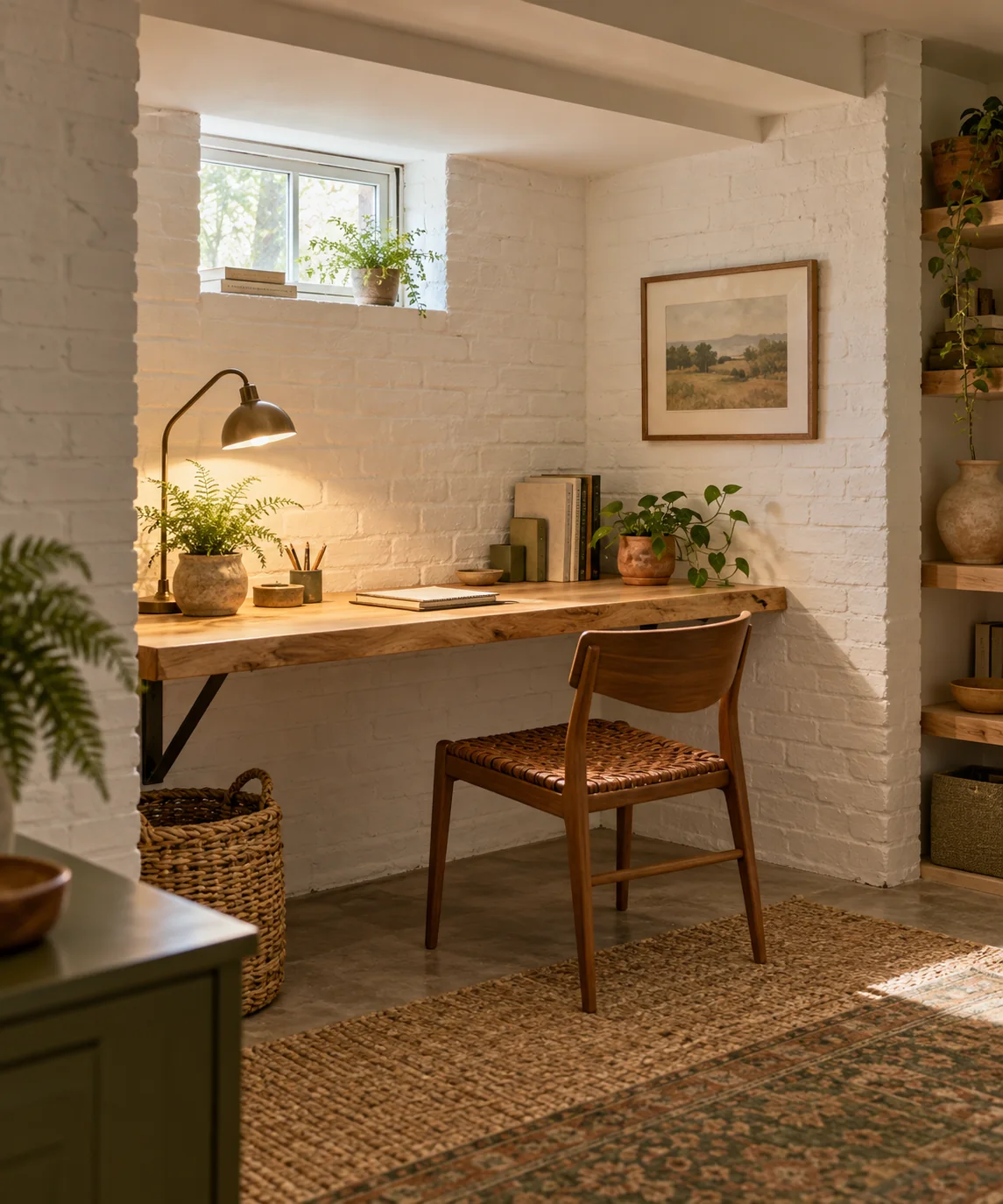
Assessing Subterranean Moisture and Masonry Soundness
Below-grade brick and stone walls constantly interact with soil moisture and ambient humidity. While a taped plastic sheet can indicate surface condensation, it does not detect seasonal hydrostatic pressure or deep water vapor migration. Before introducing furniture or electronics, inspect the alcove for active water seepage, peeling paint, or powdery efflorescence along mortar joints. If dampness or structural mortar degradation is evident, consult a qualified waterproofing professional or structural mason before proceeding with any interior workspace improvements.
Selecting Breathable Finishes for Masonry
Rough, dark brick absorbs light, making basement nooks feel dim and enclosed. To brighten the alcove without trapping subterranean moisture, apply a vapor-permeable mineral silicate paint or traditional potassium water-glass finish in a pale, warm tone. Avoid conventional non-breathable vinyl or acrylic latex coatings, which can trap migrating dampness behind an elastic film and cause blistering or masonry decay. Matte mineral finishes diffuse ambient light softly across the nook while allowing the masonry to breathe naturally.
Introducing Thermal Breaks with Freestanding Furniture
Masonry walls remain thermally cool throughout the year, which can make prolonged desk work uncomfortable if your arms rest against bare brick. Position a freestanding timber desk inside the alcove rather than permanently bolting ledger boards into damp or uneven brickwork. Natural woods such as ash, beech, or oak provide a comfortable, warm contact plane. Pair the desk with a breathable floor runner placed over an anti-slip, vapor-permeable underlay to insulate your feet from cold concrete subfloors.
Lighting Design for Deep Recesses
Basement alcoves rarely receive natural sunlight, requiring thoughtful artificial illumination to prevent eye fatigue. Avoid relying on a single overhead downlight, which casts harsh shadows over keyboards and documents. Instead, combine indirect perimeter lighting—such as an LED fixture bouncing light off the pale masonry—with an adjustable task lamp focused directly on paperwork. Choose bulbs with a warm-white color temperature (around 2700K to 3000K) to render the masonry texture welcoming while keeping computer screens free of harsh reflections.
Climate Management and Fire Safety
Maintaining stable environmental conditions is vital for safeguarding laptops and paper records in a basement setting. Run a dedicated dehumidifier to keep ambient relative humidity within a steady, moderate range, preventing mold growth and musty paper odors. If supplemental heating is needed during cold seasons, maintain generous manufacturer-specified clearances between heating equipment and any combustible materials, including wooden desks and paper files. Never leave portable space heaters running unattended in an enclosed workspace.
YOUR STARTING POINT
A little checklist.
Original editorial guidance. Images are AI-generated concepts, not photographs of completed projects. Our sources and approach.
Questions to consider
Can regular interior wall paint be used on basement brick alcoves?
Standard latex paints form an impermeable film that can trap moisture inside subterranean brick, leading to bubbling and spalling. Use vapor-permeable mineral or silicate paints formulated specifically for indoor masonry.
How can I protect paper documents from basement humidity?
Keep the room relative humidity below fifty percent using a reliable dehumidifier. Store paperwork in lidded archival boxes positioned off the floor on desk shelves rather than directly against exterior foundation walls.
How should power be supplied safely to a basement office nook?
Plug computer hardware and task lighting into a code-compliant, grounded wall receptacle nearby. If the alcove lacks an outlet, hire a licensed electrician to install an approved receptacle rather than relying on extension cords for daily use.