Reading Corners · THE GUIDE
Turn a Bay Window Sill into a Deep Reading Perch
Architectural bay windows provide lovely natural light, but their shallow wooden sills often lack the depth needed for comfortable lounging. You can convert a narrow alcove into a supportive reading retreat without remodeling by positioning a sturdy freestanding wooden chest directly in front of the existing ledge. Bridging the sill and the chest with a continuous, dense foam cushion creates a seamless platform for curling up with a book. This reversible approach adds hidden blanket storage beneath the seat while preserving the structural integrity and original trim of your living space.
Jump to the checklist ↓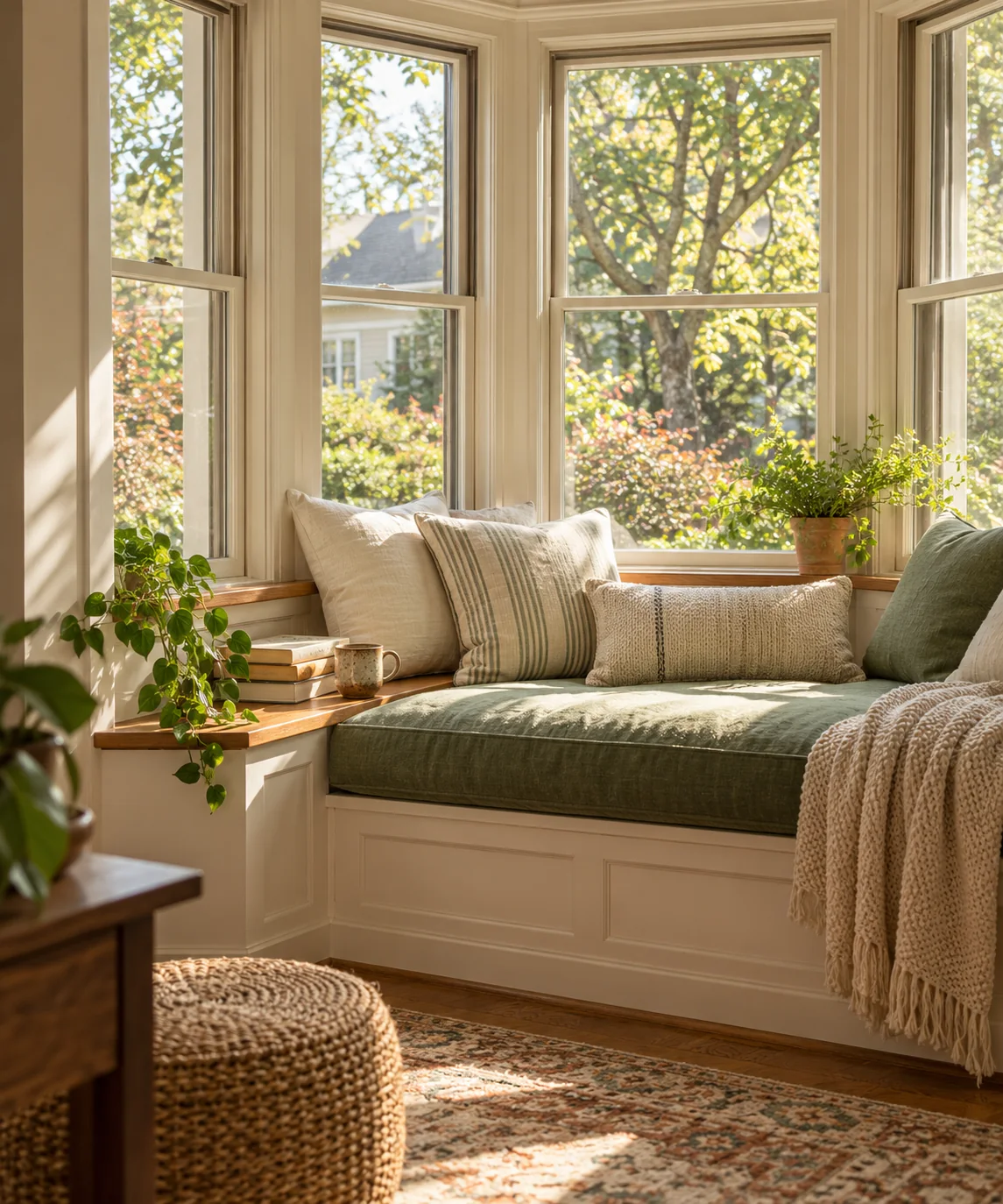
Assessing Alcove Dimensions and Sill Profiles
Before arranging furniture in an alcove, measure the depth, width, and height of the window sill from the floor. Standard window sills and decorative stools are finished trim pieces secured with finish fasteners, rarely engineered as load-bearing platforms. Any reading setup should direct body weight primarily onto dedicated, freestanding furniture rather than relying on the window ledge. Measure the wall-to-wall opening within the bay angle to confirm a chest or low bench can sit completely level without pinching window trim, baseboards, or operating hardware. Measuring depth at multiple points across the bay helps verify proper alignment, as historic frames are rarely perfectly square.
Cushion Density and Weight Distribution
Creating a comfortable lounging surface adjacent to a window requires resilient cushioning that keeps body weight supported on the bench below. High-density upholstery foam measuring three to four inches thick provides firm, even support without bottoming out under point loads. If bridging the space between a freestanding chest and the adjacent sill, ensure the furniture frame bears the user's weight while the sill merely provides light edge backing. Using a single cohesive cushion cover or a rubberized non-slip mesh underlay underneath prevents shifting, bunching, or sliding when sitting down or standing up.
Textile Selection and Direct Sunlight Exposure
Bay windows receive concentrated exposure to natural light and ambient temperature swings, which can cause conventional fabrics to fade, weaken, or stretch over time. Select durable, tightly woven upholstery textiles, such as solution-dyed acrylic, heavy canvas, or commercial-grade polyester blends with high lightfastness ratings. Zippered, removable covers allow for routine laundering or spot cleaning when condensation, dust, or pollen settles along the window area. Bolster cushions or firm back pillows can be placed against side walls rather than glass panes to protect window glazing from unexpected pressure.
Accessibility and Storage Chest Functionality
Using a low storage chest beneath a window provides convenient space for extra blankets, cushions, or household items, but accessibility depends on the chest design. A heavy, full-depth cushion makes opening a top-hinged lid awkward for daily use, requiring you to clear the cushion each time you access the interior. If frequent access is needed, consider a unit with front-opening doors, pull-out storage bins, or sliding drawers. For top-loading chests, designate the interior for seasonal or infrequently used items so the seating arrangement remains largely undisturbed.
Clearances for Heating Sources and Safe Airflow
Many bay window alcoves sit directly above heating registers, radiators, or electric baseboard heaters designed to counter cold glass drafts. Placing solid furniture against or over heat sources creates severe hazards: blocking electric baseboards presents a fire risk, while trapping heat around hydronic radiators or forced-air vents reduces system efficiency and dries out wooden furniture. Always consult your heating equipment manufacturer's guidelines for required furniture clearances, which often require at least twelve inches or more of open space around electric units. If clearances cannot be maintained safely, keep the alcove open rather than enclosing the heat source.
YOUR STARTING POINT
A little checklist.
Original editorial guidance. Images are AI-generated concepts, not photographs of completed projects. Our sources and approach.
Questions to consider
Can an original window sill support the full weight of an adult sitting on it?
Original window sills and stools are generally trim pieces fastened with finish nails, not engineered structural supports. Weight should be supported entirely by freestanding, weight-rated furniture placed in front of the window, using the sill area only as visual alignment or light cushion resting space.
How should I handle heating vents or baseboard heaters under the bay window?
Never push solid furniture tight against heating vents or electric baseboards. Review manufacturer documentation for mandatory clearance zones—often a foot or more for electric heating elements—to ensure unobstructed airflow and prevent fire hazards or material damage.
What type of fabric holds up best to prolonged sun exposure in a bay window?
Solution-dyed outdoor fabrics, commercial polyester blends, and tightly woven canvases with proven UV resistance resist fading and structural breakdown under intense sunlight far better than untreated natural silks or delicate lightweight cottons.