Compact Home Offices · THE GUIDE
Turn a Vintage Linen Press into a Concealable Work Armoire
Repurposing a vintage linen press or antique wardrobe creates a dedicated work hub that completely disappears once the workday concludes. Traditional cabinets provide generous vertical capacity, enabling you to organize screens, files, and stationery on sturdy interior shelving. By keeping the historic frame structurally intact, you gain an ergonomic work retreat without altering the character of the room. When closed, paneled doors preserve your living room or bedroom aesthetic, concealing technological clutter. Planning this conversion requires thoughtful evaluation of interior shelf depth, ventilation, and reversible organizational inserts suited to historic wood.
Jump to the checklist ↓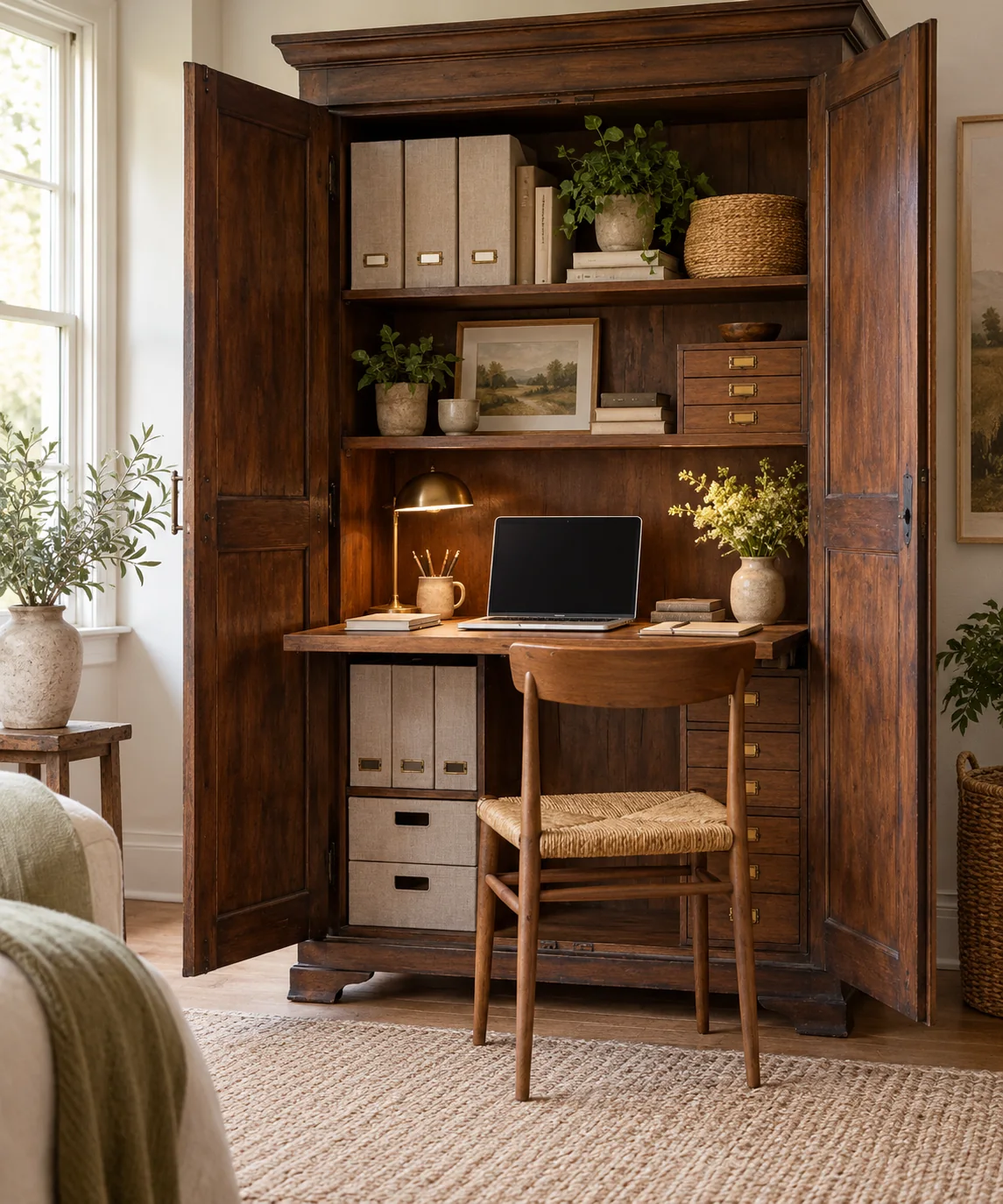
Evaluate Shelf Depth and Structural Knee Room
Adapting an antique linen press or wardrobe requires verifying whether existing shelf spans offer workable ergonomic depth. A functional setup generally requires sufficient depth to support a screen, input peripherals, and forearm rest without forcing awkward wrist angles. Examine how shelves are joined or supported before placing heavy equipment; traditional sliding trays or lightweight cleats may need evaluation to confirm they can carry modern loads. If intermediate shelves are removable, store them flat in a climate-controlled room to prevent warping.
Plan Non-Destructive Power Routing
Preserve historic joinery and prioritize electrical safety by avoiding makeshift pass-throughs. Do not wedge or thread flexible power cords through tight plank joints or seasonal expansion gaps, where shifting wood can pinch and abrade wire insulation over time. Instead, run approved cords through existing manufactured openings or route cables neatly across open interior edges using non-adhesive fabric ties or freestanding cord organizers that do not pull historic varnish or finish.
Select Low-Heat Task Lighting
Enclosed timber cabinets restrict airflow, making low-heat illumination essential. Battery-operated or low-voltage LED bars with cool-running diodes provide direct illumination over the keyboard plane without generating heat against aged timber. Place freestanding or safely mounted fixtures toward the front of the overhead shelf to distribute light evenly across your work surface while avoiding direct glare on screens.
Organize Peripherals Within Door Clearance Lines
Before closing cabinet doors at the end of the day, all electronics and paper organizers must sit behind the door rebate. Measure the depth of secondary displays, laptop stands, and storage trays to ensure they clear hinges and latch mechanisms. Use freestanding desk caddies and stackable paper trays on upper shelves to keep the primary working tier uncluttered, ensuring heavier file boxes rest on lower structural shelves.
Allow Hardware Heat Dissipation Before Closing
Enclosing active electronics inside an unvented wooden cabinet can trap heat, potentially stressing internal hardware components and drying antique wood fibers. Shut down external monitors, laptop docking hubs, and charging bricks after working, allowing devices to cool down before swinging the cabinet doors shut. Establishing this pause ensures electronic equipment operates within manufacturer temperature limits and protects vintage cabinetry.
YOUR STARTING POINT
A little checklist.
Original editorial guidance. Images are AI-generated concepts, not photographs of completed projects. Our sources and approach.
Questions to consider
Can an ergonomic office chair fit inside a repurposed armoire?
Standard office chairs with wide wheelbases rarely fit inside antique cabinet depths. Pair the armoire with a supportive chair that can be turned or placed nearby in the room when the cabinet doors are latched.
How do you protect vintage wood surfaces from equipment scratches?
Place a non-reactive desk blotter, felt-backed leather mat, or woven wool pad under laptops, keyboards, and mice. Avoid rubberized or plastic mats with chemical plasticizers that can react with traditional shellac or wax finishes.
Is heat buildup inside a closed armoire dangerous to electronics?
Operating computers or chargers inside a fully sealed cabinet can cause thermal throttling or component wear. Keep doors fully open during use, avoid operating high-draw hardware inside the enclosure, and allow equipment to cool before closing.