Patio Seating Ideas · THE GUIDE
Two-Tiered Step Bench for Multi-Generational Garden Perching
Multi-generational outdoor spaces demand adaptable seating dimensions that welcome varied mobility levels without cluttering the patio footprint. A two-tiered modular step bench addresses this challenge by functioning simultaneously as a casual ground-level lounge platform, a standard chair-height perch, and an elevated display surface for seasonal container plants. By staggering horizontal timber surfaces across two distinct heights, households provide intuitive perching spots for both active youngsters and adults seeking upright support. Integrating structured seating into a stepped layout establishes a stable focal point that organizes garden traffic while maximizing usable seating capacity along patio perimeter zones.
Jump to the checklist ↓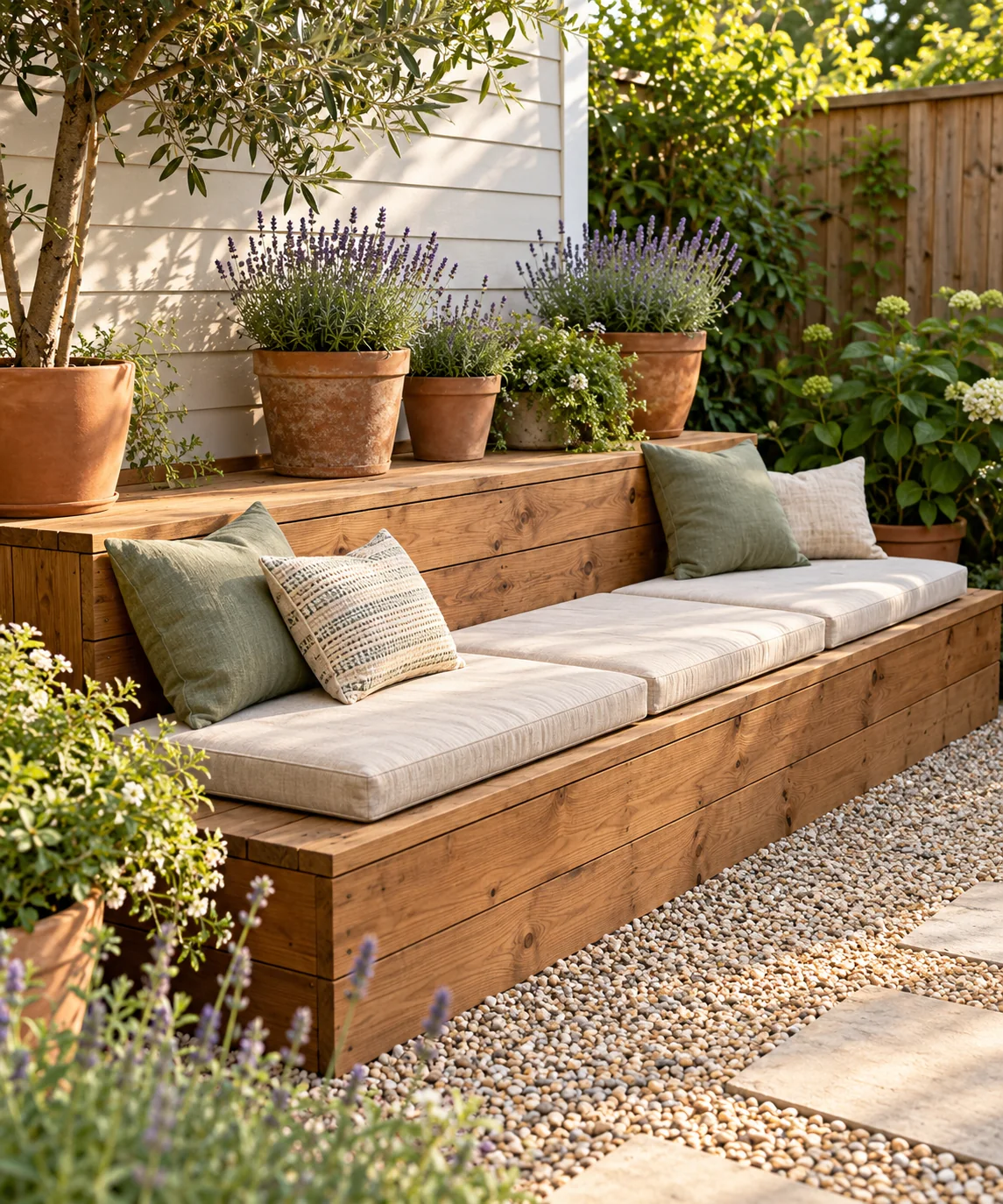
Planning Tier Dimensions and User Comfort
Multi-tiered platforms can offer casual seating options for different household members, but effective design depends on careful dimension planning. When considering tiered benches or platforms, research standard chair dimensions and local residential guidelines. A lower platform serves well for informal floor lounging or low perching, while an upper tier positioned closer to standard dining height assists those who require upright support to sit and rise with ease. Temporary mock-ups using modular garden blocks or existing low stools can help household members assess step heights, seat depths, and comfort before committing to a permanent layout.
Zoning Platforms for Plants and Seating
Dividing platform space clearly between active perching and container plants helps prevent clutter and accidents. Position container plantings toward the outer ends or rear margins of the upper tier to act as visual accents without obstructing foot movements. Keep primary step edges and central perching zones entirely clear of pots, saucers, and trailing foliage. This separation reduces the risk of accidental kicks, knocked-over containers, or crushed foliage, while ensuring that adults and children have unobstructed room to step up, sit down, and adjust their footing.
Foundation Considerations and Ground Stability
Any tiered garden seating platform requires a flat, firm, and stable ground surface to remain safe and functional over time. Placing timber platforms directly onto uneven lawn or soft garden soil can lead to localized settling, trapped ground moisture, and premature timber decay. Stable, pre-existing paved surfaces, concrete slabs, or properly prepared sub-bases help keep modular units aligned. Ensure any modular units fit securely without shifting or rocking under dynamic foot weight, and consult a qualified landscape professional or carpenter if you are integrating built-in platforms onto sloping ground.
Cushioning, Traction, and Moisture Management
Textiles used on multi-tiered platforms must balance comfort with stability. Removable outdoor pads made with high-density foam and outdoor-rated fabrics can soften firm wooden slats. To reduce slipping when stepping on or rising from low platforms, look for cushions equipped with non-slip backings or secure fabric ties that loop around framing. During prolonged wet weather or off-season months, store fabric cushions indoors in a dry area to prevent mold growth beneath the pads and to allow timber slats to dry out thoroughly after rain.
Safety Limitations and Long-Term Maintenance
While step benches offer versatile seating, they present distinct physical limitations. Step benches typically lack armrests and back supports, which can make them tiring or unsuitable for extended sitting, particularly for individuals with balance concerns or back pain. Maintain a generous, unobstructed walkway along the entire front perimeter so the structure does not impede garden circulation. Perform regular seasonal inspections to check for weathered fasteners, split wood, or loose boards, addressing worn hardware promptly to maintain structural integrity.
YOUR STARTING POINT
A little checklist.
Original editorial guidance. Images are AI-generated concepts, not photographs of completed projects. Our sources and approach.
Questions to consider
How can debris between platform decking boards be managed?
Regularly sweep the platform surface with a stiff outdoor broom to prevent leaves and organic matter from decomposing in decking gaps. Periodic cleaning with water and a soft-bristle brush prevents slippery algae layers from developing on damp wood surfaces.
What should be considered when placing a tiered bench near sloping ground?
Tiered platforms require a completely level, structurally stable sub-base to prevent uneven settling or tipping. If your patio or yard slopes, consult a licensed contractor or landscape professional rather than attempting to prop or shim wooden frames on uncompacted soil.
Are tiered benches suitable as the sole seating option for gatherings?
Because tiered step benches lack backrests and arm support, they work best as supplemental or casual perching zones. Incorporating standard patio chairs with supportive backs alongside the bench ensures comfortable accommodations for guests requiring ergonomic support.