Household Reset Routines · THE GUIDE
Under-Bed Storage Box Dusting and Garment Inspection
Low-profile rolling fabric storage boxes make platform bed undercarriages valuable for off-season linens and folded garments. However, the narrow gap between floorboards and bed slats naturally collects settled lint, hair, and dust. Establishing a dedicated maintenance routine protects stored fabrics from settled debris and keeps caster wheels running smoothly across hardwood or rugs. By sliding boxes out entirely, clearing the under-bed zone, vacuuming the exterior shell, and inspecting container seals, you ensure stored textiles remain clean and ready for seasonal rotations while keeping under-bed floor areas well maintained.
Jump to the checklist ↓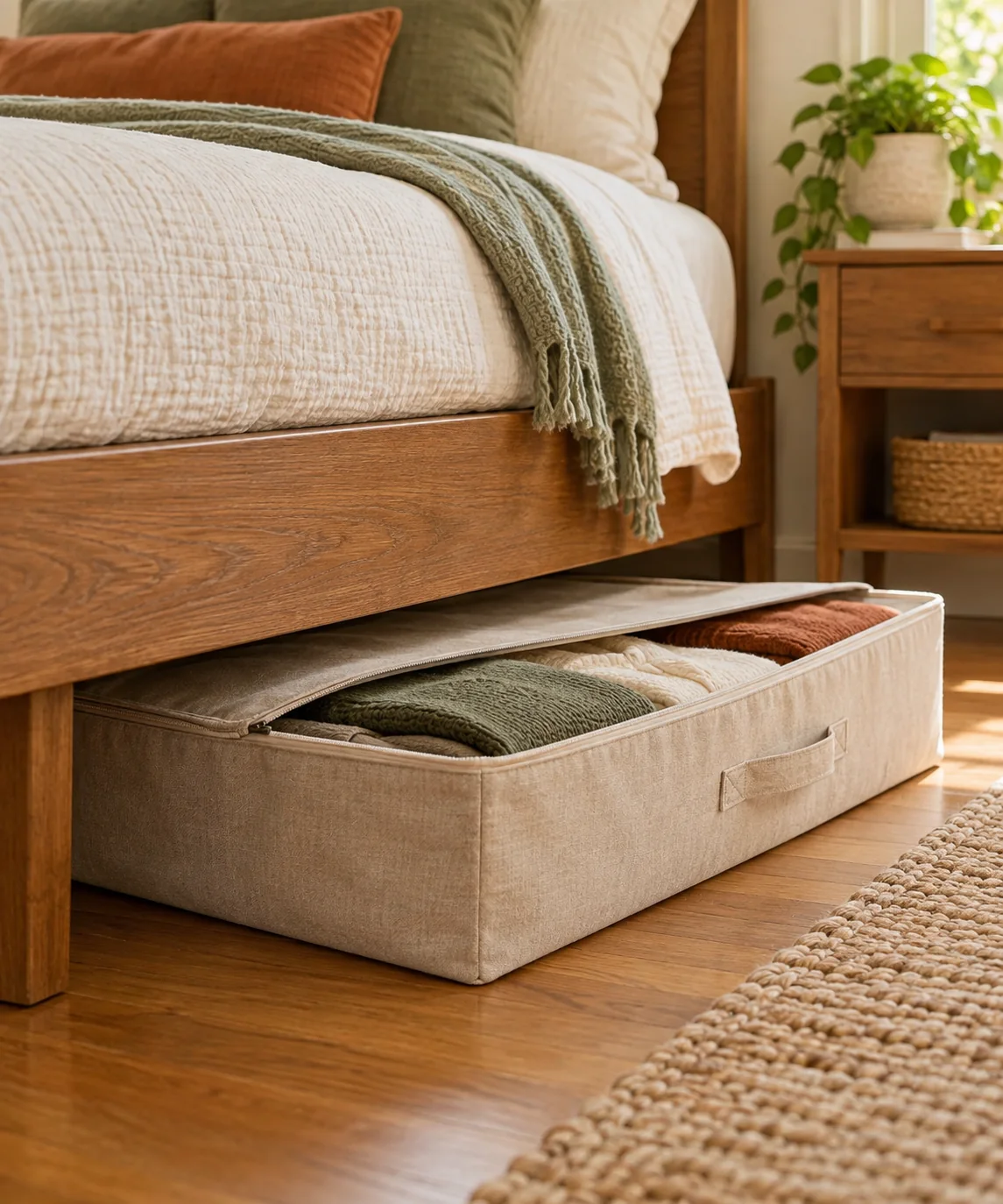
Clearing Floor Clearance and Box Removal
To begin, clear a wide runway beside the platform bed frame so each rolling container pulls out horizontally without catching on rugs, nightstands, or bedding. Lift any hanging duvet edges out of the way before pulling boxes smoothly along their track. If your containers feature caster wheels, roll them forward straight rather than twisting them diagonally, which can strain lightweight fabric sidewalls. Place the removed bins onto an elevated surface or a clean sheet on the floor to prevent transferring floor dust onto top coverlets.
Vacuuming Floorboards and Frame Rails
With the boxes fully removed, use a wide floor attachment on your vacuum cleaner to clear accumulated lint from baseboards, corner joints, and the center support rail. Follow with an angled crevice tool along the perimeter where the bed legs meet flooring, as static cling often traps loose dust here. Wipe the underside of low-profile wooden slats using a dry microfiber cloth to catch clinging fibers. Avoid liquid cleaners on bare under-bed wood to ensure no residual dampness transfers to fabric boxes.
Exterior Bin Dusting and Wheel Check
Before unzipping containers, address the exterior canvas or non-woven fabric shells. Run an upholstery brush attachment or a dry lint roller over the top lids and perimeter binding where settling dust concentrates. Turn each bin slightly to inspect caster wheels or glides, clearing wrapped threads, pet hair, or trapped lint from axle hubs using your fingers or tweezers. Smoothly rotating wheels prevent floor scuffing and reduce lateral stress on fabric handles during subsequent access cycles.
Garment Check and Moisture Assessment
Unzip the top closure completely and fold back the lid to evaluate the interior textile environment. Look for signs of dampness, mustiness, or fabric compression among seasonal sweaters, extra blankets, or folded linens. Gently refold items that have slumped against perimeter walls to redistribute interior weight evenly. If garments feel stiff or retain an enclosed scent, remove them temporarily to air out in a well-ventilated room before repacking, ensuring only completely dry, fresh textiles remain inside the protective enclosure.
Re-Zipping and Controlled Reinsertion
Carefully draw the dual zippers along their tracks, easing fabric edges inward with one hand to prevent zipper teeth from catching on stored wools or cotton linings. Ensure zipper pulls seat fully together at the center or side stops to maintain an effective barrier against particulate entry. Slide each container back under the platform bed in an aligned sequence, leaving comfortable clearance between adjacent boxes to allow smooth handling and prevent fabric friction against bed legs or support rails.
YOUR STARTING POINT
A little checklist.
Original editorial guidance. Images are AI-generated concepts, not photographs of completed projects. Our sources and approach.
Questions to consider
How often should under-bed rolling boxes be pulled out and inspected?
Pulling bins out every six to eight weeks matches standard seasonal transitions. This frequency prevents dust carpets from forming beneath slats while catching fabric humidity issues early before fibers absorb ambient room dampness.
Should open woven baskets be used instead of zippered fabric containers under beds?
Open baskets allow dust bunnies and floor debris to settle directly onto stored garments. Zippered canvas or dense non-woven boxes provide a complete physical shield against airborne particles in low-clearance platform zones.
What should I do if a rolling fabric box scrapes along the floor?
Check whether caster stems have accumulated hair or loosened from base sockets. Overfilling also causes container bottoms to bow downward, dragging fabric against flooring; remove a few heavier items to restore clearance.