Kitchen Herb Gardens · THE GUIDE
Under-Cabinet Drying Rack Positioned Over Potted Herbs
Aligning an overhead drying rail with live potted herbs on the counter creates a functional vertical workflow for everyday cooking. Excess stems pruned during routine maintenance can be bundled and suspended immediately, catching stray leaves on the tray below while drying in warm, circulating air. This arrangement organizes culinary greens within a single vertical footprint, making both fresh and preserved seasonings accessible during prep. By mounting lightweight dowels beneath upper cabinetry away from cooking steam, you preserve essential plant oils without cluttering useful counter prep surfaces.
Jump to the checklist ↓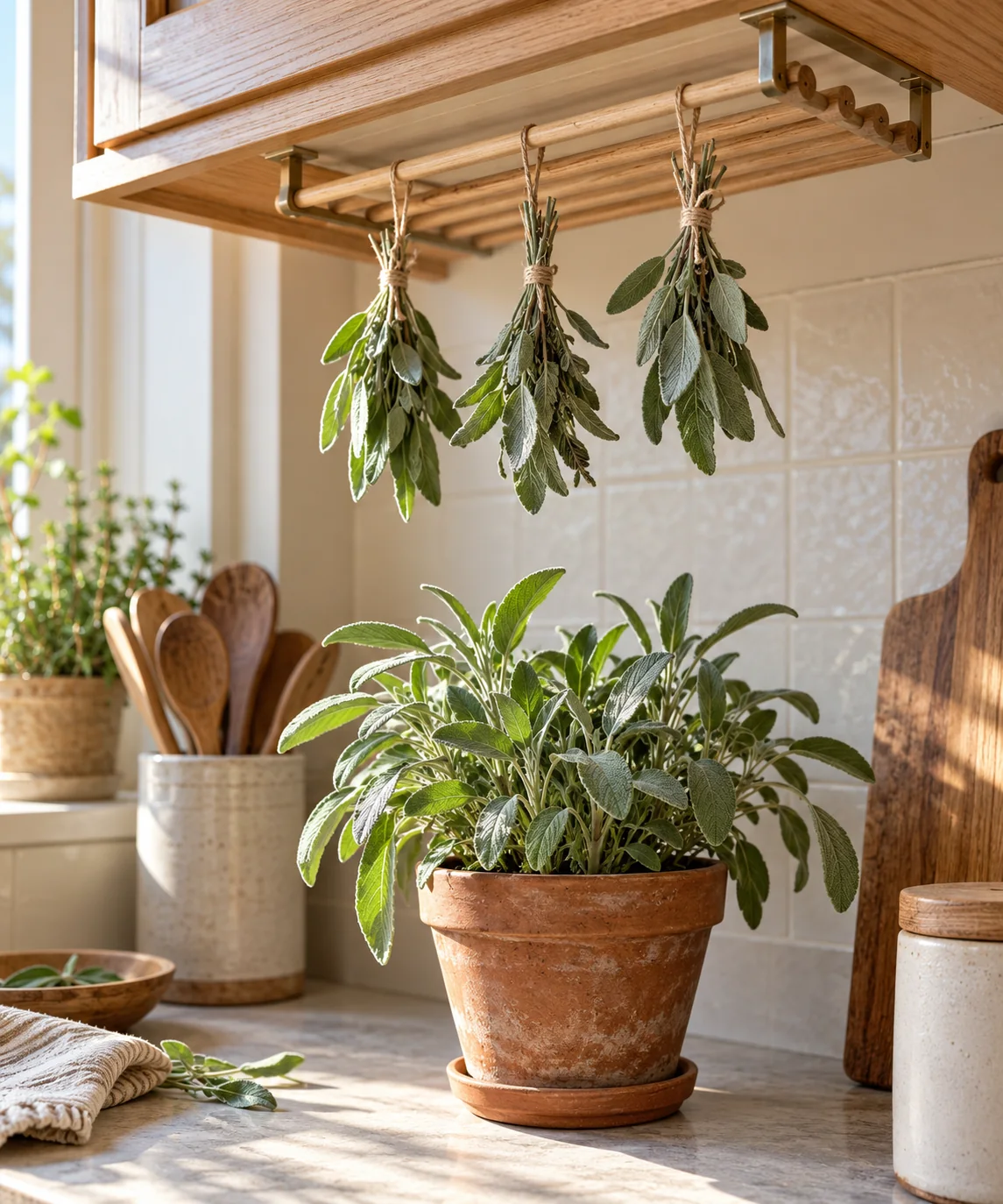
Vertical Space Planning and Countertop Layout
Planning an overhead drying area above countertop herbs requires assessing the vertical clearance between the counter surface and upper cabinetry. Cabinet mounting heights and backsplash dimensions vary considerably between homes. Before setting up any drying arrangement, measure the mature height of your potted herb containers to ensure foliage has adequate open headroom beneath suspended sprigs. Avoid overcrowding the counter surface; leaving visible space around each container facilitates routine watering, plant inspection, and passive ambient airflow without foliage rubbing against adjacent surfaces or drying bundles.
Mounting Considerations and Weight Limitations
Suspending items beneath upper cabinetry requires careful hardware selection based on cabinet material and manufacturer guidance. Avoid relying on unrated adhesive hooks for overhead suspension in cooking environments, as grease accumulation, warmth, and ambient humidity can compromise adhesive bonds over time. Consult cabinet manufacturer specifications or building guidelines before attaching any hardware. For a non-invasive setup, consider freestanding countertop drying racks or weighted stands that eliminate mechanical fasteners and potential drop hazards above food prep areas and live plants.
Environmental Heat, Steam, and Airflow Dynamics
Kitchens feature localized temperature and humidity fluctuations that directly influence both dehydration and live plant health. Keep drying herbs and living pots away from active cooking appliances, dishwashers, and electric kettles. Rising steam introduces moisture that delays drying and encourages mold development, while direct appliance heat can scorch living foliage and prematurely bake essential oils out of harvested sprigs. Position the station where it receives gentle, indirect natural daylight and stable room ventilation, consulting appliance user manuals for recommended lateral clearances.
Selecting Herb Varieties for Ambient Air-Drying
Woody Mediterranean herbs with naturally low moisture levels dry most dependably in ambient indoor air. Culinary varieties such as rosemary, thyme, culinary sage, and oregano dehydrate steadily without turning dark or harboring excess internal moisture. Conversely, broad-leaved, moisture-dense herbs like basil, flat-leaf parsley, and mint are prone to softening or molding when suspended in typical room air. Gather dryable varieties into small, loose clusters using breathable kitchen twine to ensure air circulates thoroughly through the stems.
Debris Containment and Workspace Cleanliness
As botanical foliage dries, natural shrinkage causes leaves and bracts to separate from stems. Placing live herb pots within a wide, rimmed ceramic or stoneware tray directly beneath the drying bundles provides a practical catch basin for falling dry matter. This contained boundary prevents brittle leaf fragments from scattering across surrounding prep surfaces and simplifies routine cleaning. Periodically inspect drying bundles and live containers for moisture buildup, pest activity, or leaf drop to maintain sanitary kitchen conditions.
YOUR STARTING POINT
A little checklist.
Original editorial guidance. Images are AI-generated concepts, not photographs of completed projects. Our sources and approach.
Questions to consider
Can adhesive hooks safely hold under-cabinet herb drying racks?
Adhesive performance depends heavily on cabinet underside surface material, ambient kitchen temperature, and fluctuating humidity from cooking. Because steam and grease can weaken adhesive bonds over time, manufacturer load ratings and surface preparation guidelines must be consulted, or freestanding countertop racks should be used instead.
How do kitchen appliances affect hanging drying herbs?
Cooktops, electric kettles, and dishwashers release plumes of warm vapor and radiant heat. This concentrated moisture can rehydrate drying foliage, delay dehydration, and foster mold growth. Hanging herbs should be kept well clear of appliance exhaust paths and heat zones based on kitchen layout and airflow patterns.
Which herbs are best suited for hanging in a kitchen?
Woody herbs with low moisture levels, including rosemary, thyme, sage, and winter savory, dry most reliably in ambient room air. High-moisture herbs like basil, parsley, and mint often turn dark or mold before drying thoroughly under standard indoor kitchen conditions.