Container Vegetable Gardens · THE GUIDE
Under-Railing Low Profile Planters for Compact Lettuce
Balcony perimeters often possess underutilized ground space directly beneath handrails and balustrades. Deploying low-profile, elongated planters on the balcony deck uses this perimeter without obstructing sightlines, provided building rules permit floor containers along edges. Compact gem and loose-leaf lettuces possess shallow, fibrous root systems that can grow successfully in containers approximately five to seven inches deep. Positioned along open railings or clear panels, these crops receive low-angle sunlight, turning a narrow floor boundary into an accessible micro-garden for fresh salad greens during cool spring and autumn weather. Check building regulations and property management guidelines regarding edge placement and drainage before proceeding.
Jump to the checklist ↓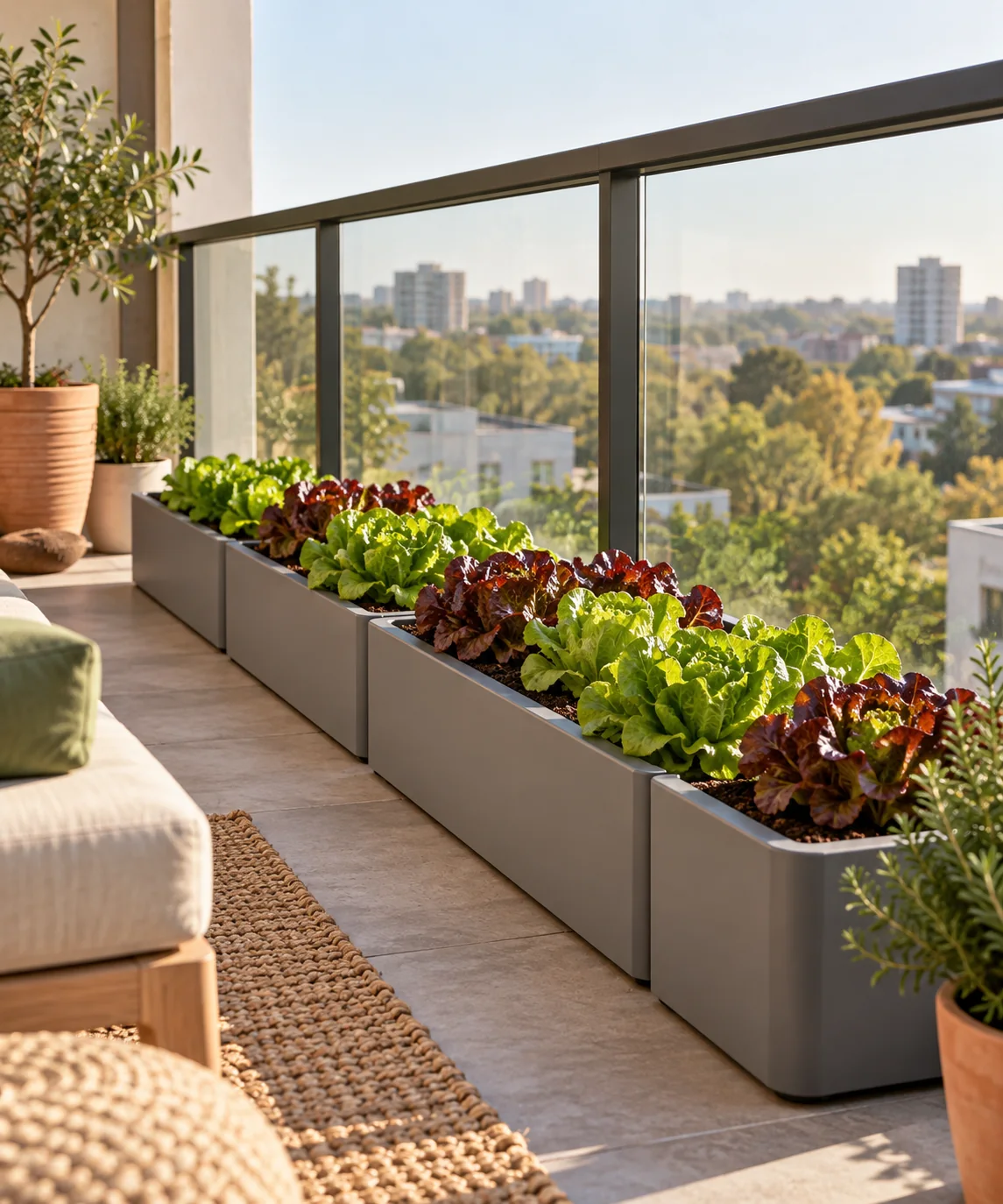
Container Proportions and Walkway Planning
Low-rise rectangular resin or plastic boxes measuring five to seven inches deep provide adequate volume for miniature lettuces while keeping the center of gravity low. Rather than relying on arbitrary clearance rules, review local egress codes and building bylaws to maintain an unobstructed pathway for foot traffic and emergency exits. Keep containers slightly offset from solid panels or glass balustrades to facilitate air movement and prevent debris from wedging against frames. Always confirm that building management permits containers along perimeters, as some properties restrict floor items near railings to address potential climb hazards or exterior aesthetics.
Balcony Light Patterns and Railing Shadows
Light availability at floor level depends heavily on railing construction and orientation. Clear glass balustrades allow light down to the decking, while slatted metal or masonry walls create distinct shadow zones that shift throughout the day. Compact lettuces generally require several hours of steady, direct sun or strong ambient light to develop firm heads without stretching. Track sunlight patterns directly across the deck floor across several days before arranging containers; early spring sun sits lower on the horizon, whereas high summer sun may cast sharp shadows along interior building edges.
Drainage Management and Substrate Selection
Shallow containers hold a limited volume of soil, causing them to dry out and heat up faster than deep pots. Use a lightweight, porous potting mix containing components like composted bark, perlite, and peat or coir to maintain aeration around roots. Avoid garden topsoil, which easily compacts in small troughs. Planters must have functional drainage holes fitted over reliable catchment saucers. Uncontrolled runoff can pool on decking, damage exterior building finishes, or drip onto balconies below, often violating multi-family building policies.
Staggered Planting and Harvesting Practices
Maximize productivity within narrow floor boxes by adopting succession planting with compact butterhead, Little Gem, or loose-leaf varieties. Space transplants according to seed packet instructions, typically several inches apart along the row. Instead of harvesting entire heads at once, clip outer leaves with clean snips once plants establish several true leaves. Introducing fresh seedlings in small batches every few weeks creates a rolling harvest throughout cool periods, while rising summer temperatures eventually cause lettuce to turn bitter and bolt to seed.
Deck Protection and Floor Airflow
Placing containers directly on concrete, stone, or composite decking can trap moisture and transfer high floor heat to sensitive root zones during sunny intervals. Elevating planters on low rubber feet, plastic risers, or wooden spacers allows air to circulate under the base, reducing heat transfer and permitting deck surfaces to dry after rain or watering. Keep the area clean by regularly picking up dropped foliage and spilled mix, which discourages surface mold, protects deck coatings, and prevents floor-dwelling insects from multiplying.
YOUR STARTING POINT
A little checklist.
Original editorial guidance. Images are AI-generated concepts, not photographs of completed projects. Our sources and approach.
Questions to consider
Can lettuce grow effectively in shallow containers?
Yes. Many loose-leaf and compact gem lettuces develop shallow, fibrous roots that adapt well to five to seven inches of quality potting medium, provided moisture and balanced nutrients remain consistent.
How do solid railing panels affect floor-level lettuce?
Solid panels block low-angle sunlight, casting long floor shadows that can cause lettuce to become leggy. If your balcony has solid balustrades, assess whether sun reaches the floor during peak daylight or place containers where light falls unobstructed.
How do I prevent watering runoff from leaving my balcony deck?
Use planters paired with deep, sealed drip trays or saucers. Apply water slowly with a narrow-spout watering can to let the potting medium absorb moisture before the tray overflows, and empty standing water if needed.