Kitchen Herb Gardens · THE GUIDE
Under-Shelf Suspended Wire Planters Beneath Cabinets
Utilizing the vertical gap beneath upper kitchen cabinets can free valuable counter space while keeping culinary herbs within reach. Slide-on wire brackets that fit over a cabinet floor or lower shelf offer a reversible hanging solution without requiring permanent screw penetrations. However, suspending loads from cabinet components introduces mechanical leverage that must be evaluated against the cabinetry's construction and manufacturer limits. Careful planning around door clearances, moisture containment, and natural window exposure ensures that hanging planters remain practical, tidy, and stable.
Jump to the checklist ↓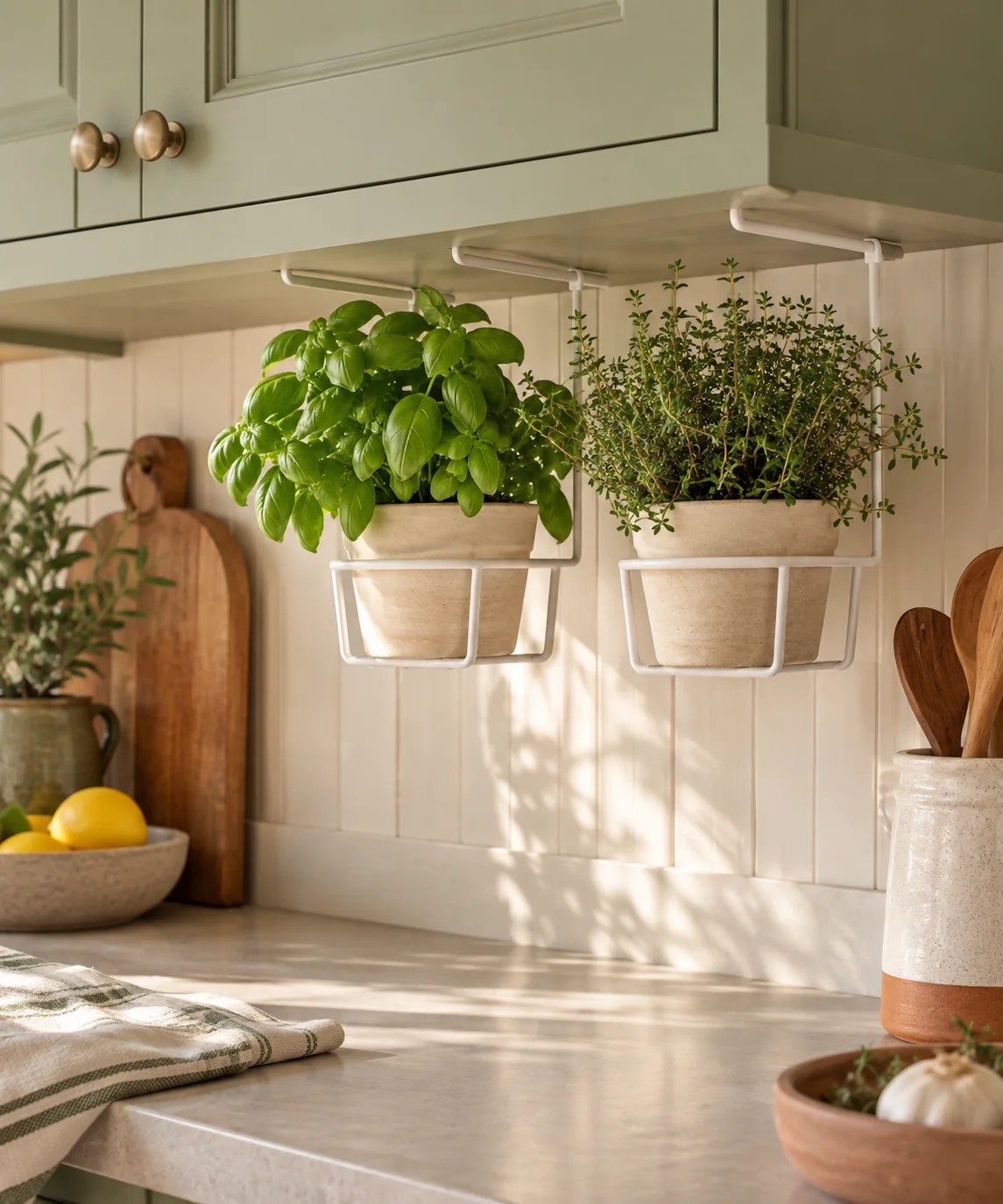
Evaluating Cabinet Door Clearance and Fit
Slide-on wire organizers function by clamping flat metal arms over the front edge of a cabinet base or interior shelf. Before hanging any plants, slide the empty bracket in place and verify that the cabinet door closes completely without binding, rubbing, or marring the cabinet face frame. Measure the vertical clearance remaining between the bottom of the suspended frame and the countertop below to ensure food preparation surfaces and everyday appliances remain unobstructed.
Assessing Shelf Mechanics and Load Limitations
Placing weight along the front overhang of a cabinet shelf creates a cantilevered force that pushes down on front shelf supports while lifting the back edge. On adjustable shelves resting on simple push-in pins, this uneven load can cause the shelf to tip forward. Consult your cabinet manufacturer's specifications for load limits, and prefer fixed, mechanically fastened cabinet bottoms over loose shelves. Keep containers small and avoid overloading brackets beyond the organizer manufacturer's stated guidelines.
Selecting Lightweight Pots and Containment
To minimize strain on cabinet components and brackets, select lightweight plastic nursery containers paired with form-fitting, leakproof outer pots. Avoid heavy materials such as terracotta, ceramic, or cast concrete, which add unnecessary static weight. Confirm that outer cachepots fit securely into the wire rings without shifting and do not have drainage holes, ensuring that soil particles and water droplets cannot drop onto food-contact surfaces below.
Managing Natural Light, Steam, and Heat
Upper cabinets cast broad shadows, so under-cabinet organizers require close proximity to bright windows where direct or strong indirect daylight strikes the foliage. Avoid mounting brackets directly above steam-producing or heat-generating appliances, including kettles, toasters, and ranges. Rising steam and thermal plumes scorch delicate foliage, stress roots, and create localized humidity pockets that foster fungal problems in kitchen environments.
Sink-Based Watering and Safe Harvesting
Never water plants while they remain suspended over food preparation counters. Lift the interior nursery pots out of the hanging wire frame, carry them to the sink, and water thoroughly until moisture penetrates the root ball. Allow pots to drain completely in the sink before returning them to their hanging cachepots. When harvesting, use sharp shears to snip stems gently from above rather than pulling, avoiding sudden jolts to the bracket.
YOUR STARTING POINT
A little checklist.
Original editorial guidance. Images are AI-generated concepts, not photographs of completed projects. Our sources and approach.
Questions to consider
Can slide-on wire brackets cause cabinet shelves to tip forward?
Yes. Front-hung weight creates leverage that can lift the rear of an unclipped, adjustable shelf off its support pins. Use brackets on fixed cabinet bottoms or ensure adjustable shelves are secured with locking shelf clips.
How much weight can an under-cabinet organizer safely hold?
Safe weight limits depend entirely on the cabinet joinery, shelf material, and organizer manufacturer specifications. Check manufacturer ratings, avoid heavy pottery, and use lightweight plastic pots to minimize structural strain.
What should you do if an under-cabinet area receives poor light?
Deep overhangs beneath upper cabinets often block direct skylight. If natural daylight from adjacent windows does not illuminate the plants, move the organizers closer to the window or provide supplemental horticultural lighting.