Household Reset Routines · THE GUIDE
Under-Sink Supply Bucket Decanting and Cloth Restock
Under-sink utility cabinets often become disorganized when half-empty bottles, worn scrubbers, and damp cleaning cloths collect around plumbing traps. This disarray makes it difficult to see what supplies remain on hand and risks damaging cabinet floors with lingering moisture. Organizing your primary cleaning essentials into a dedicated, portable utility caddy restores visibility while keeping damp tools separated from wooden surfaces. By auditing supplies, keeping cleaning products in their original labeled packaging, and establishing a tidy supply of dry microfiber cloths, you create a convenient kit ready for daily household tasks.
Jump to the checklist ↓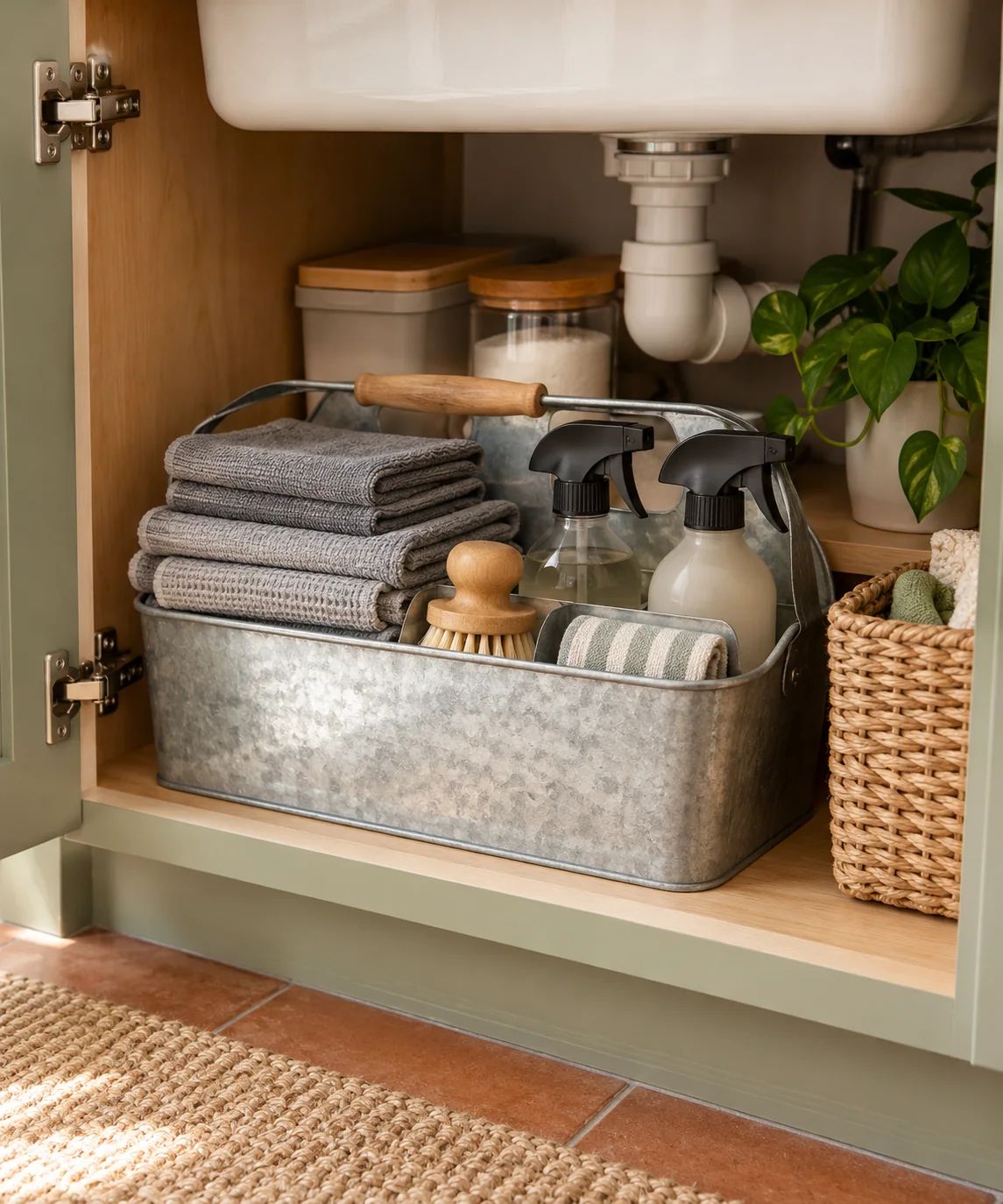
Auditing Cabinet Contents and Plumbing Clearances
Begin by emptying the under-sink cabinet completely to inspect plumbing pipes, shutoff valves, and cabinet floor conditions. Hidden water leaks frequently go unnoticed behind crowded supplies, so check for moisture marks, mineral crusting, or swollen cabinet bases before returning items. Group similar supplies to assess quantities and discard empty containers responsibly. Measure the vertical clearance beneath sink drains, P-traps, and pull-out hose loops to ensure your caddy will slide in and out without catching on plumbing fixtures.
Retaining Original Packaging and Safe Storage
Keep commercial cleaning products in their original manufacturer containers rather than decanting them into unlabeled or generic spray bottles. Original packaging includes mandatory ingredient disclosures, safe handling instructions, dilution ratios, and emergency contact details that are lost when transferring liquids. Consolidating different bottles—even of seemingly similar products—can cause dangerous chemical reactions or container degradation. Store specialty chemicals securely and place only everyday cleaners into your active portable caddy.
Folding and Restocking Utility Cloths
Keep an orderly supply of clean, completely dry microfiber cloths in your cleaning kit. Fold cloths into uniform compact squares and stand them vertically inside a designated caddy compartment or small open container. Storing cloths vertically allows you to grab a single rag without unsettling the entire stack. Limit the caddy supply to five to eight cloths; storing excessive quantities under a sink can trap stale odors and consume valuable storage space.
Structuring Caddy Compartments for Daily Workflows
Arrange cleaning tools within the caddy to ensure balanced handling during transport. Position heavier original bottles on opposing sides of the central carry handle to keep the caddy stable when lifted. Slot handheld detail brushes, a bottle brush, and a squeegee into narrow center compartments. Place replacement sponge pads flat along the base. Containing all items within rigid caddy walls prevents small supplies from sliding into unreachable gaps behind the drain pipe.
Establishing Restock Thresholds and Drying Habits
Never return damp sponges or saturated cleaning rags directly to the dark under-sink cabinet, as poor airflow promotes mildew and musty smells. Let wet tools air-dry fully on a countertop drying rack or laundry line before returning them to the caddy. Set a straightforward inventory limit based on caddy capacity: purchase refills only when an active product is nearly depleted. This physical boundary prevents under-sink overflow and keeps plumbing shutoff valves instantly accessible.
YOUR STARTING POINT
A little checklist.
Original editorial guidance. Images are AI-generated concepts, not photographs of completed projects. Our sources and approach.
Questions to consider
Why should cleaning products remain in their original containers?
Original bottles provide essential safety information, including chemical contents, correct dilution rates, and first-aid instructions. Decanting chemicals into unrated containers can degrade plastics or lead to accidental misuse.
What type of caddy works best in an under-sink cabinet?
Choose a heavy-duty plastic or powder-coated metal caddy with a solid base and a sturdy handle. A leak-proof solid bottom contains accidental drips, protecting the cabinet floor from liquid rings.
Where should bulk refill jugs of detergent and vinegar be stored?
Store large bulk jugs on a sturdy, well-ventilated lower shelf in a utility closet or laundry area. Keep only the active, standard-sized containers in the under-sink caddy to avoid cluttering plumbing access.