Small Kitchen Organization · THE GUIDE
Undercabinet Slide Rack for Stemless Tumblers and Cups
The open airspace beneath upper kitchen cabinets often sits unused while interior shelving remains crowded with drinkware. Evaluating a suspended slide rack provides an organized, accessible home for daily water glasses, juice tumblers, and metal cups. By suspending everyday vessels beneath upper cabinetry, you can help protect rims from contact chipping and free up interior cupboard space for heavier dishware. Creating a functional arrangement involves measuring vertical clearances, confirming the base diameter of your specific glassware, and choosing locations situated safely away from high-heat cooking zones and water splash areas.
Jump to the checklist ↓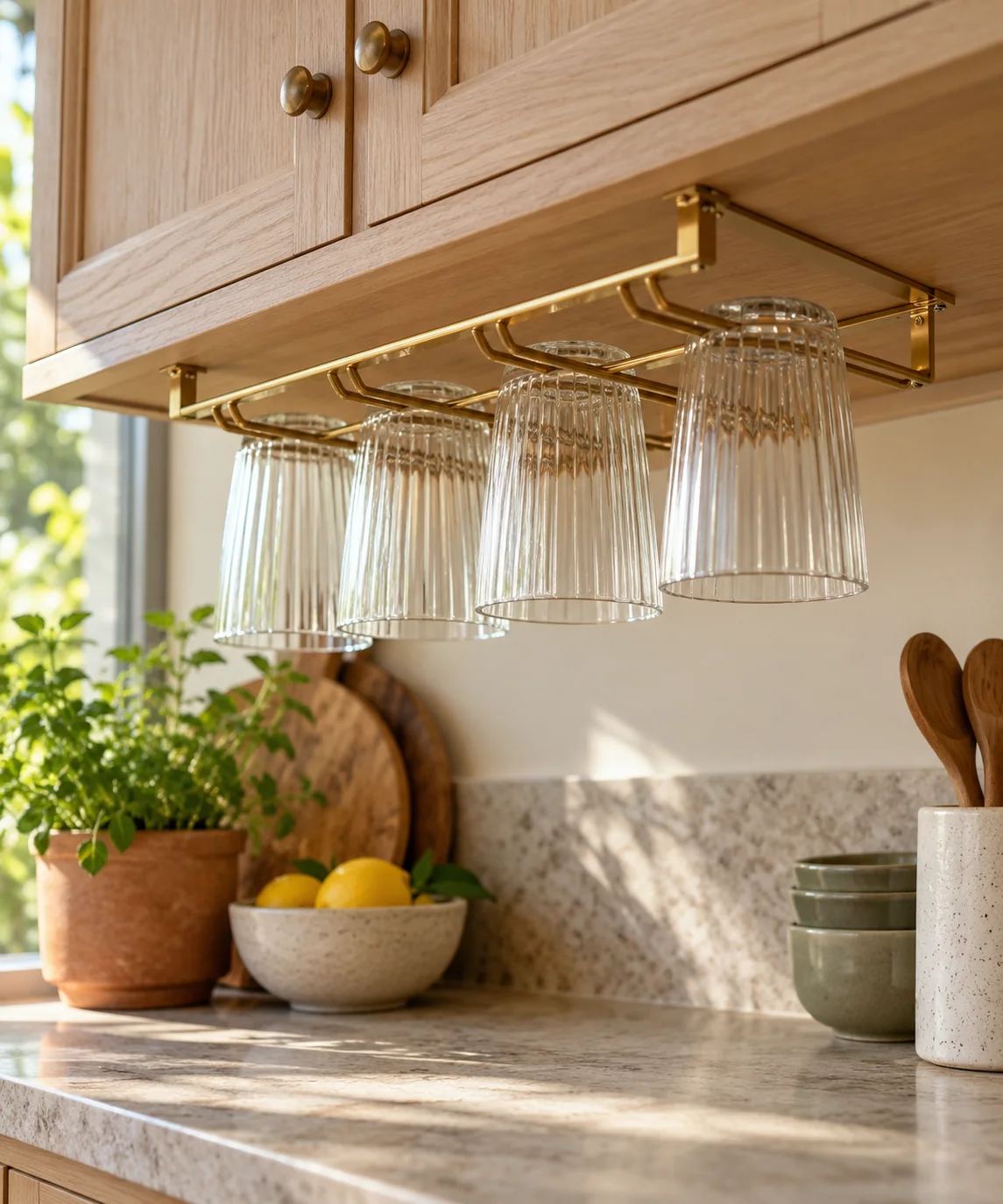
Evaluating Counter Clearance and Overhead Reach
Before choosing an undercabinet storage rail, measure the vertical span between your countertop surface and the lower edge of the upper cabinetry. Suspended tumbler racks reduce the available clearance once drinkware is slotted in place. Confirm that hanging glasses leave sufficient space above small countertop appliances such as electric kettles, blenders, or food prep stations. The planned location should allow household members to reach and slide glasses forward naturally without awkward bending or striking nearby wall trim and light valances.
Channel Design and Tumbler Base Compatibility
Stemless tumblers lack the defined stem and wide foot of traditional stemware, requiring channel rails shaped to support their specific lower profiles. Look for dual-rail profiles or channel brackets designed to support straight-sided or gently flared drinkware along the base perimeter. Measure the widest diameter of your daily tumblers alongside the base width before purchasing hardware. If the channel opening is excessively wide, glassware may tilt or sit unstable; if too narrow, sliding glasses in and out requires unnecessary effort.
Positioning Away from Steam and Splash Zones
Plan the placement of hanging glassware away from direct steam sources such as stovetops, rice cookers, or dishwashers, as well as the active splash zone around the primary kitchen sink. Ambient cooking vapors, airborne oils, and dishwater droplets collect quickly on inverted glassware, leaving films or mineral deposits on otherwise clean cups. Suitable positions often include dry preparation counters, spaces near a filtered water faucet, or cabinetry above a dedicated beverage station.
Mocking Up Layout with Painter's Tape
Test the layout of your proposed system before committing to any hardware. Use low-tack painter's tape on the underside of the cabinet to mark the length, width, and spacing of the intended slide channels. Hold your tallest daily tumbler against the marked layout to observe how much working space remains above the counter. Check routine kitchen activities, such as opening adjacent upper cabinet doors or reaching for nearby electrical switches, to verify that hanging vessels will not obstruct daily workflow.
Cabinet Construction and Weight Considerations
Cabinet underside panels vary significantly across manufacturers, ranging from solid wood frames to thin composite or veneer skins. Consult the cabinet manufacturer or landlord guidelines regarding weight limits and approved mounting methods before introducing suspended loads. Wipe down metal rails periodically with a dry or lightly dampened microfiber cloth to remove settled dust. Restrict hanging storage to lightweight everyday tumblers rather than heavy ceramic mugs or oversized thermal carafes to prevent undue stress on the cabinet structure.
YOUR STARTING POINT
A little checklist.
Original editorial guidance. Images are AI-generated concepts, not photographs of completed projects. Our sources and approach.
Questions to consider
Can I store ceramic coffee mugs on a tumbler slide rack?
Slide racks are generally intended for tapered or flat-bottom tumblers without handles. Protruding mug handles can interfere with channel rails and cause uneven weight distribution, making retrieval awkward and potentially exceeding intended load thresholds.
How many glasses should be placed on a single slide channel?
Follow the capacity limits specified by the rack manufacturer. Spacing three or four average tumblers per rail usually allows smooth access without crowding rims or placing concentrated weight on the cabinet panel.
What should I consider if my cabinet has a recessed lower bottom?
Recessed cabinet bases feature a lower face frame or light rail that can obstruct glassware removal. Check that the channel height sits low enough for glasses to clear the trim, or select hardware specifically designed to accommodate recessed cabinet bottoms without structural modification.