Small Kitchen Organization · THE GUIDE
Uniform Square Glass Jars for Baking Flours in a Shallow Cupboard
Shallow kitchen cupboards make storing bulky, irregularly folded flour and sugar bags inefficient and messy. Torn paper packaging leaks fine dust onto cabinet shelves, attracts pests, and leaves unused vertical gaps between items. Decanting staple baking ingredients into uniform square glass jars resolves these space constraints. Square profiles sit flush against one another, eliminating the wasted dead space typical of cylindrical jars. Transparent glass allows immediate visual inventory checks, while airtight gasket lids protect dry goods from moisture, stale air, and pantry moths, turning a cramped upper cupboard into an organized baking pantry.
Jump to the checklist ↓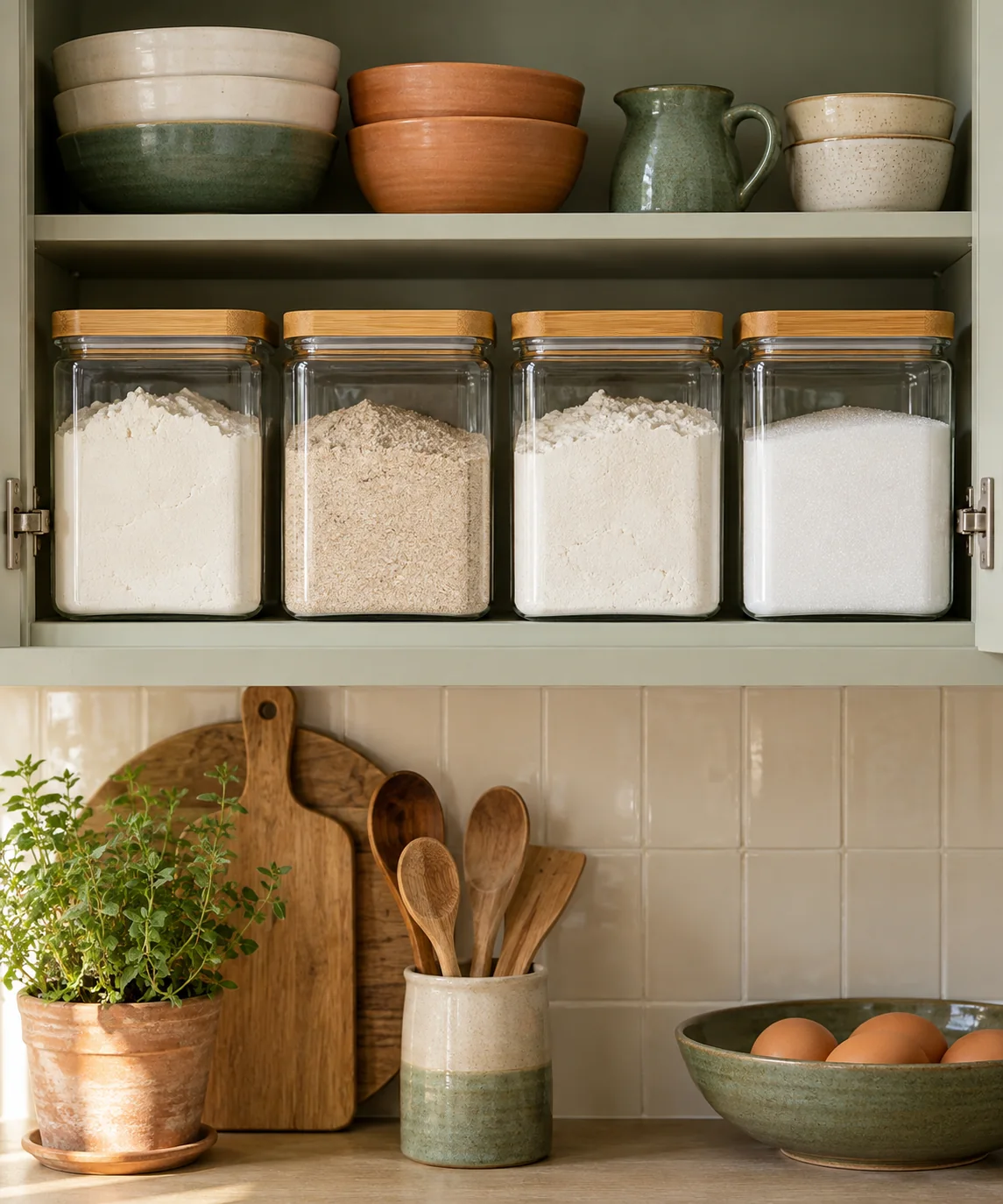
Measuring Cabinet Dimensions and Usable Space
Shallow upper cupboards often have limited interior depth between the back wall and the inside of the cabinet door. Measure the clear depth, width, and height of your shelving, accounting for door hinge mechanics, shelf adjustment pegs, and front lip frames. Allow enough vertical space above jar lids so you can comfortably grasp and lift filled jars off the shelf without knocking the shelf above. Comparing jar dimensions directly against your usable shelf dimensions helps prevent overcrowded storage.
Footprint Advantages of Square Containers
Square containers align closely along shelf runs, reducing the open gaps that naturally form between rounded edges. While round jars leave curved voids along shelf edges, square profiles sit alongside one another to make efficient use of straight shelf runs. This layout is especially helpful in shallow cabinets where depth is limited to a single row of containers. The flat sides also create a neat, aligned appearance that makes reading labels and checking ingredient levels straightforward.
Decanting Staples and Labeling Practicalities
Transfer dry baking ingredients on an open work surface using a wide-mouth funnel or large scoop to prevent spills. Match jar sizes to your typical ingredient purchases; for example, standard bags of flour require spacious containers due to their volume and aerated texture. Apply clear labels indicating the ingredient name, flour type, and purchase or expiration date. Keeping package instructions or specialized protein percentages noted on the jar bottom or back helps preserve important recipe details.
Managing Shelf Load and Weight Distribution
Glass jars filled with dense ingredients like flour, sugar, and grains carry substantial weight. Review the cabinet manufacturer's stated weight limits for individual shelves and support pins before filling an entire shelf with glass containers. Distribute jars evenly across the shelf rather than grouping the heaviest items in the center, which helps prevent shelf deflection over time. If shelf ratings are unknown, consider spreading heavy glass vessels across lower shelves or sturdier pantry sections.
Gasket Maintenance and Moisture Protection
Airtight lid seals help shield dry staples from pantry pests and ambient humidity, but flour dust can settle in gasket grooves during refilling. Inspect silicone or rubber gaskets during routine refills, wiping away fine starch and powder residue that might disrupt a tight seal. Ensure jars and seals are thoroughly dry after washing before adding fresh baking ingredients, as residual moisture can cause clumping. Close lids evenly after each use to keep ingredients protected.
YOUR STARTING POINT
A little checklist.
Original editorial guidance. Images are AI-generated concepts, not photographs of completed projects. Our sources and approach.
Questions to consider
How much volume is needed to store a standard bag of baking flour?
A standard five-pound bag of flour is aerated and bulky, generally requiring a container volume of approximately 3.8 to 4 liters. Denser ingredients like sugar take up less volume for the same package weight.
How can I prevent glass jars from clinking together on shallow shelves?
Arrange jars with a small gap between them so you can grasp sides easily without contacting adjacent glass. Non-slip shelf liners can also help dampen vibrations and keep containers steady when opening cabinet doors.
What is the best way to store specialty whole grain flours?
Whole grain flours retain natural bran oils that can turn stale more quickly than refined white flours. Store whole grain flours in airtight jars in a cool, dark cupboard away from direct sunlight and stove heat, or refrigerate for longer storage.