Rental-Friendly Decor · THE GUIDE
Unify Mismatched Second-Hand Seating with a Tailored Linen Slipcover
Furnishing an apartment with second-hand or thrifted seating often yields an assortment of conflicting upholstery patterns, faded velvets, and dated textures. Reupholstering these solid vintage frames professionally requires significant expense and permanent structural changes to the pieces. Tailored linen slipcovers provide a sophisticated, completely reversible method to visually unify disparate chairs into a cohesive interior design scheme. By choosing a neutral linen textile with refined seam details, you can harmonize different silhouettes, soften visual noise in smaller living rooms, and protect underlying furniture frames while maintaining the flexibility to wash or swap coverings as needs evolve.
Jump to the checklist ↓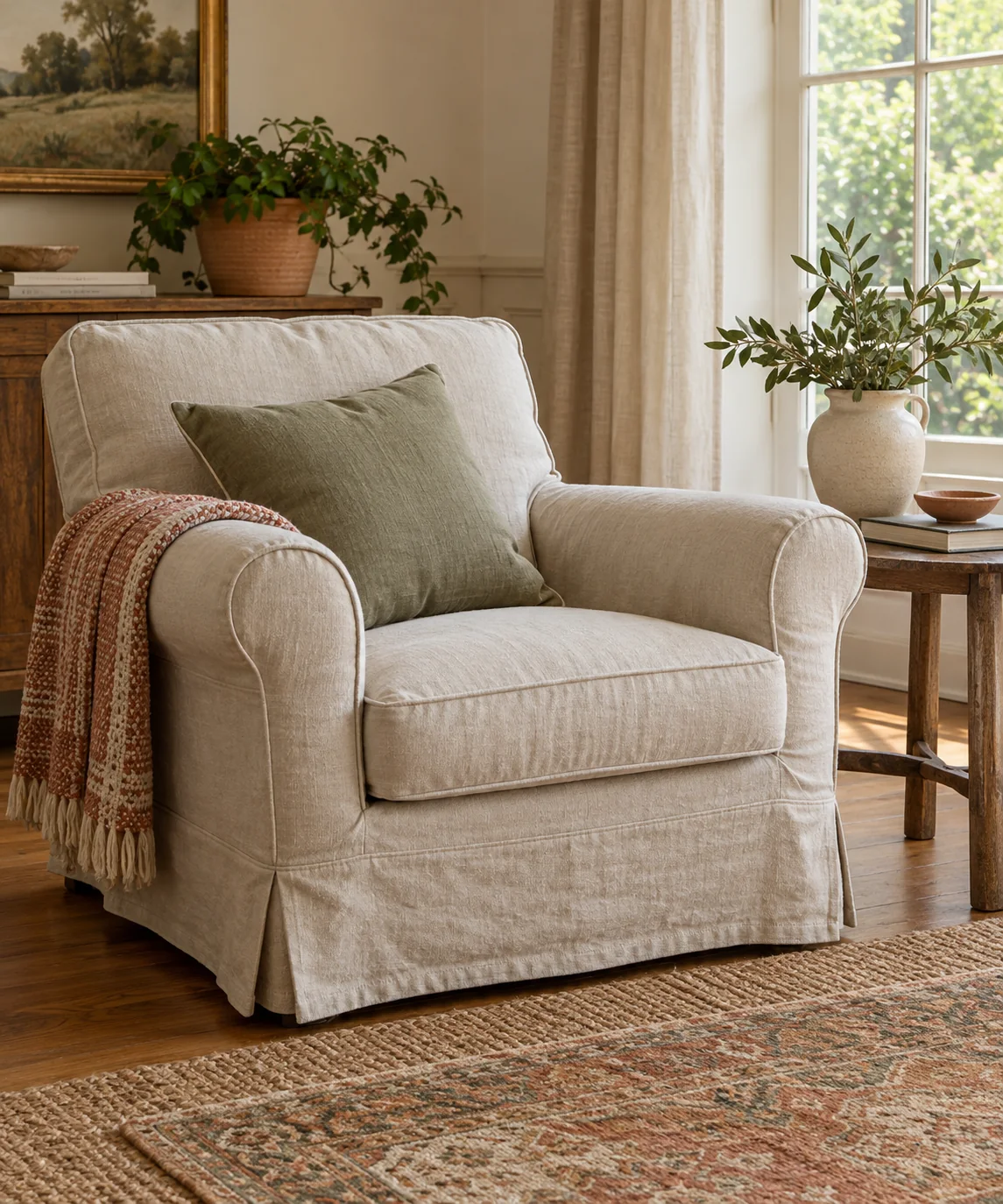
Evaluating Chair Silhouettes for Slipcovering
Not every second-hand armchair accepts slipcovers equally well. Pieces with distinct lines, such as classic roll-arm club chairs, mid-century club chairs, or parsons armchairs, accommodate tailored fabric naturally. Avoid chairs with exposed, curved wooden framing on the backrest or deeply contoured barrel backs, which tend to push slipcovers out of alignment. Examine the frame to confirm the seat cushion is fully removable; separate cushion covers yield a crisp, custom-upholstered appearance that prevents the sloppy, shifting fit common to one-piece stretch covers.
Selecting Durable, Pre-Washed Linen
Choose a medium- to heavy-weight linen or linen-cotton blend designed for upholstery rather than delicate apparel fabric. Heavy linen possesses the structural drape required to hold crisp box pleats and welted borders without collapsing. Prioritize fabric labeled as pre-washed or pre-shrunk. Pure untreated linen shrinks significantly during laundering, which could render a tailored slipcover unusable after the first cycle. A tightly woven, natural oatmeal or muted stone tone conceals darker base upholstery fabrics without requiring opaque lining.
Measuring and Recording Chair Proportions
Accurate measurements are essential when commissioning or tailoring a fitted slipcover. Use a flexible seamstress tape to document the overall height, outer width across the arms, depth from front to back, and interior seat dimensions. Measure the cushion separately in three dimensions: width, depth, and box thickness. Record the distance from the lower seat rail to the floor to determine whether a floor-length skirt or an exposed-leg design best balances the visual proportion of your room.
Installing and Securing the Fabric
Begin installation by smoothing the main cover over the backrest and down across both armrests. Push excess fabric deeply into the crevices between the seat deck and back frame. To keep the fabric anchored during daily use, insert foam grip rolls or lengths of wooden doweling into the internal seat folds. Fit the separate cushion into its zippered casing and press it down onto the seat deck, which further locks the tucked body fabric securely in place.
Routine Care and Linen Maintenance
Linen gains softness and natural character with use, but it requires thoughtful handling to maintain its structured shape. Vacuum the fabric weekly with a soft upholstery brush attachment to remove dust and crumbs before they settle into the weave. Spot-clean minor marks promptly with a damp cloth and mild soap. When laundering, use a gentle cycle with cold water, then air-dry the cover until slightly damp before placing it back on the chair frame to dry smooth.
YOUR STARTING POINT
A little checklist.
Original editorial guidance. Images are AI-generated concepts, not photographs of completed projects. Our sources and approach.
Questions to consider
How do I keep a linen slipcover from looking excessively wrinkled?
Medium-weight linen naturally develops gentle creases. Smooth the fabric by hand daily and reinstall covers slightly damp after laundering so they dry taut over the chair frame, minimizing deep or unsightly folds.
Can a dark or patterned chair show through a light linen cover?
High-contrast prints or dark colors can show through lightweight fabrics. Choose a heavyweight upholstery linen or select a cover with an internal cotton lining to block underlying patterns from casting dark shadows.
How do I prevent the slipcover from shifting when someone sits down?
Anchor deep fabric tucks using dense foam grips or wooden dowels pressed firmly between the seat deck and backrest. Ensuring the separate seat cushion fits snugly also keeps the foundation fabric taut.