Patio Seating Ideas · THE GUIDE
Upcycled Cable-Spool Table with Quarter-Circle Benches
Repurposing a wooden utility spool into a casual outdoor patio table offers an expansive circular surface, but its wide proportions require careful attention to layout and materials. A standard wooden spool's central drum can restrict legroom if paired with conventional straight chairs, making curved or modular perimeter seating an attractive pairing. Nesting curved benches under the table overhang helps maximize usable patio circulation when the table is not in use. However, industrial spools originate as heavy transport hardware rather than finished domestic furniture. Successfully adapting one requires screening the wood for industrial chemical treatments, assessing structural stability, checking underside clearances, and planning sufficient walking space on your patio surface.
Jump to the checklist ↓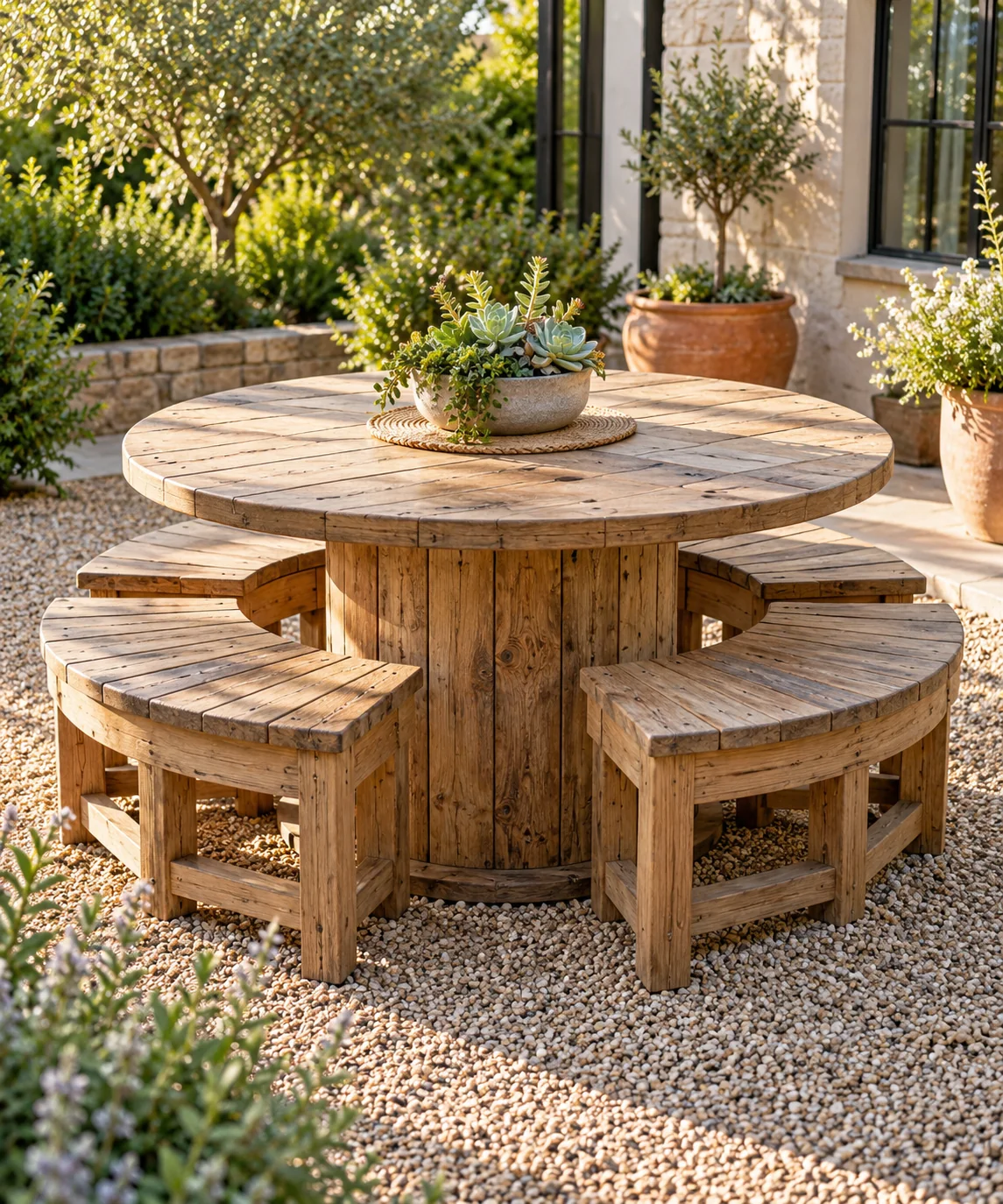
Screening Timber Origin and Chemical Treatments
Before bringing an industrial wooden spool into a patio setting, investigate its origin and treatment history. Many commercial reels are treated with chemical preservatives, fungicides, or pesticides—such as methyl bromide—to resist pests during international transit, making them unsuitable for food service or domestic use. Look for treatment stamps or markings on the flanges; spools marked with chemical designations should be avoided in favor of untreated, heat-treated (HT), or domestic electrical reels. Avoid spools with chemical odors, oily staining, or signs of industrial contamination, and thoroughly inspect the wood for deep rot or structural weakness before planning your project.
Spool Dimensions and Seating Proportions
Cable spools vary significantly in height, flange diameter, and drum thickness. Before investing in or designing curved benches, measure the spool's total height and the vertical clearance beneath the upper flange to ensure comfortable seating proportions. A standard dining arrangement generally functions best when there is adequate vertical room between the bench seat and the tabletop underside for leg clearance. Similarly, measure the overhang from the outer edge to the center drum. If the drum is unusually wide relative to the top disc, knee room may feel restricted, indicating that shallower bench perches or alternative seating arrangements are more suitable.
Curved Bench Alignment and Clearance Planning
Quarter-circle benches designed to match the curve of a spool flange can provide neat storage when pushed inward. When planning bench arcs, allow a modest margin of clearance between the bench frame and the center drum so that cushions or hands do not get pinched during movement. Ensure the radius of the benches aligns comfortably with the table perimeter to avoid clumsy overhangs. Because patio surfaces are rarely perfectly flat, check that the benches slide smoothly on the pavers or gravel without catching on uneven edges or dragging debris beneath their feet.
Surface Smoothing and Moisture Management
Utility reels endure rough industrial handling, often leaving behind severe splinters, raised grain, and recessed carriage bolts. Thoroughly sand all wood surfaces, softening the outer perimeter edges where arms and clothing rest. Inspect the surface for protruding staples, nails, or wire fasteners, driving them flush or removing them safely. While penetrating exterior oils or deck sealers help slow water absorption and surface weathering, no finish completely stops natural wood movement or checks in exterior timber. Plan to apply a breathable exterior sealant periodically and re-tighten hardware as the wood naturally expands and contracts through seasonal humidity shifts.
Patio Footprint, Leveling, and Ground Contact
Because large spools are heavy and broad, positioning them requires thoughtful traffic planning. Allow ample walking space around the entire perimeter so that guests can comfortably pull out benches and move past the table without stepping into surrounding planting beds. Placing the bottom wood flange directly onto damp soil or unsealed ground accelerates moisture decay. Support the base flange slightly above the ground using dense synthetic risers, composite deck shims, or stone pavers to promote airflow underneath, prevent continuous moisture wicking, and facilitate sweeping away trapped leaves and garden debris.
YOUR STARTING POINT
A little checklist.
Original editorial guidance. Images are AI-generated concepts, not photographs of completed projects. Our sources and approach.
Questions to consider
Are all wooden utility cable spools safe to use for patio dining tables?
No. Many industrial reels are treated with toxic pesticides, fungicides, or chemical preservatives to withstand shipping, or they may have absorbed industrial oils and chemicals during commercial use. Only choose clean, uncontaminated spools that are untreated or clearly stamped as heat-treated (HT).
Can a spool center hole support an outdoor patio umbrella?
While the central spindle opening seems ideal for an umbrella pole, the spool alone cannot safely stabilize an umbrella against wind loads. You must use a dedicated, heavy umbrella base beneath or inside the drum to secure the shaft and prevent wind gusts from toppling the assembly.
How do you keep the bottom flange from rotting on a patio?
Never let raw timber rest directly on bare earth or constantly wet pavers. Install non-porous composite glides or heavy-duty rubber leveling pads underneath the bottom rim to elevate the timber slightly, which allows rainwater to drain and air to circulate.