Warm Neutral Living Rooms · THE GUIDE
Use a Ceramic Pitcher for Foraged Botanical Cuttings on the Side Table
Styling living room surfaces can often lead to unnecessary purchases of synthetic decor that clutter tables without adding genuine character. Repurposing a classic ceramic pitcher filled with foraged garden stems brings organic texture and architectural height to a warm neutral living room. Natural seed pods, dried grasses, and dormant branches introduce seasonal rhythm without the maintenance or water damage risks associated with fresh cut flowers. By thoughtfully pairing ceramic weight with stem proportions and evaluating tabletop stability, you can create a quiet, grounded focal point that complements linen furnishings and pale wood accents seamlessly.
Jump to the checklist ↓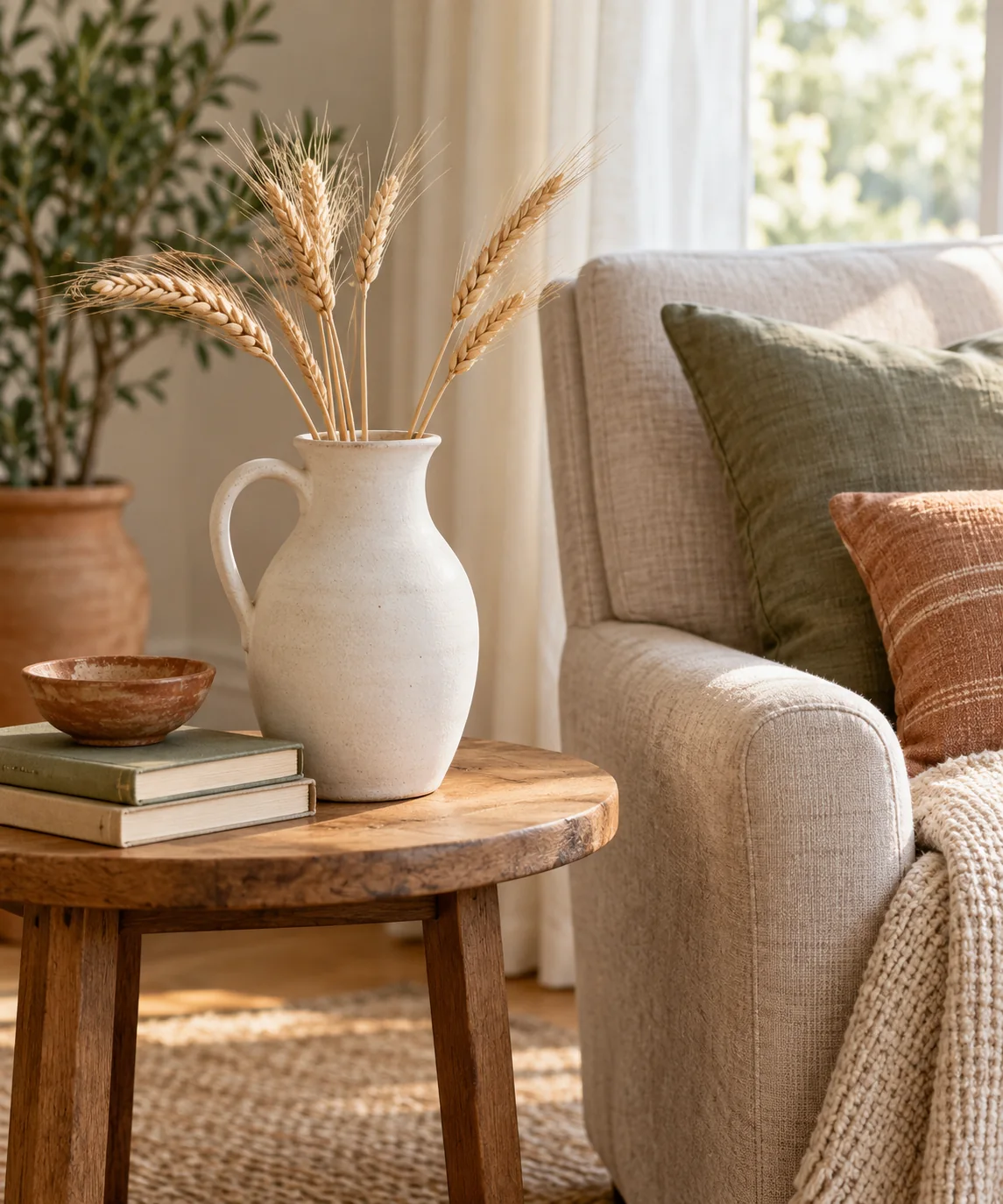
Selecting Vessel Proportion and Stability
A side table arrangement requires balance so reaching for a book or drink does not tip the display. Choose an unglazed or satin-finish ceramic pitcher with a substantial base and comfortable heft. A pitcher standing seven to ten inches tall offers enough anchoring weight to support taller dried stems without wobbling. Look for earthenware in shades of biscuit, chalk white, or warm oatmeal to harmonise with neutral walls. Ensure the pitcher's handle aligns parallel to the adjacent wall or seating line to keep profiles streamlined and prevent accidental snags.
Foraging Stems with Architectural Silhouette
When gathering materials from your yard or local garden borders, prioritize structure over volume. Rigid branches like dormant dogwood, dried hydrangeas, allium seed heads, or wild wheat stems provide striking lines that read well against soft paint colors. Limit your collection to three to five clean stems to maintain an airy, intentional appearance. Trim any fragile or crumbly side leaves outdoors before bringing clippings inside. Selecting stems with gentle curves or interesting branching patterns adds sculptural warmth without creating dense visual clutter.
Balancing Scale on Small Side Tables
A common styling mistake is overpowering a compact side table with an oversized botanical arrangement. As a general guideline, the height of your tallest stem should not exceed one and a half times the height of the pitcher. For a nine-inch vessel, keep the branch peak around thirteen to fourteen inches above the rim. Position the vessel toward the back quadrant of the tabletop, leaving the front half entirely clear for everyday utility items like coasters, reading glasses, or a small ceramic dish.
Managing Dust and Preserving Dried Botanicals
Unlike fresh floral arrangements, dried clippings require zero moisture, eliminating the danger of condensation rings on fine wood finishes. However, fragile seed heads and dried grasses collect ambient dust over time. Maintain your arrangement by gently stepping outdoors every few weeks and shaking stems lightly, or using a hairdryer on its lowest, coolest setting held at arm’s length. Replace brittle stems every season as they shed, refreshing the visual tone of your room as surrounding natural landscapes shift from autumn to spring.
Harmonizing Textures with Surrounding Decor
The matte surface of stoneware paired with dry botanical fiber creates quiet tactile contrast against smooth living room materials. Set the pitcher near soft textiles, such as a slubby linen cushion or a chunky wool throw draped over an armchair. If your side table features polished marble or glossy varnish, the chalky clay and organic twigs soften the cold surfaces. Keep nearby accessories minimal—a single matte candle or folded cloth napkin—to let the structural silhouette remain the primary visual anchor.
YOUR STARTING POINT
A little checklist.
Original editorial guidance. Images are AI-generated concepts, not photographs of completed projects. Our sources and approach.
Questions to consider
Should I put water in the pitcher for dried stems?
No, keep the pitcher completely dry. Adding water to dead stems causes decay, bacterial growth, and unpleasant odors while risking moisture damage to unglazed earthenware or wooden tabletops. Stems should remain dry to preserve their form.
How do I keep top-heavy branches upright inside a wide pitcher neck?
Place clean, dry pea pebbles or small tumbled stones inside the base of the pitcher. This ballast weights the bottom against tipping while providing friction to secure stem angles exactly where you want them without floral foam.
Which dried garden botanicals hold up longest indoors?
Woody branch cuttings, dried hydrangea panicles, seed capsules from poppies or alliums, and stiff grasses such as miscanthus hold their structure for many months indoors without dropping excessive debris, making them ideal for everyday side table displays.